

Archive · 16 Sep 2025
Biosignatures on Mars: NASA's Search for Past Life
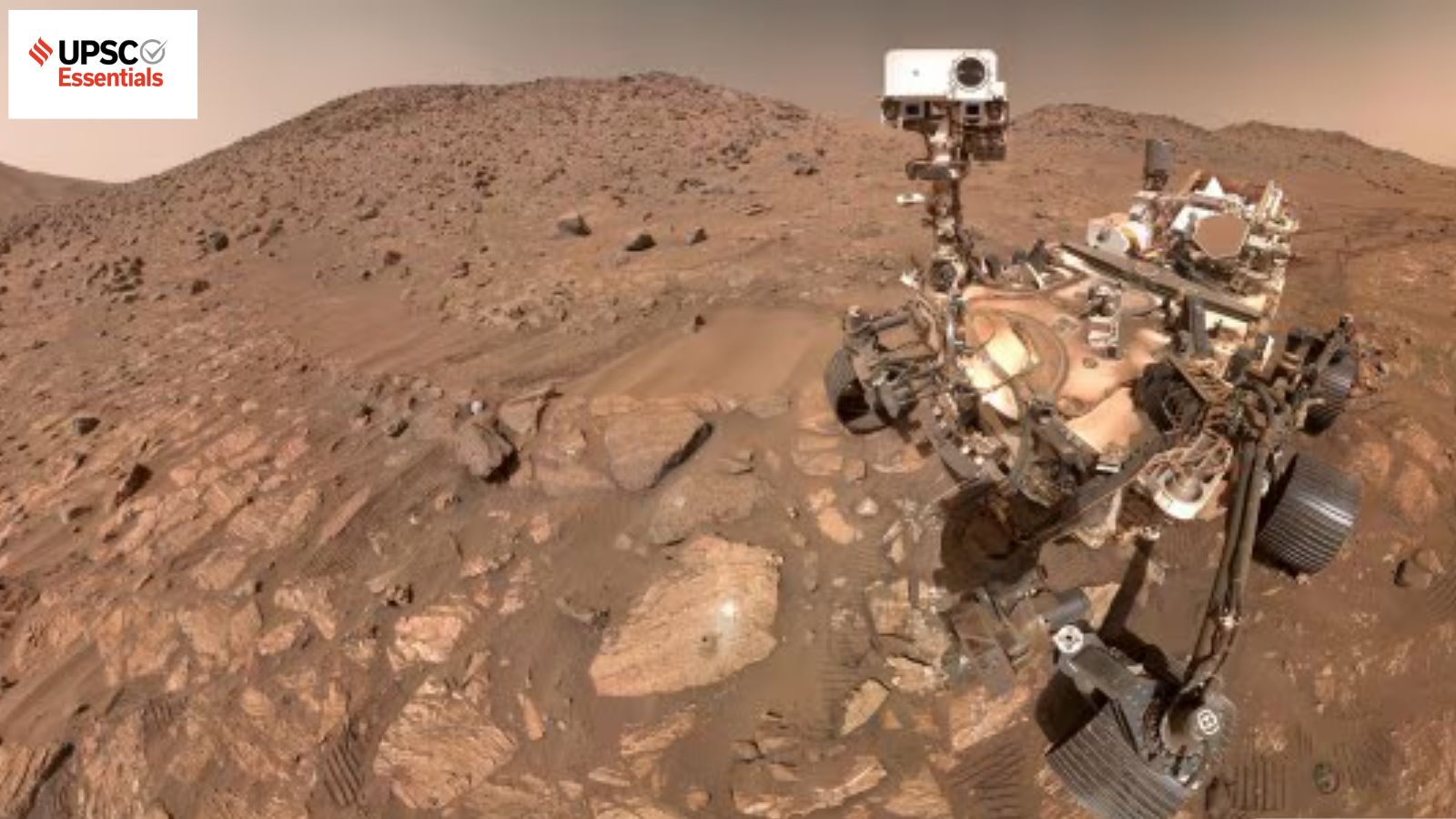
Imagine a robot on Mars found some rocks that look interesting, like they could hold clues about tiny living things.
This robot, Perseverance, looked at a rock and found some exciting ingredients.
It saw clay, minerals, and some carbon.
These things are often found on Earth with microbes.
Scientists are excited, because these clues suggest that life might have been possible on Mars, a very long time ago.
They're still studying the rocks to see if these ingredients really are a sign of past life.

Perseverance rover identified potential biosignatures in rock samples on Mars.
The rock sample, named Cheyava Falls, was found in Neretva Vallis, Sapphire Canyon.
Scientists found clay, silt, organic carbon, sulfur, and phosphorus in the sample.
These minerals and structures are often associated with microbial life on Earth.
Further analysis is needed to confirm the presence of past Martian life.
- Who
- NASA's Perseverance rover and scientists
- What
- Discovered potential biosignatures in Martian rock samples.
- When
- Data gathered in 2024.
- Where
- Mars, specifically Neretva Vallis, Sapphire Canyon.
- Why
- To search for evidence of past or present life on Mars.
- Definition
- Substance/structure with potential biological origin
- Mission
- Perseverance rover
- Location
- Mars
- Sample Name
- Cheyava Falls
- Key Findings
- Clay, silt, organic carbon, sulfur, iron oxides, phosphorus
- Significance
- Potential biosignature, possible microbial life
- Next Steps
- Further detailed analysis of Cheyava Falls rock sample
