

Archive · 30 Jul 2026
Why an Aadhaar fix for India’s education crisis won’t work
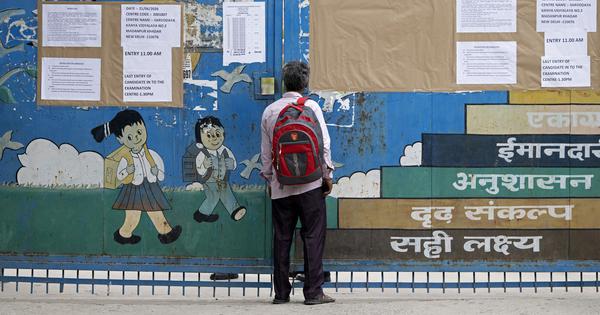
The Indian government wants to fix problems with big exams by using a computer system like Aadhaar.
A famous tech leader, Nandan Nilekani, is leading a group to make new rules.
But experts say this plan is too focused on computers and not enough on people.
They point to Aadhaar’s problems, where many people were wrongly denied help.
They suggest instead listening to teachers, students, and local schools, and making exams fairer and easier to understand.
The goal is to give every child a chance to succeed, not just to make the system run smoothly on a computer.

The government is using a technocratic task force led by Nandan Nilekani to reform national exams after the NEET leak protests.
The approach mirrors the Aadhaar project, aiming for a digital, fraud‑proof system but risking human rights and equity.
Critics argue that technocratic solutions ignore social realities, leading to inclusion and exclusion errors seen in Aadhaar.
The article calls for democratic, pedagogical reforms, decentralization, and continuous assessment to restore trust.
Key stakeholders such as teachers, students, and state exam boards are largely absent from the current task force.
- Who
- Indian government, Nandan Nilekani, students and civil society
- What
- Formation of a technocratic task force to reform national exams and critique its approach
- When
- Recent, following the NEET exam leak protests in 2024
- Where
- India
- Why
- To address exam security and fairness concerns but highlighting the limits of technocratic fixes
- Task Force Leader
- Nandan Nilekani
- Issue
- National Eligibility-cum-Entrance Test leak
- Critique
- Technocratic solutions inadequate
- Proposed Reform
- Decentralization, pedagogical overhaul
- Key Example
- Aadhaar experience