Archive · 7 Nov 2025
Scam Centers in Southeast Asia Proliferate Despite Crackdowns
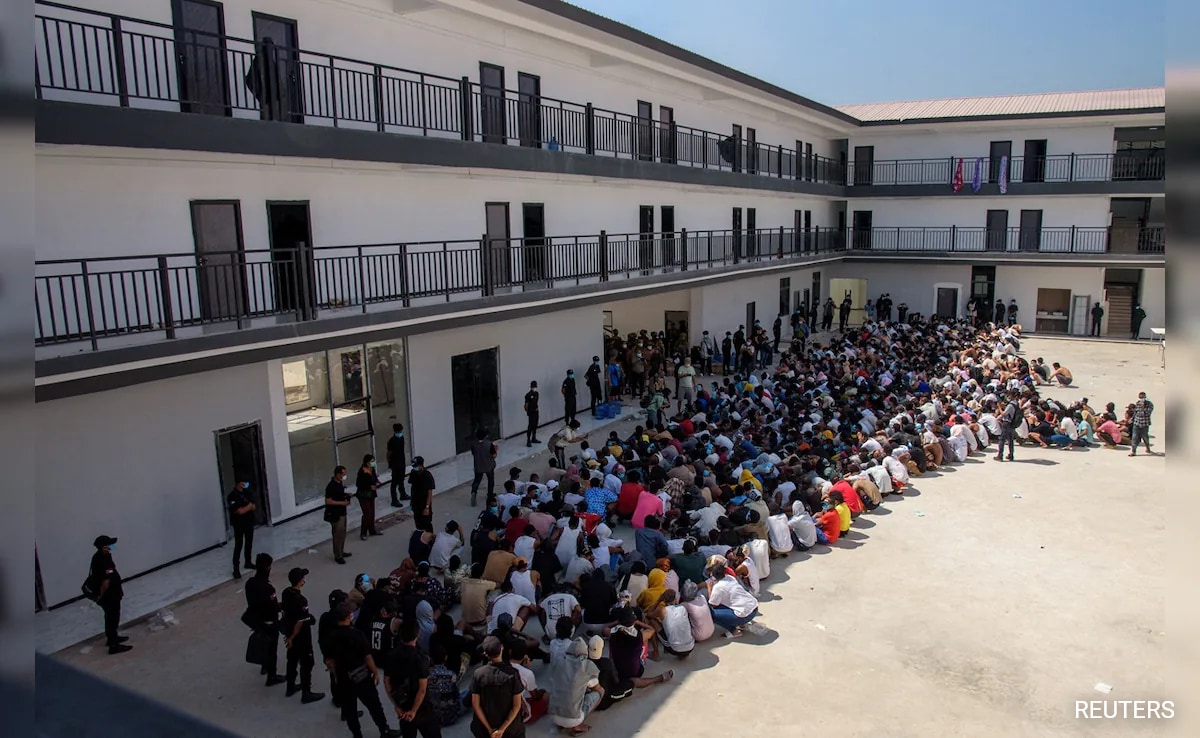
Imagine some places in Southeast Asia where people are tricked into working in big scam centers.
They might be promised good jobs, but instead, they're forced to work very long hours trying to scam other people online, like through fake investment or romance schemes.
These workers are often not allowed to leave and can be punished if they don't meet targets.
Many of these scam centers are run by criminal groups, sometimes linked to casinos that used to exist there.
Recently, governments have tried to shut down some of these places, like a big one in Myanmar called KK Park.
Some workers have been rescued and sent back to their home countries.
However, it's hard to stop all of them because new ones keep appearing, and the people in charge, like criminal syndicates, are difficult to catch.
People all over the world have lost a lot of money to these scams.

Scam compounds, often originating from casino operations, are widespread in Southeast Asia, exploiting thousands of individuals for forced labor in online fraud.
Workers are lured with false job promises but face harsh conditions, confiscation of passports, and punishments if targets are not met.
Recent crackdowns in Myanmar, including the partial shutdown of the KK Park compound, have led to the escape and repatriation of some workers.
Criminal syndicates, often with Chinese links, are believed to operate these transnational scam networks, targeting victims globally and causing billions in losses.
Despite government efforts and crackdowns, activists argue that the industry's persistence is due to the failure to arrest the main culprits and the continuous emergence of new scam centers.
- Who
- Laborers working in scam compounds across Southeast Asia, including Indians, Chinese, Filipinos, Vietnamese, Ethiopians, and Kenyans; victims of global scams; criminal syndicates; government and civil society groups.
- What
- Scam compounds are operating on a large scale across Southeast Asia, luring individuals with false job promises, forcing them into labor to conduct online scams, and defrauding victims worldwide. Crackdowns are occurring, but the industry is proving resilient.
- When
- Recent military action in Myanmar last month; repatriation of Indian citizens occurred on Thursday; US prosecutors unveiled indictments recently; Americans lost $10 billion in 2024; a UN report in April detailed billions lost globally.
- Where
- Southeast Asia, with specific mention of Myanmar (KK Park, border with Thailand) and Cambodia. Scam operations also occur in urban areas and within legitimate office buildings.
- Why
- Scam compounds originated from casinos and shifted to online fraud during pandemic travel restrictions. They rely on trafficked and willingly lured labor, operate with protection from local elites, and exploit victims globally through various digital schemes.
Government/Law Enforcement Efforts
Civil Society/Victim Advocates
Effectiveness of Crackdowns
Government/Law Enforcement Efforts
Military actions and demolitions have shut down compounds like KK Park, and facilitated repatriation of citizens. Authorities are working with foreign governments to return their nationals.
Civil Society/Victim Advocates
Shutdowns are often superficial, with parts of compounds still operating. Crackdowns are insufficient if the main culprits, including transnational syndicates and the Chinese mafia, are not arrested. New scam centers continue to emerge.
Rooting out the Industry
Government/Law Enforcement Efforts
Repatriating citizens and investigating recruitment methods are key steps to dismantling these networks. Efforts include working with foreign governments on repatriation.
Civil Society/Victim Advocates
Simply rescuing victims without arresting the masterminds will not end the problem. The focus needs to be on apprehending the transnational syndicates that operate these scams.
- Estimated Forced Laborers (Myanmar)
- At least 120,000
- Estimated Forced Laborers (Cambodia)
- 100,000
- Origin of Scam Model
- Casinos and illegal gambling operations
- Primary Operators
- Chinese criminal groups
- Laborer Origins
- 56 countries, including India, China, Philippines, Vietnam, Ethiopia, Kenya, Indonesia, Liberia
- Estimated US Losses (2024)
- $10 billion to Southeast Asia-based scams
- Targeted Victims
- Global, including US, Europe, India, Chinese nationals
Sources
Indians Who Fled Myanmar Cyberscam Center Being Flown Home In 2 Batches

Indians Who Fled a Myanmar Cyberscam Center Are Being Flown Home From Thailand

IAF brings back 270 Indians who fled to Thailand to escape Myanmar cyber scam hub

270 Indians freed from Myanmar scam centres return home, authorities probe recruitment racket – Firstpost