

Archive · 7 Oct 2026
Rheumatologist Warns Against Ignoring Persistent Joint Pain
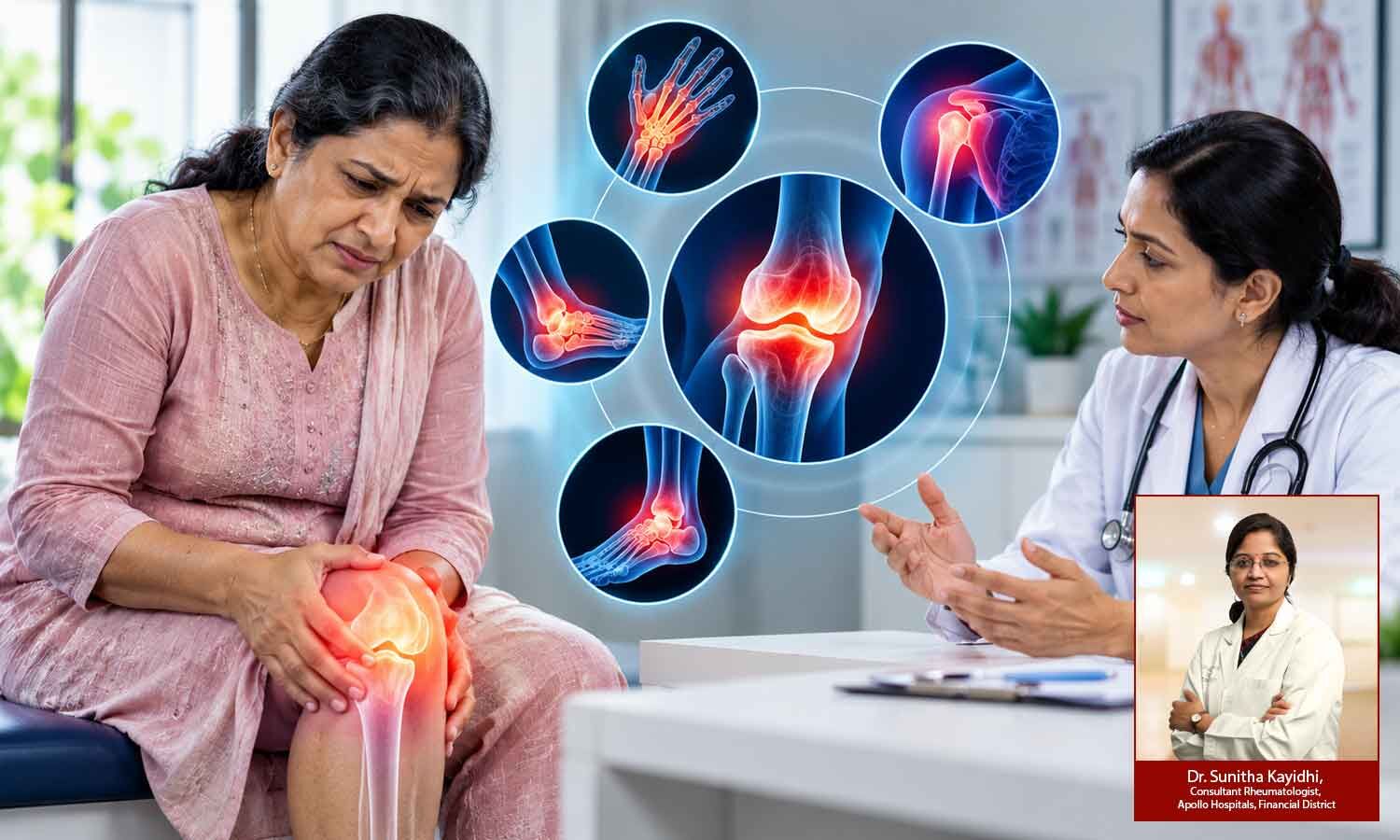
Joint pain that keeps coming back should not be ignored.
Dr. Sunitha Kayidhi says swelling, tenderness, trouble moving, or long-lasting stiffness in the morning can also be warning signs.
Arthritis is the name for more than 100 conditions that affect joints and nearby tissues.
Some kinds are linked with ageing, while others can affect younger people.
Doctors may examine a person and use blood tests or scans to find the cause.
Treatment can include medicines and exercises chosen for the person.
Walking, swimming, or cycling may help some people.
Getting medical advice early can help prevent some joint problems from getting worse.

Dr. Sunitha Kayidhi says persistent joint pain, swelling and stiffness should not be dismissed as normal ageing.
Arthritis covers more than 100 conditions, and some inflammatory forms can affect younger people.
Diagnosis may involve a medical history, physical examination, blood tests and imaging.
Treatment can include medicines, physiotherapy and exercise; joint replacement may be considered for severe damage.
Tailored low-impact exercise, healthy weight, avoiding smoking and timely medical attention can support joint health.
- Who
- Dr. Sunitha Kayidhi, Consultant Rheumatologist at Apollo Hospitals, Financial District.
- What
- She warns that persistent joint pain, swelling and stiffness may signal arthritis or another joint disorder.
- When
- Ahead of World Arthritis Day, observed on October 12.
- Where
- Apollo Hospitals, Financial District.
- Why
- Untreated inflammatory arthritis can cause progressive and irreversible joint damage.
- World Arthritis Day
- Observed on October 12.
- Conditions covered
- Arthritis includes more than 100 conditions affecting joints and surrounding tissues.
- Possible warning signs
- Persistent pain, swelling, tenderness, restricted movement and prolonged morning stiffness.
- Diagnostic methods
- Medical history and examination, with blood tests or imaging when needed.
- Treatment options
- May include medicines, physiotherapy, exercise and, for severe joint damage, joint replacement.
- Suggested activities
- Low-impact options include walking, swimming and cycling; exercise should be tailored to the individual.