

Archive · 20 Jul 2026
Scientists Solve Mystery of Sun's Missing Silver
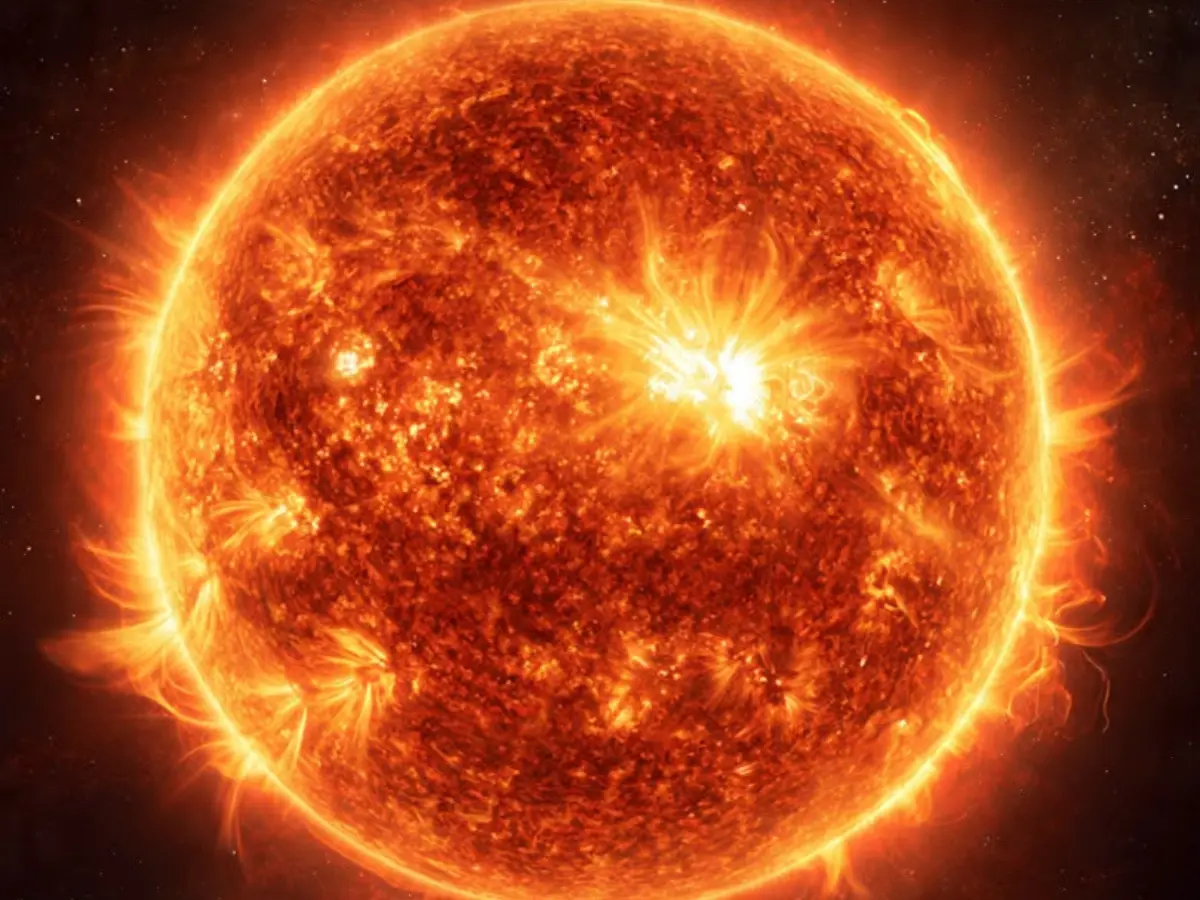
Scientists have been puzzled for decades because the Sun seemed to be missing a lot of silver compared to meteorites.
Since the Sun and meteorites formed from the same cloud of gas and dust, they should have the same amounts of heavy elements.
However, measurements showed a significant difference.
Sema Caliskan and her team at Uppsala University discovered that the silver wasn't missing at all.
The issue was with how scientists were measuring it.
They used a more realistic model of the Sun's atmosphere, which accounted for its turbulent and dynamic nature.
This new model accurately detected the silver, solving the mystery.

The Sun and meteorites formed from the same cloud of gas and dust 4.6 billion years ago.
Measurements showed the Sun had significantly less silver than meteorites.
Sema Caliskan and her team found the silver was never missing; the issue was with measurement methods.
Traditional methods used oversimplified models of the Sun's atmosphere.
Advanced modeling techniques accounted for the dynamic nature of the Sun's outer layers, accurately detecting silver.
- Who
- Sema Caliskan and her team at Uppsala University
- What
- The mystery of the Sun's missing silver
- When
- 4.6 billion years ago (formation of the solar system)
- Where
- The Sun and meteorites
- Why
- To understand the composition of the solar system and resolve discrepancies in elemental abundances
Traditional Measurement Methods
Advanced Modeling Techniques
Measurement Accuracy
Traditional Measurement Methods
Traditional methods underestimated the presence of silver in the Sun due to oversimplified atmospheric models.
Advanced Modeling Techniques
Advanced modeling techniques, accounting for the dynamic nature of the Sun's outer layers, accurately detected silver.
- Time Frame
- 4.6 billion years ago
- Key Elements
- Silver
- Researcher
- Sema Caliskan
- Institution
- Uppsala University
- Methodology
- Advanced atmospheric modeling