

Archive · 13 Sep 2025
Albert Einstein's Enduring Legacy on Modern Science
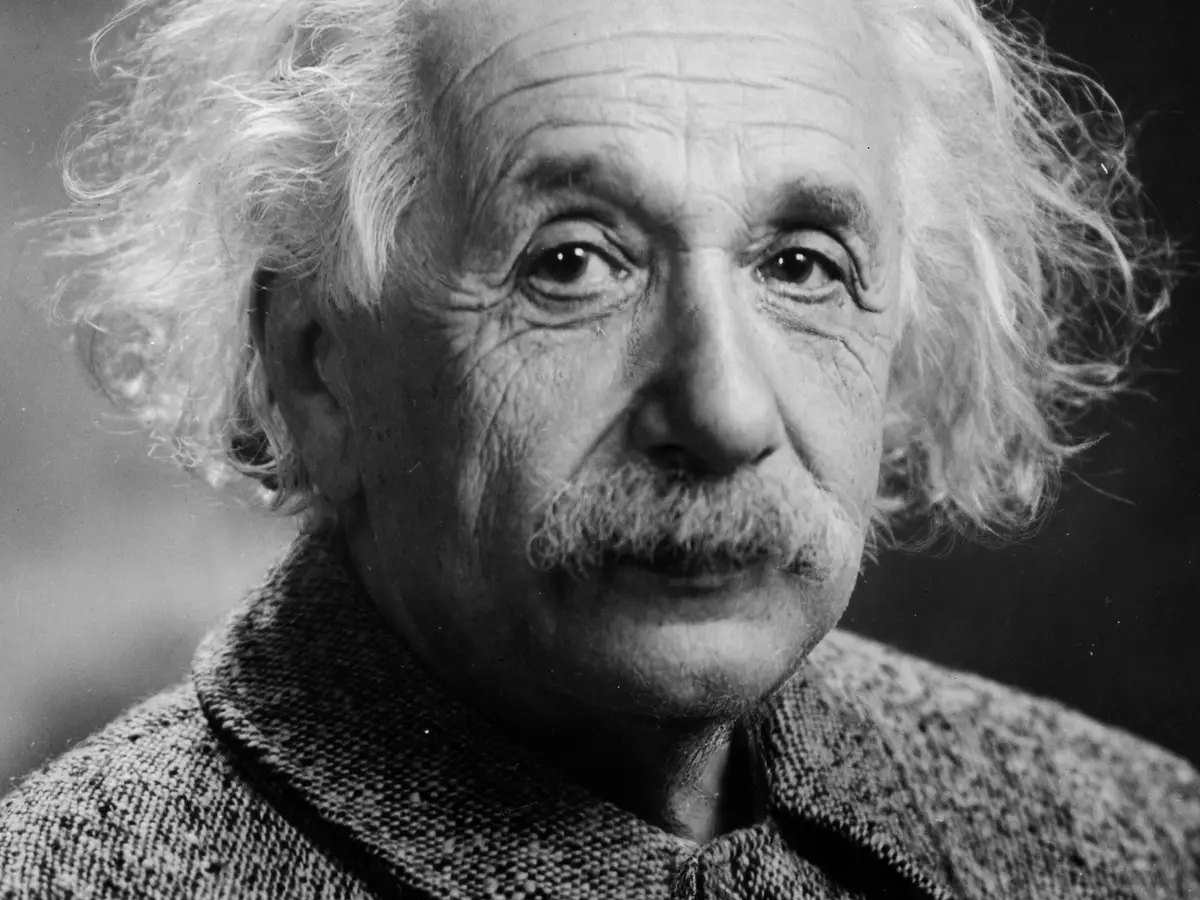
Albert Einstein was a brilliant scientist who changed how we see the world.
His ideas, like relativity and E=mc², helped us understand how energy and matter work together.
These ideas led to amazing inventions.
GPS satellites, which help us navigate, depend on Einstein's theories.
Also, medical scanners like MRI and PET use his ideas to help doctors see inside our bodies.
Even the power plants that generate electricity use his work.
He also warned about dangerous weapons and stood up for civil rights.
His insights continue to inspire scientists today, including those working on the future of computers.

Einstein's theories of relativity transformed our understanding of the universe.
His equation E=mc² led to nuclear power and advanced atomic theory.
The photoelectric effect, earned him a Nobel Prize, it is fundamental to quantum mechanics.
His theories are essential to technologies like GPS, MRI, and PET scans.
Modern cosmology and quantum computing are based on Einstein's work.
- Who
- Albert Einstein, a German-born scientist
- What
- His theories revolutionized physics and modern technology.
- When
- Early 20th century, theories still impactful today.
- Where
- His influence is worldwide, impacting various fields.
- Why
- His work shaped understanding of space, time, energy, and enabled significant technological advancements.
- Main Contribution
- Theories of relativity and photoelectric effect
- Nobel Prize
- Physics, 1921 (Photoelectric effect)
- E=mc²
- Equation demonstrating mass-energy equivalence
- Impact on Technology
- GPS, MRI, PET scans, Nuclear power
- Predictions
- Expansion of universe, black holes, gravitational waves
- Gravitational Waves Detection
- Confirmed by LIGO in 2015