

Archive · 5 Aug 2026
Bengali homes have own no-waste playbook, like Japan's Mottainai
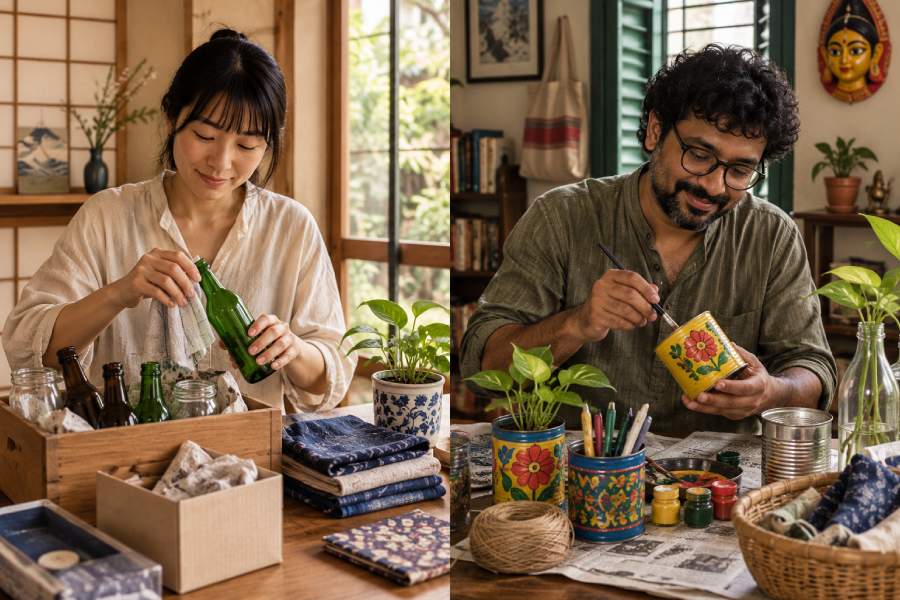
In Japan, people have a special idea called 'Mottainai'.
It means 'what a waste!'
and reminds people not to throw away things that are still good.
A famous nature helper named Wangari Maathai told the world about this idea.
It matches Reduce, Reuse, Recycle and Respect.
In Bengal, many families have been doing this for a long time, even without a fancy name.
They keep old boxes, bottles and tins to use again in new ways.
They turn leftover rice into a dish called panta bhaat and use broken cups as plant pots.
A chef says wasting less food is very important because many people do not have enough to eat.
A psychologist says these habits make people thankful, creative and careful about what they buy.
So taking care of the things we own is a smart and kind way to live.

Japan's philosophy of 'Mottainai' means 'what a waste' or 'too good to waste', expressing regret over misuse of resources, time or talent.
Environmental activist Wangari Maathai popularised the term globally by linking it to 'Reduce, Reuse, Recycle and Respect'.
Bengali households have quietly practiced similar no-waste habits for decades, such as storing needles and thread in biscuit boxes and reusing soda tin cans as flower pots.
Chef Preetam Bhadra of Annaja says reducing food waste is no longer about benefits but a necessity, citing surging food insecurity across continents.
Psychologist Rimpa Sarkar says these habits encourage gratitude, resourcefulness and mindful consumption, with younger generations rediscovering them as sustainability.
- Who
- Bengali households, including Konnagar resident Bithika Banerjee, Behala-based teacher Sanjoy Chatterjee, Chef Preetam Bhadra of Annaja and psychologist Rimpa Sarkar.
- What
- Practicing no-waste habits similar to Japan's Mottainai philosophy, such as reusing containers and bottles, repurposing broken items and zero-waste cooking.
- When
- Habits practiced for decades by Bengali elders and continuing today; no specific date is given in the article.
- Where
- Bengali homes, including in Konnagar and Behala.
- Why
- To avoid waste, save money, show gratitude for resources and take responsibility for food amid surging food insecurity.
- Mottainai meaning
- 'What a waste' or 'too good to waste'
- Philosophy
- Expressing regret over the misuse or loss of resources, time or talent
- Environmental framework
- Reduce, Reuse, Recycle and Respect
- Popularised by
- Environmental activist Wangari Maathai
- Example practices
- Biscuit boxes for needles, soda tins as flower pots, stale rice for lunch, panta bhaat, potato skin chips and bone broth
- Chef's view
- Reducing food waste is a necessity due to surging food insecurity
- Psychologist's view
- Habits encourage gratitude, resourcefulness and mindful consumption across generations