

Archive · 29 May 2025
Solar Storms Accelerate Starlink Satellite Re-Entry, Raising Concerns
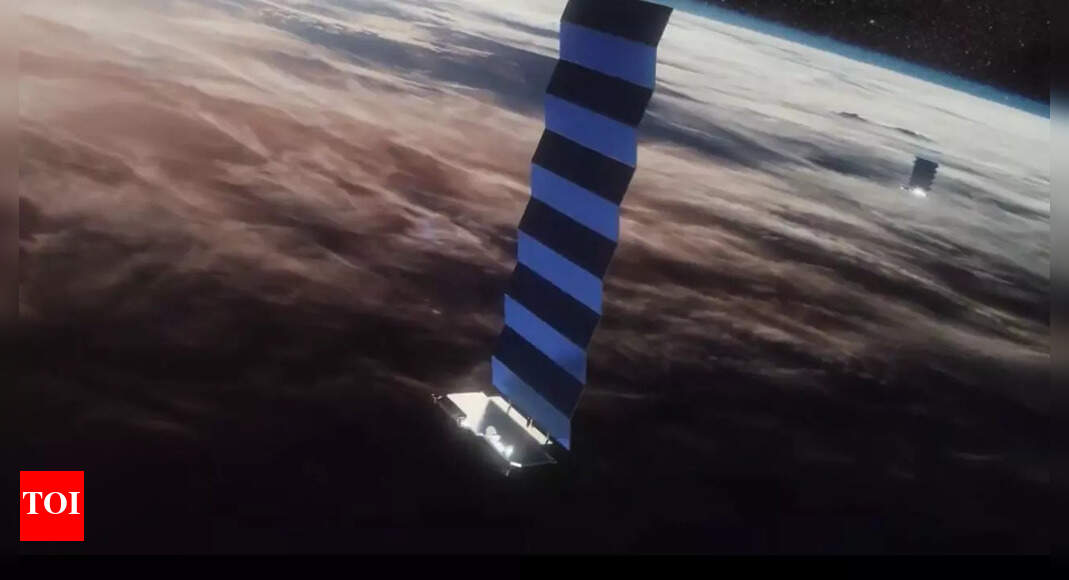
The sun goes through cycles, and during the active periods, it shoots out strong bursts of energy.
These bursts create space weather that heats up Earth's upper atmosphere.
This heat makes the air thicker, like trying to drive through a strong wind.
This is causing some of the Starlink satellites to fall back to Earth sooner than expected.
Scientists have noticed that satellites are now falling out of orbit much faster than before.
Some are worried about what happens when the satellites burn up because of possible effects on the atmosphere and the possibility of collisions with other satellites in space.
Companies are working on solutions to manage the risks.

Solar storms and geomagnetic storms are accelerating the re-entry of Starlink satellites.
Increased atmospheric drag due to solar activity is a key factor in this accelerated re-entry.
NASA has observed a rise in satellite re-entries, particularly affecting large constellations.
Environmental scientists have expressed concerns about the chemical effects of satellite combustion in the atmosphere.
Space agencies and industry are developing more robust traffic management and space weather forecasting.
- Who
- NASA, SpaceX, environmental scientists, and satellite operators
- What
- Accelerated re-entry of Starlink satellites due to increased solar activity and geomagnetic storms.
- When
- During solar maximum and geomagnetic storms
- Where
- Earth's atmosphere, LEO (Low Earth Orbit)
- Why
- Increased atmospheric drag due to solar activity; to address concerns regarding space debris and atmospheric impacts.
Environmental Concerns
Industry Response
Mitigation of Satellite Re-entry Effects
Environmental Concerns
Environmental scientists warn of long-term effects from satellite re-entry, including potential chemical effects from satellite combustion in the mesosphere and increased risk of collisions in orbit.
Industry Response
Industry players are called upon to create more resilient traffic management systems and to take space weather forecasting into account in operational planning.
- Cause of Accelerated Re-entry
- Increased solar activity during solar maximum
- Observed Re-entries
- 523 Starlink satellite re-entries (2020-2024)
- Usual orbital lifetime before atmospheric drag
- 15 days
- Shorter re-entry time observed recently
- 5 days
- Planned Starlink Satellites
- Tens of thousands more planned
- Emitted Substance From Combustion
- Aluminum oxide
- Major effect on satellites
- Increased atmospheric drag