

Archive · 20 Sep 2025
NASA's IMAP Mission Set to Explore the Solar System's Edge
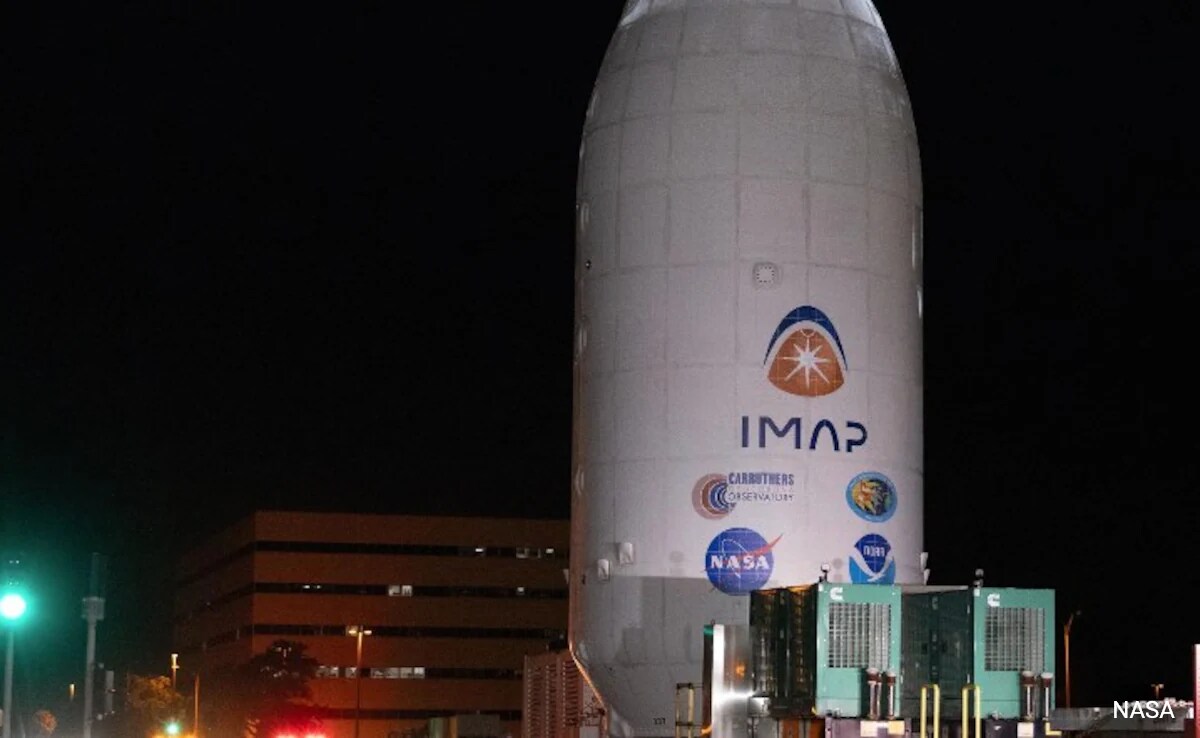
Imagine a giant bubble around our solar system protecting us from dangerous space stuff.
NASA is sending a special spacecraft called IMAP to study this bubble, called the heliosphere.
IMAP will watch how the sun's energy and particles affect the bubble and how it interacts with stuff from outside the solar system.
It will also send back warnings about solar storms, which are like giant bursts of energy from the sun.
This will help protect astronauts and satellites.
The spacecraft will be placed far from Earth, giving us a heads-up about incoming space weather.
It carries special tools to measure different things in space.
The mission aims to learn more about our solar system and keep astronauts safe.

IMAP is a NASA mission to explore the solar system's outer reaches.
The mission will study the heliosphere and its interaction with interstellar space.
IMAP will launch on September 23 and be positioned at Earth-Sun Lagrange point (L1).
The probe carries 10 instruments designed to measure aspects of space.
Data collected by IMAP will feed into a system to improve space weather prediction.
- Who
- NASA is launching the IMAP mission.
- What
- The IMAP mission will explore the heliosphere, study the solar wind and energetic particles, and provide real-time information.
- When
- IMAP is scheduled to launch on September 23.
- Where
- IMAP will be located at the first Earth-Sun Lagrange point (L1).
- Why
- To study the heliosphere's interaction with space, improve space weather prediction, and protect astronauts.
- Mission Name
- Interstellar Mapping and Acceleration Probe (IMAP)
- Launch Date
- September 23
- Launch Time
- 6:40 am EDT
- Location
- First Earth-Sun Lagrange point (L1)
- Purpose
- Study heliosphere and space weather
- Anticipated Benefit
- Improve space weather prediction and protect astronauts