8 months ago
China Revises Foreign Trade Law Amid Global Pressures
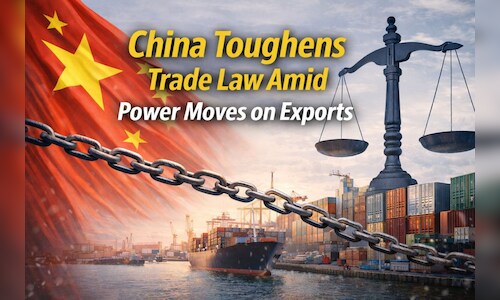
China has updated its Foreign Trade Law to better handle trade issues and open up its economy.
This law, which was first made in 1994 and last changed in 2022, will now include new rules about digital trade, green trade, and protecting ideas.
The changes will start working in 2026.
China wants to show it follows the rules and can be part of big trade groups.
The law also gives the government more power to control exports and deal with problems from other countries.
Some people think this will help China in trade disputes and make it easier for foreign companies to do business there.

China revised its Foreign Trade Law to strengthen trade capabilities and open its economy.
The law will take effect on March 1, 2026, and includes new rules on digital, green trade, and intellectual property.
The revision aims to meet standards of the Comprehensive and Progressive Agreement for Trans-Pacific Partnership.
The law empowers policymakers to counter trade restrictions and open restricted sectors to foreign firms.
China is also preparing for potential lawsuits from private firms and sharpening its legal toolkit for external challenges.
- Who
- China's top legislative body
- What
- Revised the Foreign Trade Law
- Where
- China
- When
- December 27, 2023, effective March 1, 2026
- Why
- To strengthen trade capabilities, open economy, and meet international standards
Key facts
- Legislation
- Foreign Trade Law
- Effective Date
- March 1, 2026
- Economic Size
- $19 trillion
- Trade Bloc
- Comprehensive and Progressive Agreement for Trans-Pacific Partnership
- Key Areas
- Digital trade, green trade, intellectual property
- Last Revision
- 2022
- Original Adoption
- 1994
Quotes
Western trade diplomat
A Western trade diplomat with decades of experience working with China, speaking anonymously as they were not authorized to speak with media.
“Ministries have become more concerned about private sector criticism.”
 CNBC TV 18
“China is a rule-of-law country, so the government can stop a company's shipment, but it needs a reason.”
CNBC TV 18