

Archive · 21 May 2025
Indian Scheme Workers Struggle for Labor Rights and Identity
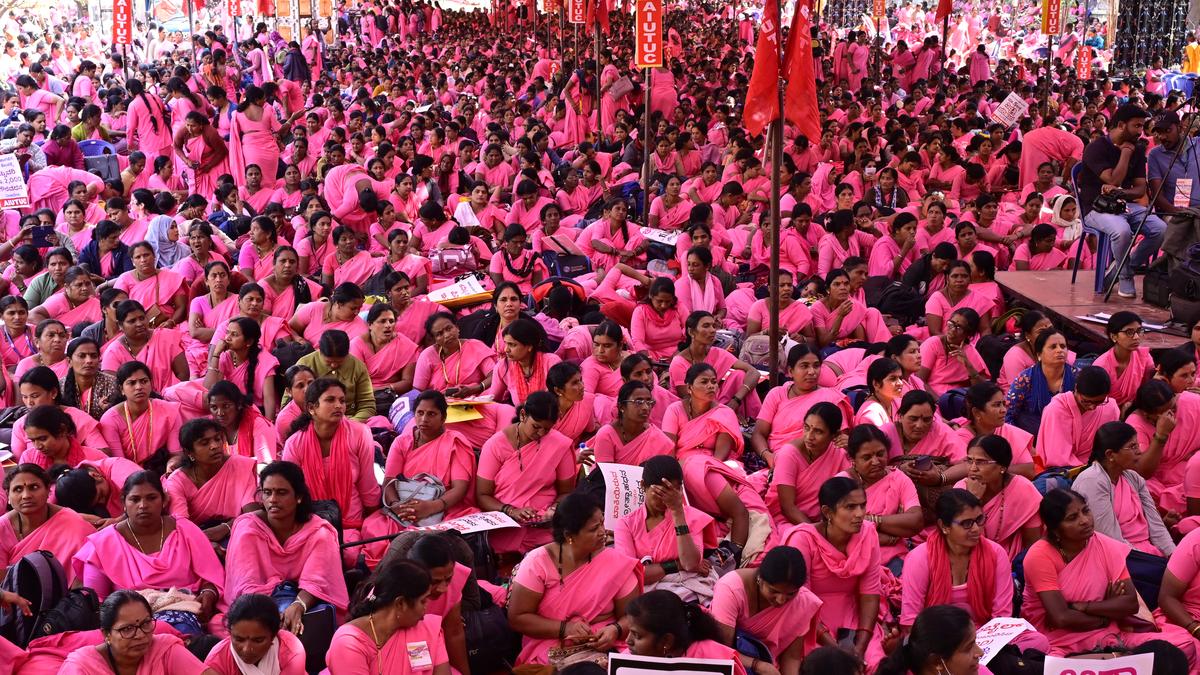
Scheme-based workers, like Anganwadi and Mid-Day-Meal workers, provide crucial social services but often lack basic worker rights.
They are fighting for recognition as 'workers,' not volunteers, which would grant them minimum wages and social security.
Despite facing challenges from the government, these workers use strikes, legal action, and dialogue to advocate for their rights.
The courts have made some favorable rulings, but the government is hesitant due to cost concerns.
These workers seek fair treatment and the same rights as other government employees for their hard work.

Scheme-based workers (SBWs) seek recognition as 'workers,' along with minimum wages and social security.
Major central trade unions have organized SBWs, leading to strikes and legal action.
The Maharashtra government used the Maharashtra Essential Services Maintenance Act to curb Anganwadi strikes.
The judiciary has provided some relief, including gratuity eligibility for Anganwadi workers.
The government cites cost implications and delays policy implementation for SBW demands.
- Who
- Scheme-based workers, including Anganwadi and Mid-Day-Meal workers.
- What
- SBWs are fighting for recognition as 'workers' and improved labor rights.
- When
- Ongoing, with events highlighted in 2022, 2024, and 2025.
- Where
- India.
- Why
- To gain worker status, minimum wages, and social security.
- Workers Involved
- Around 60 million
- Main Issues
- Worker status, minimum wages, social security
- Strategies Used
- Strikes, legal action, social dialogue
- Key Schemes
- ICDS, NRHM, Mid-day meal scheme
- Government Stance
- Concerned about cost, slow to implement changes
- Judicial Developments
- Some rulings favor workers' rights