

Archive · 12 Jan 2026
Experts Discuss India's Economic and Political Challenges
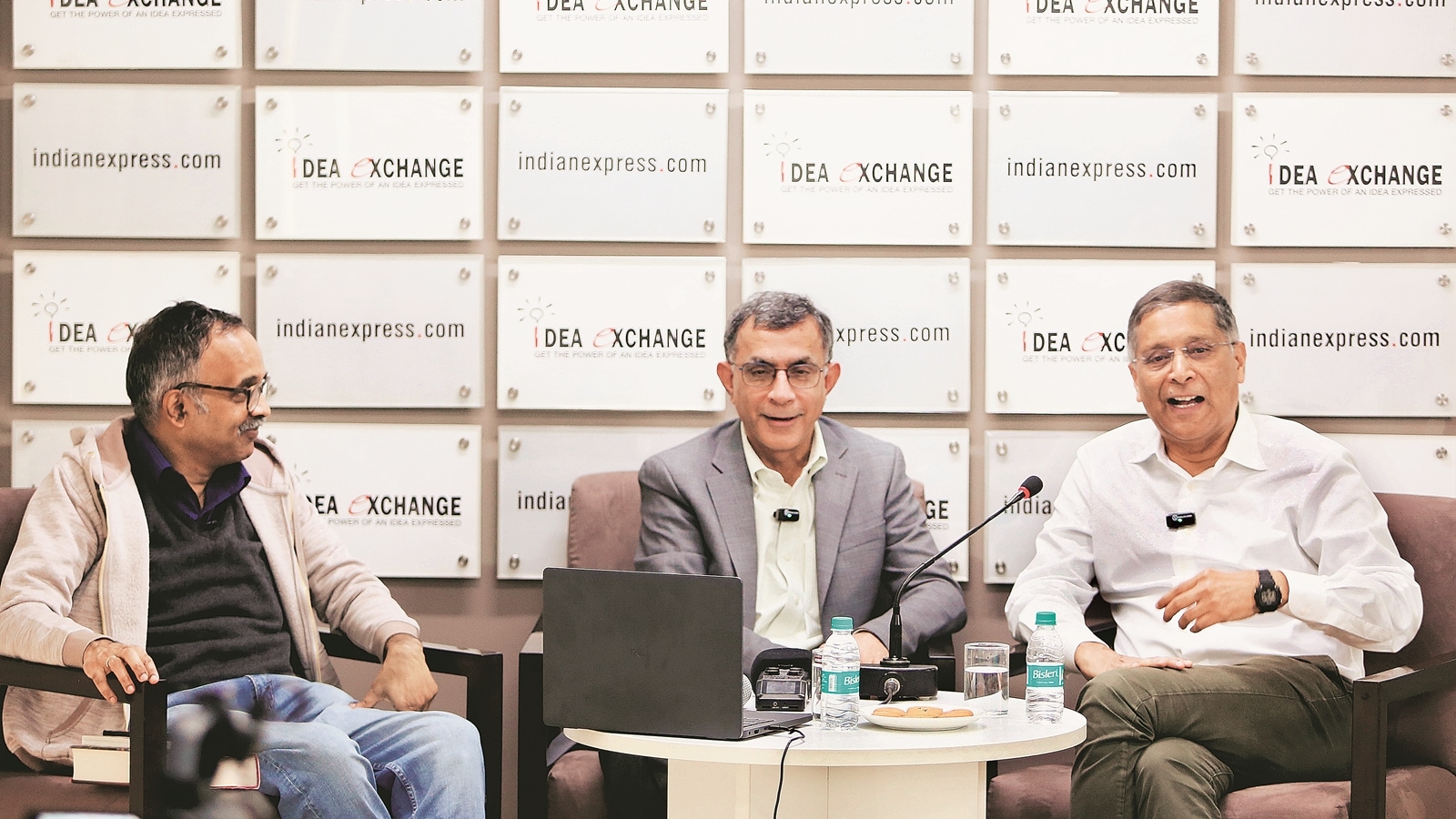
Arvind Subramanian and Devesh Kapur talked about how India has avoided big problems like hyperinflation and mass violence.
They discussed how India skipped making a lot of manufactured goods and went straight to services, which is unusual.
They also talked about how democracy in India has some problems, like too much money in elections and not enough focus on long-term plans.
They mentioned that India needs to improve its schools and universities to make sure people get good education.
They also talked about how the government is good at building things but needs to make better rules to help businesses grow.
They said that India should learn from its successes and not make the same mistakes again.

India has avoided extreme instability but faces endemic structural micro instabilities.
India's democracy has helped avoid mass violence but faces issues like money in elections and short-term focus.
India's economy skipped manufacturing and went straight to services, which is unusual.
The government is good at implementing projects but needs better rules to help private investment.
Education in India needs improvement, with a focus on quality over quantity and better teacher performance.
- Who
- Arvind Subramanian, former Chief Economic Advisor, and Devesh Kapur, Professor of South Asian Studies at Johns Hopkins University
- What
- A discussion on India's economic and political challenges, including centralisation, UBI, and higher education
- When
- The session was moderated by Harish Damodaran, National Rural Affairs and Agriculture Editor, The Indian Express
- Where
- The location is not specified in the article
- Why
- To analyze India's macro stability, micro instabilities, and the impact of various policies and political structures
- Participants
- Arvind Subramanian, Devesh Kapur, Harish Damodaran
- Event
- Session on centralisation, UBI, and higher education in India
- Key Themes
- Macro stability, micro instabilities, precocious servicification, democracy, education
- Notable Policies
- Demonetisation, GST, inflation targeting, new welfarism
- Economic Indicators
- High fiscal deficit, low R&D spending, manufacturing challenges
- Demographic Data
- Peak in school-going age children by 2015
- Educational Issues
- Weak learning outcomes, teacher absenteeism, focus on hardware over software
- Political Concerns
- Centralisation, money in elections, short-term focus, ideological vetting in universities