Archive · 27 Dec 2025
Reliance Resumes Russian Oil Purchases
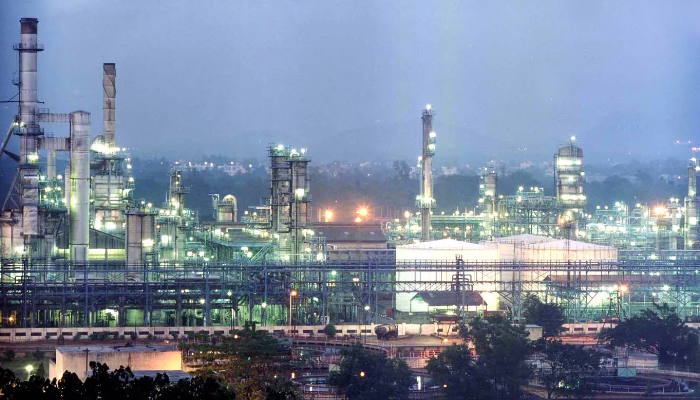
Reliance Industries, a big company in India, has started buying cheap oil from Russia again after a short pause.
They are getting this oil from companies that aren't on the sanctions list and using special ships called Aframax tankers.
The oil is being sent to their big factory in Gujarat.
The US gave them a special one-month permission to buy oil from a Russian company called Rosneft.
Meanwhile, India's exports of petroleum products have decreased by 8% compared to last year, but the amount of oil they are using in the country has slightly increased.
India is still buying a lot of oil from Russia, even though some countries have put sanctions on Russia.
The price of Russian oil has also gone down a bit.
Some countries like Australia are buying more oil from India, while others like the EU, US, and UK are buying less.

Reliance Industries has resumed buying discounted Russian crude oil via non-sanctioned suppliers after a temporary halt due to sanctions on Rosneft and Lukoil.
The oil is being sent to the Jamnagar refinery in Gujarat, which supplies the domestic market and exports petroleum products.
India's exports of petroleum products fell 7.9% year-on-year to $26.6 billion during April-November of FY26, while imports decreased by 7.7% to $14.7 billion.
In November, six refineries in India and Turkiye exported refined oil products partially made from Russian crude to the EU, USA, UK, Australia, and Canada.
India's consumption of petroleum products during the first eight months of FY26 rose by 1.4% to 160.2 million tonnes, with projected domestic demand reaching a record 252.9 million tonnes for FY26.
- Who
- Reliance Industries Limited (RIL)
- What
- Resumed buying discounted Russian crude oil and saw changes in petroleum exports and imports
- When
- After a temporary halt due to sanctions on Rosneft and Lukoil on 22nd October, with data up to November 2023
- Where
- At the Jamnagar refinery in Gujarat, India, with exports to various countries including the EU, USA, UK, Australia, and Canada
- Why
- To secure supply and mitigate the decrease in Russian oil imports, while adapting to global sanctions and market dynamics
Pro-Russian Oil Trade
Sanction Enforcement
Economic Benefits
Pro-Russian Oil Trade
Continued trade with Russia provides discounted crude oil, benefiting domestic supply and refining operations.
Sanction Enforcement
Sanctions aim to limit Russia's economic gains and pressure its government over geopolitical actions.
Geopolitical Impact
Pro-Russian Oil Trade
India maintains energy security and economic ties with Russia despite Western sanctions.
Sanction Enforcement
Western nations seek to isolate Russia economically to influence its policies and actions.
- Company
- Reliance Industries Limited (RIL)
- Refinery Location
- Jamnagar, Gujarat
- Refinery Capacity
- 660,000 barrels/day (domestic) and 700,000 barrels/day (export)
- Suppliers
- Non-sanctioned entities like RusExport
- Tankers Used
- Aframax tankers
- US Concession
- One-month concession to secure oil from Rosneft
- Last Sanctioned Purchase
- 12th November
- Expected Russian Oil Imports
- Decrease from 1.9 million barrels/day in November to 800,000 barrels/day
- Petroleum Exports (Apr-Nov FY26)
- $26.6 billion (down 8% YoY)
- Petroleum Imports (Apr-Nov FY26)
- $14.7 billion (down 7.7% YoY)
- EU Exports (Nov)
- EUR 465 million
- US Exports (Nov)
- EUR 110 million
- UK Exports (Nov)
- EUR 51 million
- Australia Exports (Nov)
- EUR 150 million (up 69% MoM)
- Canada Exports (Nov)
- EUR 31 million
- Domestic Consumption (Apr-Nov FY26)
- 160.2 million tonnes (up 1.4% YoY)
- Projected Domestic Demand (FY26)
- 252.9 million tonnes
- Russian Crude Imports (Nov)
- EUR 2.6 billion (79% of total Russian imports)
- Urals Crude Price (Nov)
- $55 per barrel (down 6% MoM)
Sources
Reliance Industries resumes buying discounted Russian oil, uses non-sanctioned entities, Aframax tankers to deliver for domestic market
Beyond Energy: The surprising shift as India rewires its Russia Trade Strategy for 2026
Petroleum products exports down 8% to $26.6 billion in April-November