Archive · 1 Nov 2025
Steaming vs. Boiling: Which Cooking Method Preserves Vegetable Nutrients Best?
Imagine vegetables have tiny helpers inside them called nutrients, like vitamins.
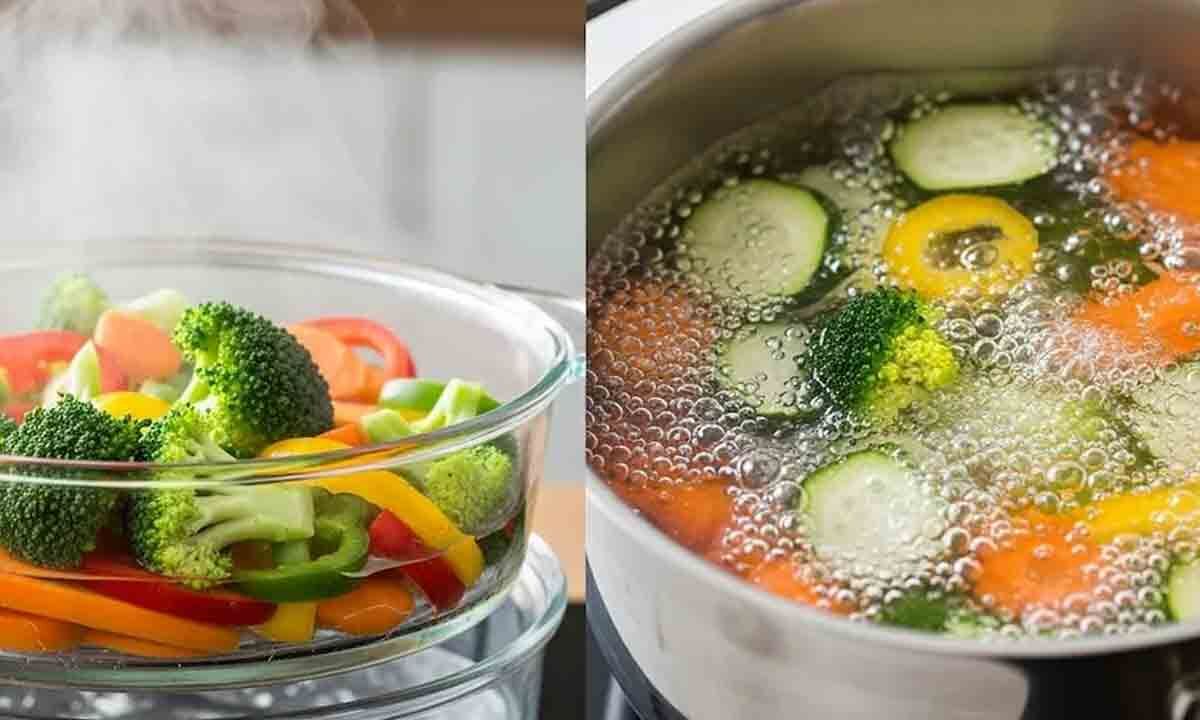
When you boil vegetables, they sit in a lot of hot water, and some of those helpers can escape into the water, which often gets thrown away.
Steaming is like giving vegetables a warm shower with hot air (steam).
They get cooked but don't soak in water, so most of the helpers stay inside.
Steaming also keeps vegetables looking bright and feeling crunchy.
Boiling makes vegetables very soft, which is good for some things like potatoes, but can make other veggies mushy.
Steaming is generally better for keeping nutrients and keeping vegetables looking and tasting fresh.

Steaming cooks vegetables with steam, preserving more water-soluble vitamins like C and B-complex.
Boiling immerses vegetables in water, leading to nutrient loss as vitamins and minerals leach into the cooking liquid.
Steamed vegetables retain their crisp texture, vibrant color, and natural sweetness.
Boiled vegetables become softer and can lose texture and color, especially delicate types like peas and beans.
Boiling is convenient and suitable for root vegetables like potatoes and beetroot, while steaming is preferred for nutrient retention and crispness.
- Who
- Home cooks
- What
- Comparing steaming and boiling methods for cooking vegetables based on nutrient retention, color, flavor, and texture.
- When
- Ongoing cooking practices
- Where
- Delhi, India
- Why
- To determine which cooking method is healthier and results in better taste and appearance.
- Steaming Method
- Cooks vegetables using steam from boiling water, with no direct contact.
- Boiling Method
- Vegetables are fully immersed in boiling water (100°C).
- Nutrient Retention (Steaming)
- High, retains up to 90% of water-soluble vitamins.
- Nutrient Retention (Boiling)
- Lower, can lose nearly half of water-soluble vitamins; advised to use cooking water.
- Texture (Steaming)
- Maintains crispness and freshness.
- Texture (Boiling)
- Softens vegetables, ideal for root vegetables but can overcook delicate ones.
- Color & Flavor (Steaming)
- Preserves vibrant color and natural sweetness.
- Color & Flavor (Boiling)
- Can lead to dullness and blandness.