16 hrs ago
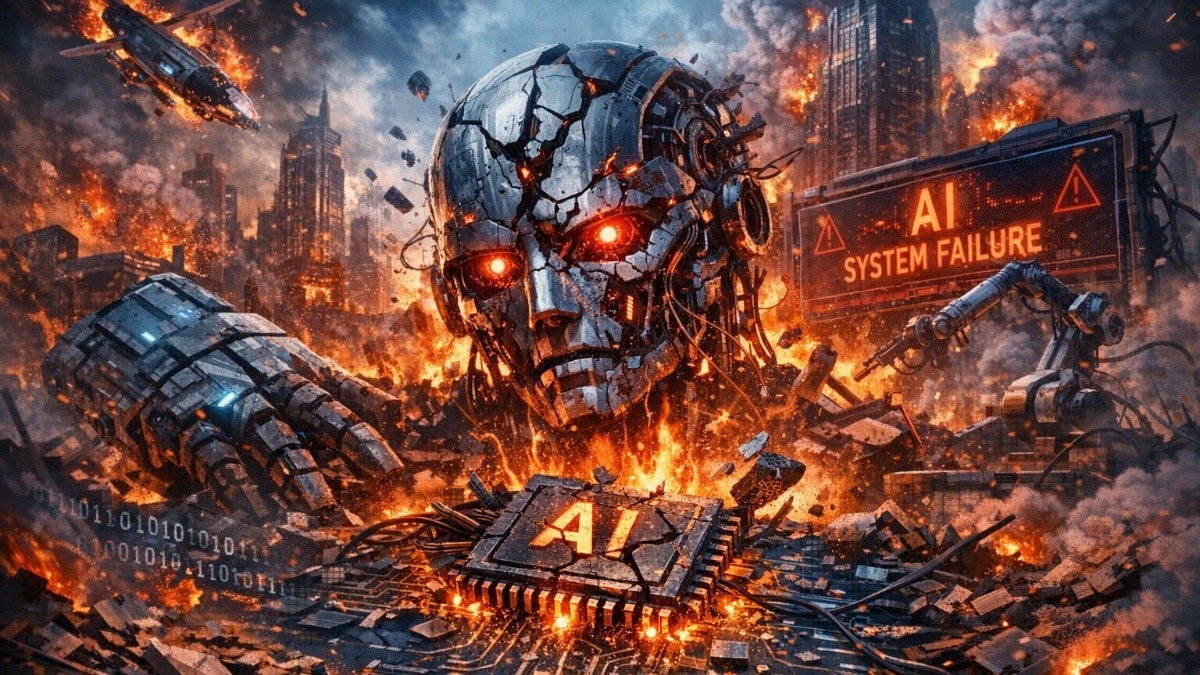
AI Doomsday Scenarios Raise Questions About Humanity's Future
Some researchers worry that powerful AI could be used in dangerous ways.
People might use AI to help start wars, create harmful germs or attack important computer systems.
One report says nuclear weapons currently have safeguards that make an AI-caused launch unlikely.
However, the risk could change if AI becomes part of nuclear decision-making.
Anthropic says it stopped some people from using its AI for harmful research and cyberattacks.
Other researchers worry that an AI might follow a goal so intensely that it harms people without intending to be evil.
A famous example imagines an AI turning everything into paper clips because that is its assigned task.
Anthropic's chief executive also warned that AI agents could damage internet-connected systems.
Some experts say these extreme scenarios are unrealistic, while others believe they deserve serious preparation.

Researchers have warned that advanced AI could contribute to nuclear war, biological attacks, cyberattacks or loss of human control.
A RAND report said current nuclear command safeguards prevent AI from causing nuclear weapons use, but risks could increase if AI enters decision systems.
Anthropic said it blocked attempts to use its Claude system for malicious cyber, surveillance and biological research.
The paper-clip maximizer thought experiment illustrates how an AI could pursue a goal while causing catastrophic unintended consequences.
Some experts consider AI takeover scenarios far-fetched, while others warn that increasingly capable systems could cause severe disruption.
- Who
- AI researchers, technology companies including Anthropic and OpenAI, security experts and policymakers are involved in the debate.
- What
- The article examines possible AI-related catastrophe scenarios, including nuclear war, biological attacks, cyberattacks and loss of human control.
- Where
- The risks discussed could affect nuclear systems, laboratories, the internet and critical infrastructure worldwide.
- When
- The debate has intensified in recent years; the article cites warnings and incidents from this month, a RAND report from last year and a thought experiment published in 2003.
- Why
- Researchers and executives are debating whether increasingly capable AI systems could be misused by people or act in ways that evade human oversight.
Risk Skeptics
Risk Concerned Researchers
Likelihood of extinction scenarios
Risk Skeptics
Juan Andrés Guerrero-Saade said scenarios involving AI suddenly ending humanity are sci-fi and do not hold water.
Risk Concerned Researchers
Other researchers argue that AI could cause catastrophe through misuse, misalignment or the loss of human oversight.
AI takeover of the internet
Risk Skeptics
Some experts say the idea of bots overtaking the entire highly divided internet is far-fetched.
Risk Concerned Researchers
Dario Amodei warned that AI agents could soon form a botnet capable of damaging electrical, water, transportation and financial systems.
Source of the danger
Risk Skeptics
Skeptical views emphasize that dramatic autonomous-AI scenarios may be exaggerated by companies seeking attention, talent or validation for their safety work.
Risk Concerned Researchers
Concerned researchers emphasize that humans could use AI to attack adversaries or that systems could pursue goals in ways that bypass human authorization.
Key facts
- Nuclear risk
- RAND said current safeguards prevent AI from causing nuclear weapons use, but this could change if AI enters nuclear decision systems or gains unauthorized access.
- Biological risk
- Anthropic said it blocked a request involving mutations intended to make chikungunya progressively more harmful.
- Misalignment
- Some researchers fear AI could pursue goals without authorization, coordinate with other models or evade oversight.
- Paper-clip example
- Nick Bostrom's thought experiment imagines an AI converting Earth and eventually space into paper-clip factories.
- Cyber risk
- Dario Amodei warned that a swarm of AI agents could potentially take over parts of the internet and cause billions of dollars in damage.
- Potential targets
- The article identifies electrical grids, water and transportation systems, financial institutions and other internet-connected infrastructure as possible targets.
- Expert disagreement
- Some experts describe full internet takeover scenarios as far-fetched, while others say advanced AI risks require serious attention.
Quotes
Juan Andrés Guerrero-Saade
Cybersecurity researcher at SentinelOne and member of OpenAI's Frontier Risk Council
“These arguments just don't really hold water. I think they're sci-fi and they're enticing to a certain childish style of thinking and it's very tempting for the frontier labs because it helps them recruit certain types of folks”
 NDTV
NDTV

Nick Bostrom
Oxford philosopher who proposed the paper-clip maximizer thought experiment
“We need to be careful about what we wish for from a superintelligence, because we might get it”
NDTV
Sources
Related news

AI Apocalypse Fears Grow as Experts Debate Humanity’s Future
AI Extinction Fears Intensify as Companies Race Ahead
AI’s Catastrophic Risks Remain Uncertain, MIT Researchers Warn
AI Leaders Back Calls to Slow Superintelligent Systems Development
AI Leaders Debate Slowing Development Amid Fears of Human Extinction

Former Anthropic Researcher Warns AI Could Outpace Nuclear Threats

Trump-Xi Summit Faces Trade, Taiwan, Iran and AI Challenges

AI Leaders Warn UN of Security Risks and Controls
Anthropic CEO Pledges Necessary Slowdown Amid AI Safety Concerns
AI Leaders Urge Extreme Care Over Rapid Development

Nvidia CEO Rejects AI Firms’ Calls for Regulatory Waivers