Archive · 2 Sep 2026
Nepal Flood Death Toll Tops 1,200 as Searches Continue

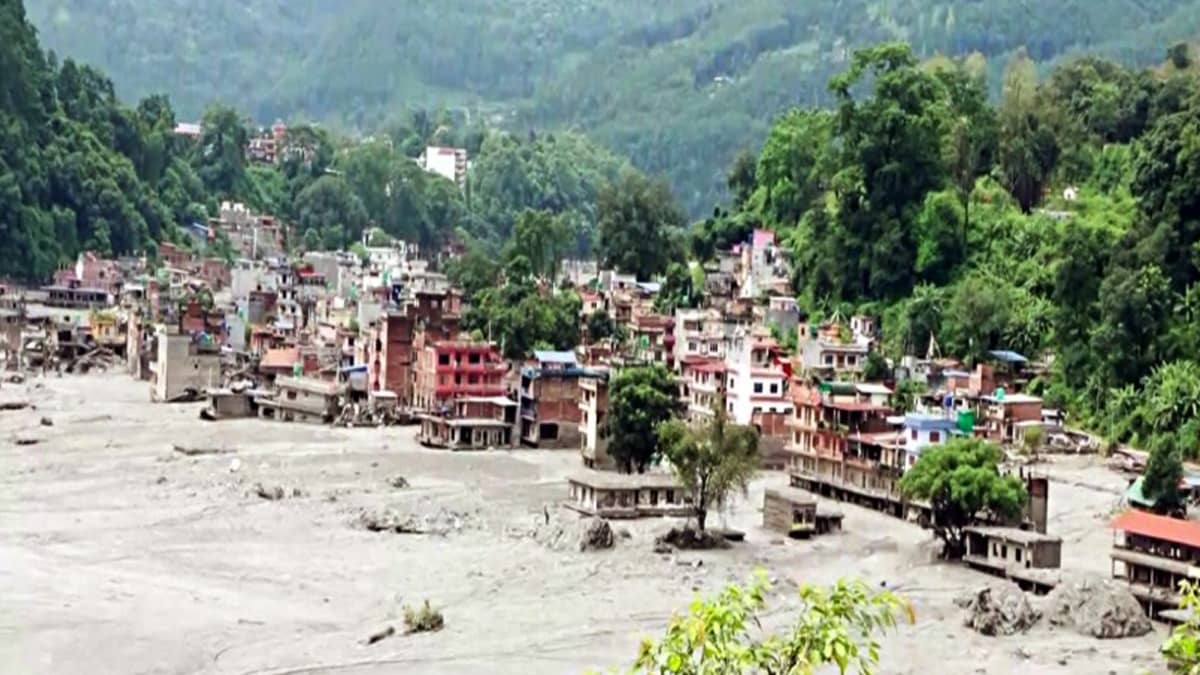
A huge flood hit Nepal on August 26 after an ice-and-rock avalanche near the Nepal-Tibet border.
It damaged towns, villages, roads, bridges and hydropower projects.
Officials have reported different death totals, all above 1,200.
Thousands of people are still missing, including foreign visitors and hydropower workers.
Rescue teams have saved nearly 12,000 people.
Some workers may be trapped inside tunnels covered by mud and rocks.
More rain is making the rescue work harder.
Prime Minister Balendra Shah says the disaster shows why countries should work together on climate-change risks.

Reports put Nepal’s death toll at 1,204, 1,222 or 1,243, reflecting differing updates as bodies are recovered.
Between about 3,900 and 4,875 people remain missing, including hundreds of foreign nationals, according to different accounts.
The August 26 floods followed an ice-rock avalanche near the Nepal-Tibet border and devastated northern and central Nepal.
Security forces have rescued 11,993 people and deployed about 21,314 personnel for search, rescue and relief operations.
Rescuers are searching debris-covered hydropower tunnels while rain, damaged roads and bridges complicate access.
- Who
- Nepalese security forces, rescue teams, missing residents and foreign nationals, hydropower workers, international experts, and Prime Minister Balendra Shah.
- What
- A catastrophic flash flood has killed more than 1,200 people, left thousands missing and triggered continuing search, identification, evacuation and relief operations.
- When
- The flood struck on August 26; the reported updates were issued on Wednesday, September 2, about a week later.
- Where
- Northern and central Nepal, especially districts including Rasuwa, Nuwakot, Dhading, Chitawan, Nawalparasi East and Nawalparasi West, along the Bhotekoshi and Trishuli rivers.
- Why
- The floods were attributed in the reports to an ice-rock avalanche near the Nepal-Tibet border; Shah said the disaster also highlighted climate-change risks in the Himalayan region.
Climate-change connection emphasized
Immediate disaster cause identified
How the disaster should be understood
Climate-change connection emphasized
Prime Minister Balendra Shah said the scale and nature of the flood showed increasing climate risks for Himalayan communities and urged Nepal to raise the climate-change link strongly with the international community.
Immediate disaster cause identified
The reports identify the immediate trigger, according to experts cited by Shah, as an ice-rock avalanche near the Nepal-Tibet border that caused the Bhotekoshi flash flood.
International responsibility
Climate-change connection emphasized
Shah said climate change has a global contribution and that managing and minimizing its effects is a shared responsibility of the international community.
Immediate disaster cause identified
The reports do not present a competing official position rejecting international responsibility, but they describe the response primarily in terms of rescue, relief and technical assistance after the avalanche-triggered flood.
Rescue prospects
Climate-change connection emphasized
Nepal’s Home Minister Sudan Gurung said the state was using all available resources to rescue people who might still be alive.
Immediate disaster cause identified
Rescue officials and hydropower representatives said debris had covered tunnel entrances, equipment was difficult to transport and continuing rain was slowing searches, making it unclear how many missing workers were trapped or swept away.
- Reported death toll
- Different reports and updates gave totals of 1,204, 1,222 and 1,243; the 1,243 figure was the highest cited.
- Bodies recovered
- One NDRRMA update reported 1,114 recovered bodies, while Nepal Police said postmortem and legal identification had been completed for 1,113.
- People missing
- Accounts reported approximately 3,900 out of contact, 4,216 missing or 4,875 missing; 583 foreigners were included in one account.
- Rescued people
- Security forces have rescued 11,993 people by helicopter and land routes.
- Rescue deployment
- About 21,314 security personnel have been mobilized.
- Hydropower impact
- Around 400 megawatts of hydropower capacity was disrupted; 947 people from hydropower projects were reported unaccounted for by IPPAN.
- Infrastructure damage
- In the Rasuwa-Nuwakot area, 40 kilometers of blacktopped roads were destroyed and another 16 kilometers partially damaged; 42 suspension bridges and 31 motorable bridges were damaged.
- International assistance
- Assistance or support was provided or pledged by countries including India, China, South Korea, the United States and others, as well as the Asian Development Bank, World Bank, European Union and United Nations.