

Archive · 17 Jun 2025
New Discovery: Galaxies Spinning Suggests Universe in Black Hole
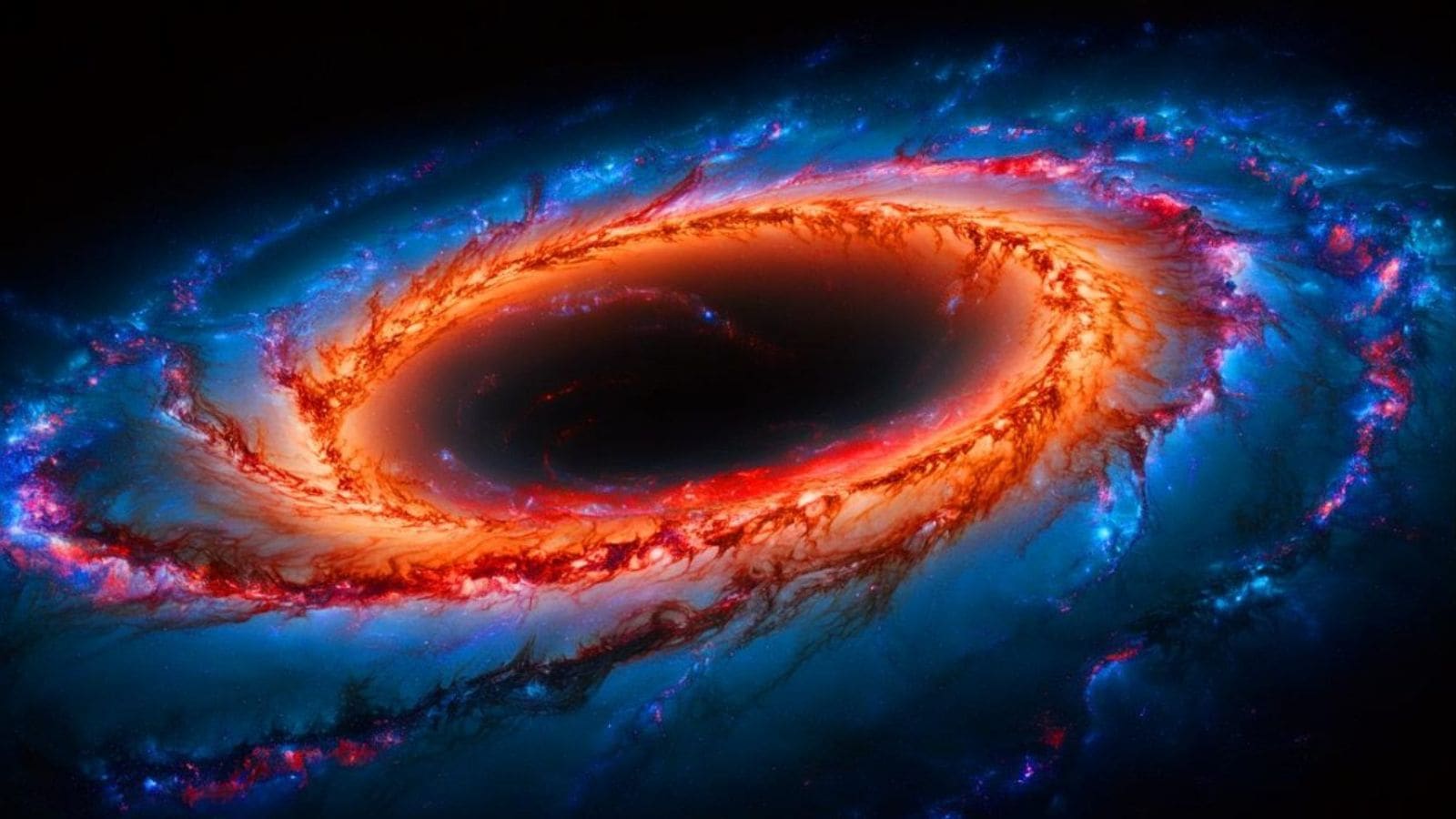
Scientists are using the James Webb Telescope to look at galaxies.
They found that many old galaxies spin the same way, which is surprising.
This could mean the universe is more organized than we thought.
It also makes scientists wonder if our universe could be inside a giant black hole!
This idea changes how we understand space and how the universe might have started.
But, it's also possible that how we're seeing the galaxies is slightly off, meaning the spin patterns may not be as consistent as they seem.

A new study using the James Webb Space Telescope observed the spin patterns of 263 old galaxies.
Approximately 60% of the observed galaxies spin clockwise, challenging prior assumptions.
This discovery may suggest more order in the universe than previously thought.
The findings support the hypothesis that the universe might be inside a black hole.
Observational bias, such as the Doppler effect, may influence the perceived galaxy spin patterns.
- Who
- Researchers at Kansas State University conducted the study.
- What
- Study reveals a possible pattern in galaxy spins, with a significant portion spinning clockwise.
- When
- Study used data from the James Webb Space Telescope on galaxies from as early as 300 million years after the Big Bang.
- Where
- Study conducted with data from the James Webb Space Telescope.
- Why
- To understand the formation and structure of the universe and challenge existing theories.
Hypothesis:
Alternative Interpretation:
Interpretation of Galaxy Spins
Hypothesis:
Suggests a pattern in galactic spin may prove the theory our universe is inside a black hole
Alternative Interpretation:
The study results are inconclusive, and could be due to observational bias such as the Doppler effect.
- Telescope
- James Webb Space Telescope
- Galaxies Studied
- 263
- Galaxy Spin Direction (Approx.)
- 60% clockwise
- Potential Implications
- Universe inside a black hole
- Possible Bias
- Doppler effect