

Archive · 11 Nov 2025
Japan PM's Taiwan Remarks Spark Diplomatic Row With China
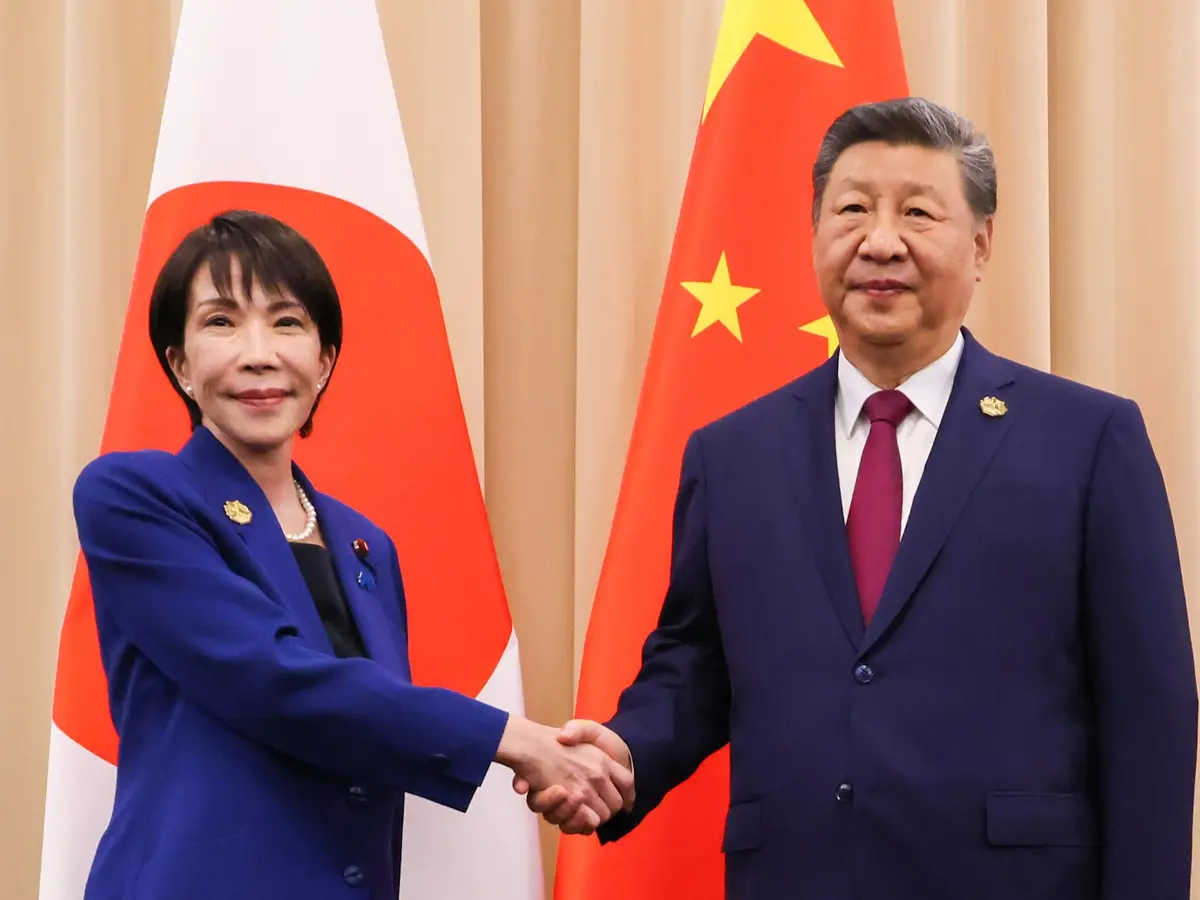
Imagine Japan and Taiwan are neighbors, and China is another big neighbor that wants to control Taiwan.
Japan's leader recently said that if China attacked Taiwan using its military, it might cause a problem so big that Japan's own army could get involved.
This is based on a law Japan has that allows its soldiers to act if its country is in serious danger.
Japan's leader explained this with a hypothetical example involving Taiwan.
Before, Japan usually stayed quiet about such possibilities.
China got very angry, calling it interference in their affairs and criticizing Japan's leader harshly.
Japan said its comments were just an example and that it respects China's position on Taiwan, but also that the diplomat's angry words were not okay.
This disagreement is important because Japan and China are big economies, and their relationship is usually trying to be stable.

Japanese Prime Minister Sanae Takaichi stated that a hypothetical Chinese attack on Taiwan could constitute a 'survival-threatening situation' for Japan, potentially allowing the activation of its Self-Defense Forces.
Her remarks, made in parliament, were based on a 2015 law that expanded the scope for military action in such scenarios.
China protested strongly, calling the comments a violation of a 1972 agreement and interference in its internal affairs, with a diplomat issuing a harsh online comment.
Japan's government stated its commitment to the 1972 agreement and hoped for peaceful resolution of Taiwan issues, while also deeming the diplomat's comments inappropriate.
The incident has heightened tensions between the two Asian economic powers, with Japan moving away from previous strategic ambiguity on the Taiwan issue.
- Who
- Japanese Prime Minister Sanae Takaichi and China
- What
- Japanese Prime Minister's remarks suggesting a Chinese attack on Taiwan could trigger a military response from Japan under specific legal conditions, leading to a diplomatic dispute.
- When
- November 5, 2023 (parliamentary remarks) and subsequent days.
- Where
- Japan and China (diplomatic exchange)
- Why
- To explain the conditions under which Japan's Self-Defense Forces could be activated, but the remarks touched upon the sensitive issue of Taiwan, prompting strong objections from China.
Japan
China
Interference in Internal Affairs
Japan
Japan's Prime Minister stated her remarks about Taiwan were hypothetical and did not constitute interference in China's internal affairs. Japan reaffirmed its commitment to the 1972 agreement recognizing the People's Republic of China.
China
China accused Japan's Prime Minister's remarks on Taiwan as a serious violation of the 1972 agreement and blatant interference in its internal affairs, demanding such comments be stopped.
Security Legislation and Taiwan Contingency
Japan
Japan's Prime Minister cited a 'survival-threatening situation' under 2015 legislation as a condition for activating its Self-Defense Forces, using a hypothetical Chinese attack on Taiwan as an example.
China
China views any discussion of Japan's potential military involvement in a Taiwan contingency as a violation of agreements and an overreach.
- Prime Minister
- Sanae Takaichi
- Date of Remarks
- November 5, 2023 (parliament session)
- Key Legislation Cited
- 2015 law on collective self-defense (allowing activation of Self-Defense Forces in 'survival-threatening situations')
- China's Stance on Taiwan
- Claims Taiwan as its own territory, not ruling out force.
- Japan-Taiwan Proximity
- Taiwan is approx. 110 km from Japanese territory.
- Chinese Diplomat's Reaction
- Commented on social media that 'the dirty head that sticks itself in must be cut off' (later deleted).
- Japan's Response to Diplomat
- Called the comments 'extremely inappropriate'.
