

Archive · 26 Jul 2025
Droughts and Migration: Research Highlights Coping Options
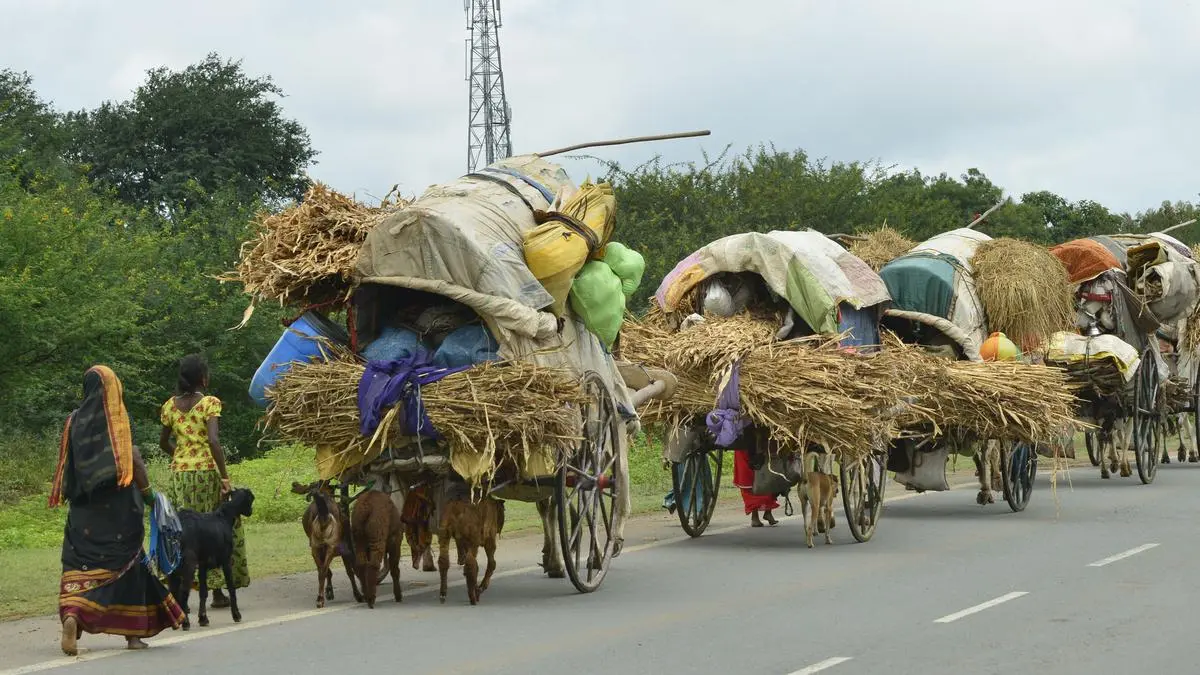
Imagine a village hit by a long dry spell.
Many people think families have to leave to find work.
But a new study looked closely and found something different.
It's not just the drought; it's whether families have help, like water for their crops or other ways to make money.
If they do, they're more likely to stay.
Groups like cooperatives also help.
The study suggests that helping families adapt, with resources, is key.
This way, they can stay in their homes, even when times are tough.

Study by IIT-Madras examines why families migrate from drought-hit villages.
Migration due to drought depends on resources such as irrigation and income.
Households with irrigation or non-farm activities are less likely to migrate.
Participation in community organizations decreases drought-related migration.
The study emphasizes strengthening local adaptive capacity as an alternative.
- Who
- Researchers at IIT-Madras and the families they studied.
- What
- Research on factors influencing migration from drought-affected villages.
- When
- The research tracked families between 2004-05 and 2011-12.
- Where
- India, specifically villages affected by droughts.
- Why
- To understand the causes of migration and find ways to help families stay.
Traditional View
Study Findings
Cause of Migration
Traditional View
Droughts directly cause migration.
Study Findings
Migration is a complex issue, not always caused by drought.
- Study Conducted By
- IIT-Madras
- Data Source
- India Human Development Survey (IHDS)
- Focus
- Drought impact on migration
- Key Finding
- Migration linked to lack of resources, not just drought
- Mitigating factors
- Irrigation, non-farm jobs, community groups
- Published On
- July 21, 2025