Archive · 9 Jan 2026
Jeju Air Crash Deaths Could Have Been Avoided Without Concrete Barrier

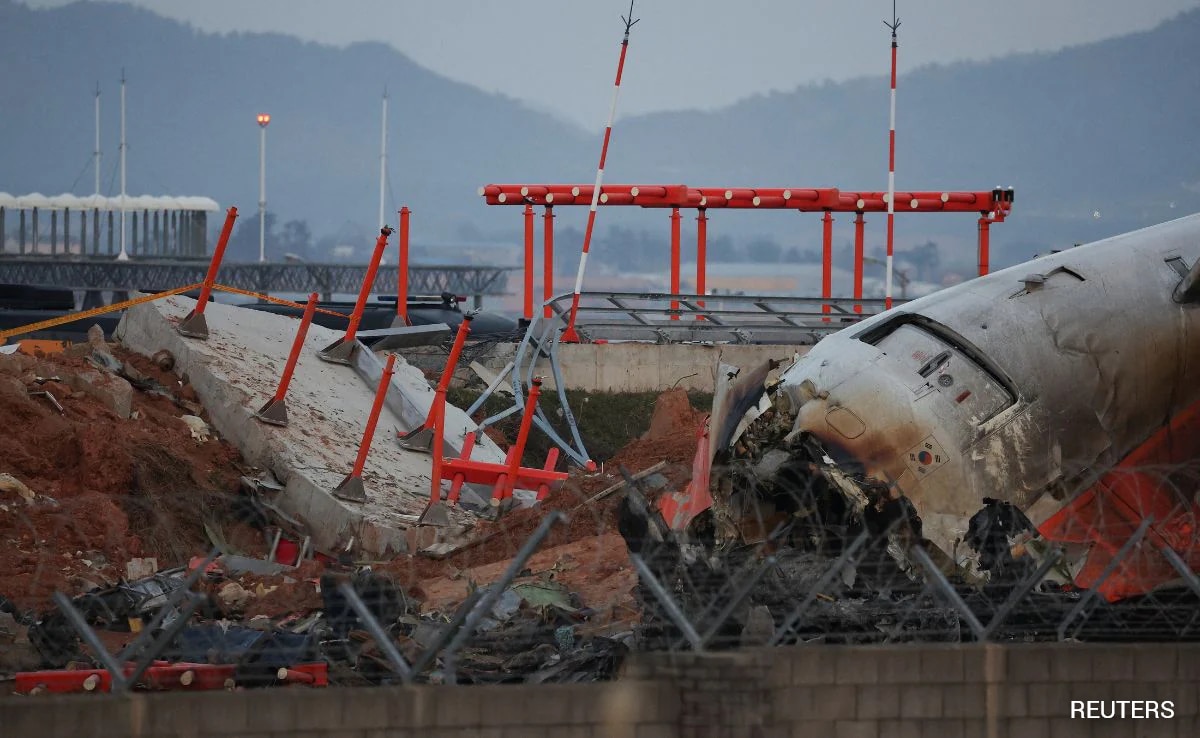
A plane from Jeju Air crashed in South Korea in December 2024.
The plane slid off the runway and hit a big concrete block, which caused many people to die.
A report says that if the concrete block wasn't there, everyone might have been okay.
The families of the people who died are very upset and want the government to take responsibility.
The airport is still closed, and the full report about the crash is not finished yet.
The families say the government knew the block was dangerous but didn't fix it.

A government-commissioned report suggests the Jeju Air crash in December 2024 might not have been deadly without a concrete barrier at the runway's end.
The simulation found the plane's initial impact was not severe enough to cause fatalities, and it could have slid 770 meters without the barrier.
The concrete structure did not meet international safety standards and was flagged as unsafe since 1999.
Families of the victims and opposition politicians are demanding accountability, accusing authorities of delaying the report and failing to address infrastructure design flaws.
The full investigative report is pending, and Muan airport remains closed until April.
- Who
- Passengers and crew of Jeju Air flight from Bangkok to Muan International Airport
- What
- Plane crash due to runway overrun and impact with a concrete barrier
- When
- December 2024
- Where
- Muan International Airport, South Korea
- Why
- Concrete barrier at the end of the runway, which did not meet international safety standards, contributed to the high death toll
- Aircraft
- Boeing 737-800
- Origin
- Bangkok
- Destination
- Muan International Airport
- Date
- December 2024
- Fatalities
- 179
- Survivors
- 2 flight attendants
- Barrier Type
- Concrete support for localiser antenna
- Simulation Findings
- Plane could have slid 770m without barrier