

2 hrs ago
US Pharma Tariff Relief Reshapes Indian Drugmaker Risks
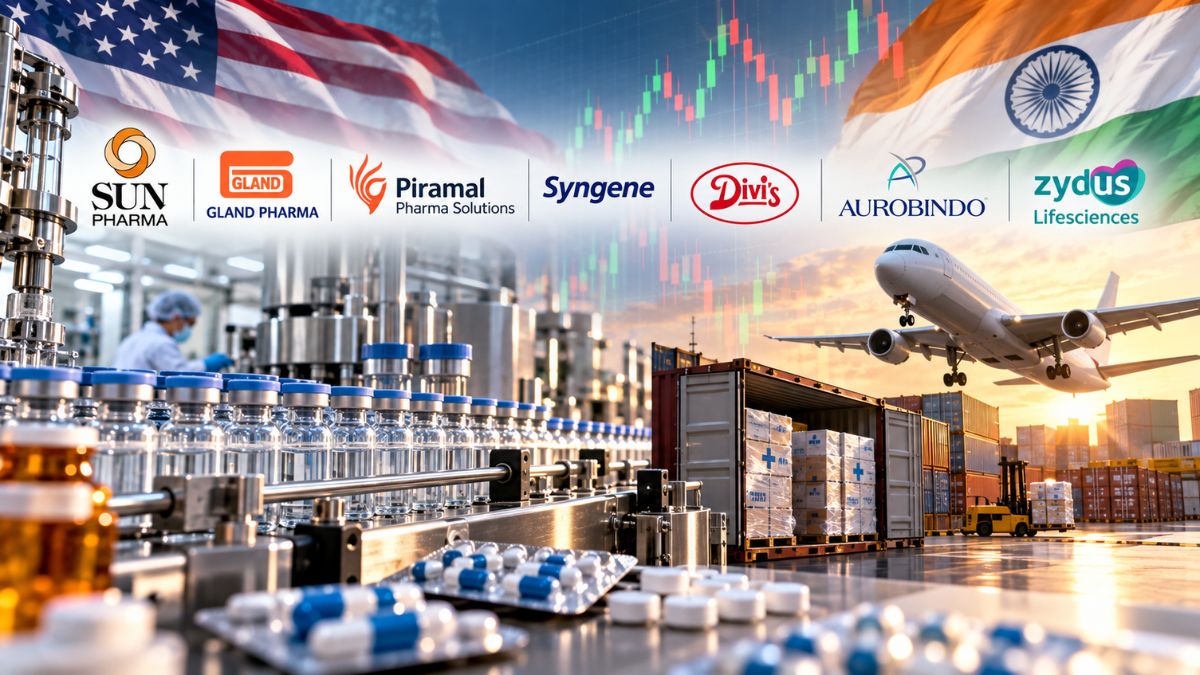
The United States has expanded a list of medicines that can enter without an extra import tax.
This is helpful for some Indian drug companies, especially those making specialised medicines or supplying large global drugmakers.
Most ordinary generic medicines are not currently expected to be significantly affected.
Sun Pharma sells patented medicines in the United States, so it has direct exposure but has secured a zero tariff rate through January 2029.
Gland Pharma sells many complex injectable medicines in the US and may gain from greater certainty.
Piramal Pharma and Divi’s Laboratories mainly benefit indirectly because their customers may continue placing orders.
Syngene could benefit later because it is building a facility for antibody-drug conjugates.
A future US review could still recommend tariffs on copy medicines, creating risk for companies with large generic businesses.

Expanded US exemptions cover rare-disease drugs, ADCs, cell and gene therapies, fertility treatments and other specialised products.
Generic medicines are expected to face negligible immediate tariff exposure, although copy medicines remain under review.
Sun Pharma benefits from a zero-rate agreement through January 2029 but remains directly exposed through patented US medicines.
Gland Pharma, Piramal Pharma, Syngene and Divi’s Laboratories gain clarity or potential benefits through injectables, ADCs and customer orders.
Aurobindo Pharma and Zydus Lifesciences have substantial US generic businesses, leaving them exposed if tariffs later cover copy medicines.
- Who
- Indian pharmaceutical companies including Sun Pharma, Gland Pharma, Piramal Pharma, Syngene International, Divi’s Laboratories, Aurobindo Pharma and Zydus Lifesciences.
- What
- An expanded US pharmaceutical tariff-exemption framework is creating different benefits and risks across Indian drugmakers.
- Where
- The impact concerns medicines and pharmaceutical services linked to the United States, including products manufactured in India and other countries.
- When
- The analysis concerns Q1 FY27 results and the latest tariff update; the US Commerce Department is due to report on copy-medicine tariffs by April 2, 2027.
- Why
- The effect varies according to whether companies sell patented medicines, generics, complex injectables, specialised products or contract-manufacturing services.
Tariff Relief and Opportunity
Continuing Trade Risk
Immediate impact on generics
Tariff Relief and Opportunity
Analysts cited say generic medicines are largely outside the current tariff impact because tariffs would work against the goal of lowering US healthcare costs.
Continuing Trade Risk
Companies with large US generic businesses remain exposed if the United States later extends tariffs to copy medicines.
Effect on contract manufacturers
Tariff Relief and Opportunity
CDMOs such as Piramal Pharma and Divi’s Laboratories gain customer-order visibility, while Indian suppliers of exempted specialised products may gain an advantage over Chinese rivals.
Continuing Trade Risk
CDMOs do not receive a direct tax saving because their customers pay any duty at the US border; their risk depends on whether customers continue placing orders.
Company-level benefit
Tariff Relief and Opportunity
Sun Pharma has secured a zero rate through January 2029, and Syngene could benefit from the inclusion of ADCs once its new facility becomes operational.
Continuing Trade Risk
Sun Pharma’s patented medicines remain directly exposed to US trade policy, while Syngene’s ADC opportunity is not expected to provide an immediate FY27 earnings benefit.
Key facts
- Exempted categories
- The expanded list includes rare-disease drugs, radioactive medicines, blood-derived products, fertility treatments, cell and gene therapies, antibody-drug conjugates, emergency medical supplies and animal medicines.
- Eligible countries
- The duty-free specialty treatment applies to products from 19 named countries; India is included and China is not.
- Sun Pharma
- US sales were $427 million in Q1 FY27, representing 26.6% of consolidated sales; its patented US medicines reportedly have a zero rate through January 2029.
- Gland Pharma
- US revenue was Rs 981 crore in Q1 FY27, or 54% of total revenue, with complex injectable products making up most of its US business.
- Piramal Pharma
- CDMO revenue rose 19% year on year to Rs 1,187 crore in Q1 FY27; the company has expanded its antibody-drug-conjugate capabilities.
- Syngene International
- Q1 FY27 revenue was Rs 736 crore, down 16% year on year; its potential ADC benefit depends on a Bengaluru facility still under construction.
- Future policy risk
- The US Commerce Department is expected to report by April 2, 2027 on whether tariffs should extend to copy medicines, potentially affecting about $10.5 billion of exports according to an analyst cited.
Quotes
Ritvik Manglik
Equity Research Analyst at InCred Equities
“The company that gains most from this particular announcement is Syngene, because antibody drug conjugates were added to the duty free list for the first time in this update, and Syngene is building a facility in Bengaluru to make exactly those.”
 financialexpress.com
“US pharma tariffs were never really an issue for the generic side of Indian pharma companies.”
financialexpress.com
Sources
Related news
India’s Drugmakers Gain US Tariff Relief on Specialty Medicines
Pharma stocks gain focus as US grants selective zero tariffs

US Sets Zero Tariff on Indian Rare-Disease Drugs
US Exempts Select Indian Specialty Drugs From 100% Tariffs
India’s Falling Stocks Hide Pharma and AI Infrastructure Winners
US Generic Drug Filings Rise Despite Looming Tariff Threat

Moneyview Soars 76% in India Debut, Tops $1 Billion Valuation

Moneyview Shares Debut 64% Above IPO Price After Strong Demand

Stocks in Focus as GIFT Nifty Falls, IPOs Debut
