

Archive · 6 Jun 2025
Clam Harvesting Industry in Kerala Faces Crisis
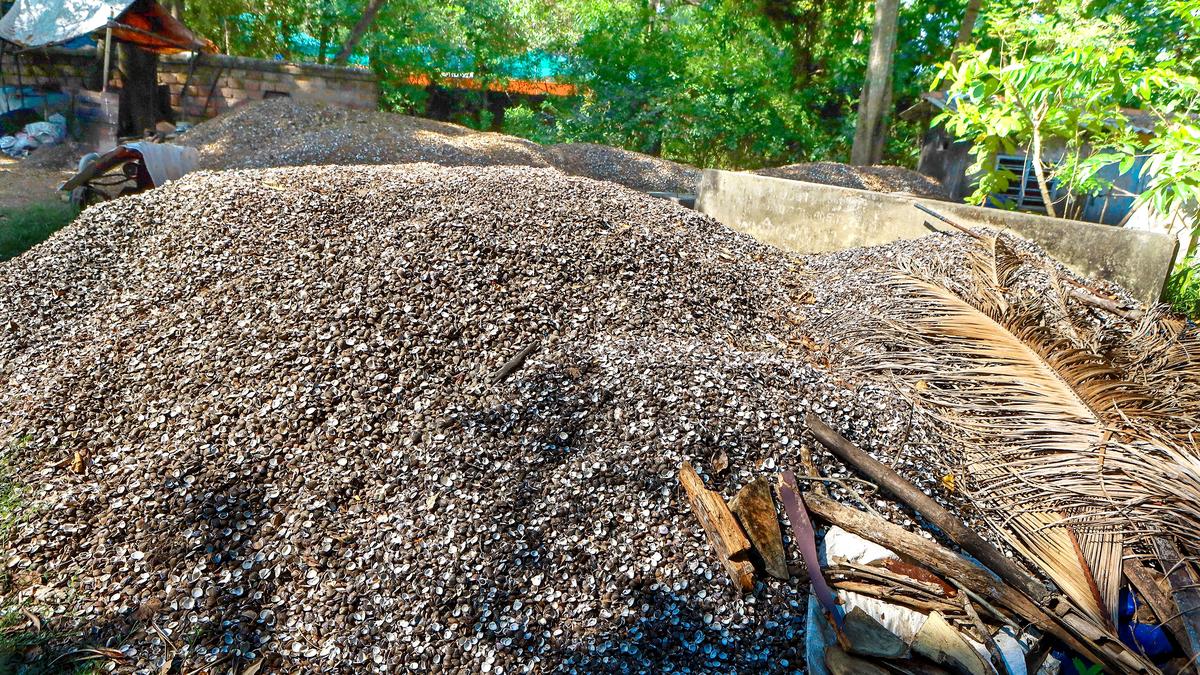
In Kerala, people who collect clams from a big lake are having a hard time.
There are fewer clams because some people are taking the baby clams illegally, and the water is getting polluted.
This harms the clams' homes and makes it hard for them to grow.
Also, the business of selling the shells is suffering because there are cheaper alternatives.
The government and other groups are trying to help by protecting the clams and finding new ways to use the shells, but it's a tough situation for the people who depend on the lake for their living.
The fisheries department has stepped up night patrols.

Clam harvesters in Kerala's Vembanad Lake are struggling due to declining clam populations.
Illegal harvesting of juvenile clams is a major problem, especially north of the Thanneermukkom bund.
The clam population plummeted in recent years but saw a seven-fold increase after the release of juveniles.
Anthropogenic activities, including E. coli contamination and rising temperatures, are impacting the ecosystem.
The lime shell industry is also in decline, as cheaper substitutes have reduced the demand for clam shells.
- Who
- Clam harvesters, the Fisheries Department, scientists, and lime shell cooperatives are affected.
- What
- The clam harvesting industry in Vembanad Lake, Kerala is facing a crisis due to a decline in clam population, illegal harvesting, and environmental factors.
- When
- The clam population has been declining in recent years, with a seven-fold increase in 2022 after the release of juveniles in 2020.
- Where
- Vembanad Lake, Kerala.
- Why
- Declining clam populations, illegal harvesting, and environmental factors are jeopardizing the industry.
Clam Harvesters
Fisheries Department/Experts
Impact of illegal Harvesting
Clam Harvesters
Harvesters face declining clam populations and illegal harvesting practices. The decline threatens their livelihoods.
Fisheries Department/Experts
Fisheries department has stepped up night patrolling, with support from the local fishing communities.
Market Challenges
Clam Harvesters
The lime shell industry struggles due to the decline in demand for shells due to cheaper alternatives.
Fisheries Department/Experts
Finding alternative markets and value additions for clam shells and meat is crucial.
- People dependent
- Approximately 6,000 people depend on clam harvesting in the Vembanad basin.
- Clam production in 2020
- Clam production plummeted to 39,243 tonnes in 2020.
- Clam production in 2022
- Clam production in 2022 was 52,582 tonnes.
- Clam production in 2024
- Clam production in 2024 was 45,000 tonnes.
- Harvester's Earnings
- Clam harvesters earn around ₹1,500 a day.
- E. coli contamination
- E. coli contamination levels are around 30,000 cells per milliliter, far exceeding the permissible limit of 5.
- Shell use
- Clam shells are used in poultry feed.