

Archive · 9 Nov 2025
Trump's Second Term: Shift from Intervention to Economic Focus
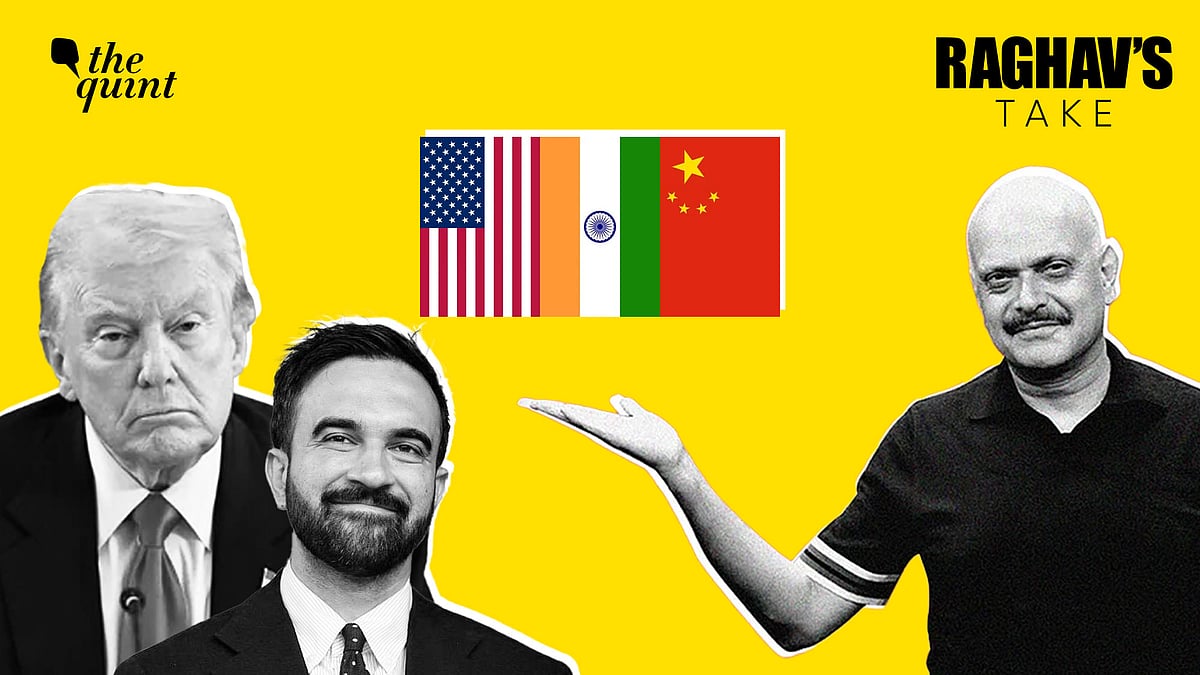
Imagine America used to try and fix problems in other countries by telling them how to run things, like being a bossy older sibling.
But President Trump decided this wasn't working well and was costing too much money.
So, in his second term, he wants America to focus more on making money and deals, like business partners, instead of getting involved in other countries' fights.
He wants to make America strong economically by focusing on trade and not spending money on things he thinks are unnecessary.
This new approach means America might not jump into every global dispute.
It's changing how America deals with countries like China and Russia, focusing more on trade agreements than arguments.
However, this shift is making India a bit worried because its neighbors, China and Pakistan, are getting closer, and America seems to be leaning towards Pakistan.
India is now trying to handle these new global friendships and rivalries on its own terms, making sure its own interests are protected.

Donald Trump's second term US policy prioritizes economic strength over foreign intervention and nation-building.
The US is shifting towards economic cooperation and regional partnerships, as exemplified by a large investment from Saudi Arabia.
Trump aims to correct trade imbalances and cut spending on non-essential projects like DEI and migration.
A significant economic pact was reached between the US and China, easing trade restrictions and tariffs.
India faces heightened national security concerns due to the deepening Sino-Pak strategic alliance and perceived US leaning towards Pakistan.
- Who
- US President Donald Trump, US Director of National Intelligence Tulsi Gabbard, leaders of Saudi Arabia, China, Russia, Ukraine, and Pakistan, India's Defence Minister Rajnath Singh.
- What
- The article outlines Donald Trump's shift in US foreign policy towards economic focus, away from interventionism, impacting global geopolitics, alliances, and US relations with countries like China, Russia, and Pakistan, with significant implications for India.
- When
- Trump's second term, with specific mentions of May 2025, November 1, October 30, and April 22, 2025.
- Where
- Middle East (Saudi Arabia, Israel-Hamas conflict, Iran), Ukraine, South Korea, China, Russia, India, Pakistan, Afghanistan, Indo-Pacific region.
- Why
- Trump's strategy change is driven by a belief that interventionism is costly and ineffective, preferring economic engagement and local solutions to achieve US interests and global stability.
Traditional Interventionism
Trump's Economic First Approach
US Foreign Policy Strategy
Traditional Interventionism
Focus on 'regime change' and 'nation building' by imposing the American system of governance.
Trump's Economic First Approach
Abandonment of interventionism in favor of economic cooperation, regional partnerships, and selective use of force; emphasis on achieving goals 'the local way'.
Role of Military Intervention
Traditional Interventionism
Past interventions in Afghanistan and Iraq in the name of 'war on terror' were undertaken with the belief of promoting American values.
Trump's Economic First Approach
Criticism of 'failed' interventions in Afghanistan and Iraq, seen as wasteful and counterproductive, creating more enemies than friends.
International Alliances
Traditional Interventionism
Maintain strong traditional alliances and international commitments.
Trump's Economic First Approach
Reduced enthusiasm for NATO, focus on bilateral deals, and a willingness to question established alliances for perceived economic benefit.
- Trump's Policy Shift
- Moving away from 'regime change' and 'nation building' towards economic cooperation and regional partnerships.
- Middle East Vision
- Defined by 'commerce not chaos', promoting local solutions and embracing national traditions.
- Saudi Investment
- Announcement of over 600 billion dollars investment in the U.S. during Trump's visit.
- US Economic Focus
- Correcting adverse trade balance, cutting DEI projects, halting migration under the 'America First' doctrine.
- US-China Economic Pact
- Resulted in a large economic agreement with China, including export/import of rare earth minerals, soybeans, and semiconductors; reduced tariffs.
- India's Strategic Concerns
- Concerns over China-Pakistan military alliance and its implications, particularly after China militarily sided with Pakistan.
- Indo-Pacific Stance
- India's reiteration for the region to be 'free of coercion' and subject to a 'rules-based international order'.
