

Archive · 29 Sep 2025
Early Humans Used Ochre for Sun Protection During Magnetic Shift
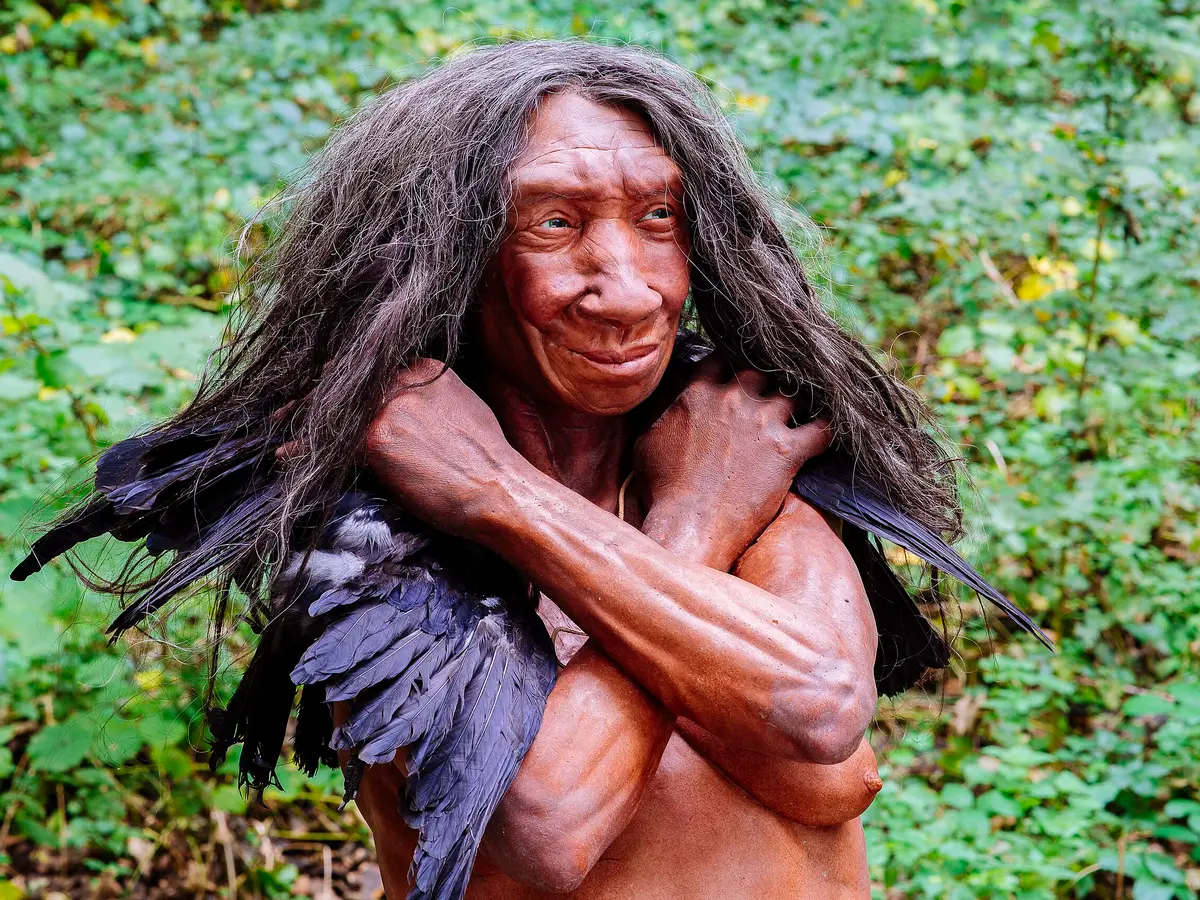
Imagine the Earth's shield against the sun got weaker.
This happened a long time ago, letting in more harmful rays.
Early humans found smart ways to protect themselves.
They used red stuff called ochre like sunscreen.
They also made clothes that fit their bodies and lived in shelters.
These clever ideas helped them survive, unlike the Neanderthals who didn't have the same advantages.
Scientists think these early protections are why humans thrived.
This event also helps us understand how the Earth's environment can affect our health.

Earth's magnetic field weakened significantly around 41,000 years ago.
This weakening led to increased UV radiation exposure.
Early humans used ochre as a natural sunscreen.
They also developed tailored clothing and utilized shelters.
These adaptations may explain Homo sapiens' survival advantage over Neanderthals.
- Who
- Early Homo sapiens and Neanderthals
- What
- Developed strategies to cope with increased UV radiation due to weakened magnetic field.
- When
- Around 41,000 years ago, during the Laschamps excursion.
- Where
- Europe and northern Africa
- Why
- To survive the increased UV exposure caused by a weakened magnetic field.
- Event
- Laschamps excursion (magnetic field weakened)
- Time Period
- Around 41,000 years ago
- Key Adaptation
- Use of ochre as sunscreen
- Other Adaptations
- Tailored clothing, use of shelters
- Group Studied
- Early Homo sapiens
- Risk Faced
- Increased UV radiation exposure