

Archive · 29 Jul 2026
SEBI Model Proposed for Food Safety
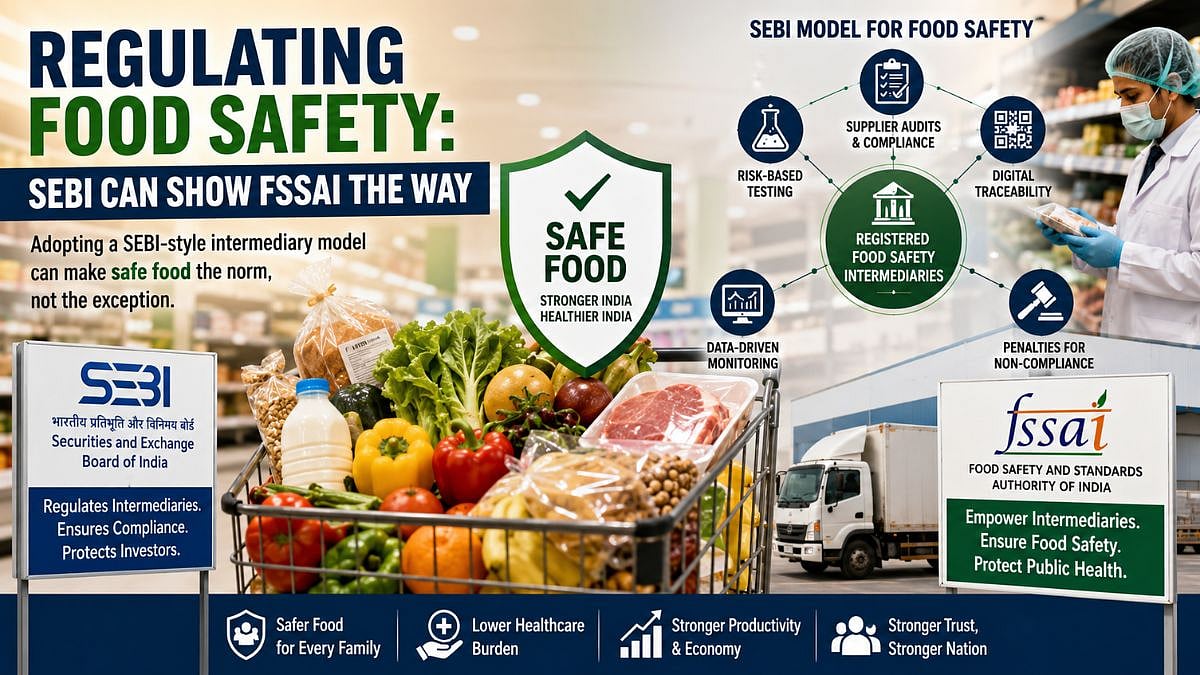
India is facing a big problem with food safety.
Many foods are contaminated with harmful chemicals and dyes, which can make people sick.
The current system relies on inspections, but this is not enough.
A retired IRS officer suggests using a system similar to SEBI, which regulates the stock market.
This system would make big food companies responsible for ensuring the safety of the food they sell.
They would have to test their products and keep records.
This would change the way food is produced and sold, making it safer for everyone.
The government would also help smaller vendors to follow the rules.
This way, people can trust that the food they eat is safe.

Food adulteration in India has become a systemic hazard, affecting public health.
Current enforcement relies on inspections, which are not enough to solve the problem.
A SEBI-inspired model proposes making large food businesses responsible for food safety.
This model would use technology for traceability and monitoring, changing economic incentives.
A phased approach would support smaller vendors while ensuring strict compliance for larger businesses.
- Who
- The Food Safety and Standards Authority of India (FSSAI) and large food businesses.
- What
- Proposal to adopt a SEBI-inspired regulatory framework for food safety.
- When
- The proposal is presented in the context of ongoing food safety issues.
- Where
- India.
- Why
- To ensure food safety, reduce adulteration, and restore public confidence in the food supply chain.
Current Food Safety Regulations
Proposed SEBI-Inspired Model
Regulatory Approach
Current Food Safety Regulations
Relies on inspections and enforcement drives by authorities like the Maharashtra FDA.
Proposed SEBI-Inspired Model
Proposes a network of registered intermediaries to ensure compliance throughout the food supply chain.
Economic Incentives
Current Food Safety Regulations
Dishonest suppliers gamble on not being inspected, leading to systemic adulteration.
Proposed SEBI-Inspired Model
Intermediaries face penalties for sourcing from non-compliant suppliers, changing the economics of adulteration.
Technology and Traceability
Current Food Safety Regulations
Lacks integrated systems for tracking and monitoring food safety.
Proposed SEBI-Inspired Model
Uses QR code traceability, integrated testing databases, and data-driven risk profiling to strengthen the ecosystem.
- Primary Necessity
- Food is essential for human survival and health.
- Systemic Crisis
- Food adulteration has become a systemic hazard in India.
- Information Asymmetry
- Consumers cannot detect contamination visually, bearing the risk.
- Health Consequences
- Adulterants contribute to organ damage, neurological disorders, and cancer.
- Current Enforcement
- Maharashtra FDA's enforcement drive has seized contaminated products and prosecuted offenders.
- SEBI Model
- SEBI regulates intermediaries to ensure compliance in the financial sector.
- Proposed Framework
- FSSAI should designate large food businesses as Registered Food Safety Intermediaries.
- Phased Approach
- Strict intermediary accountability for organised businesses, with support for smaller vendors.