

Archive · 5 Aug 2026
Overheated Baby Rooms Can Make Breastfeeding Harder, Doctors Warn
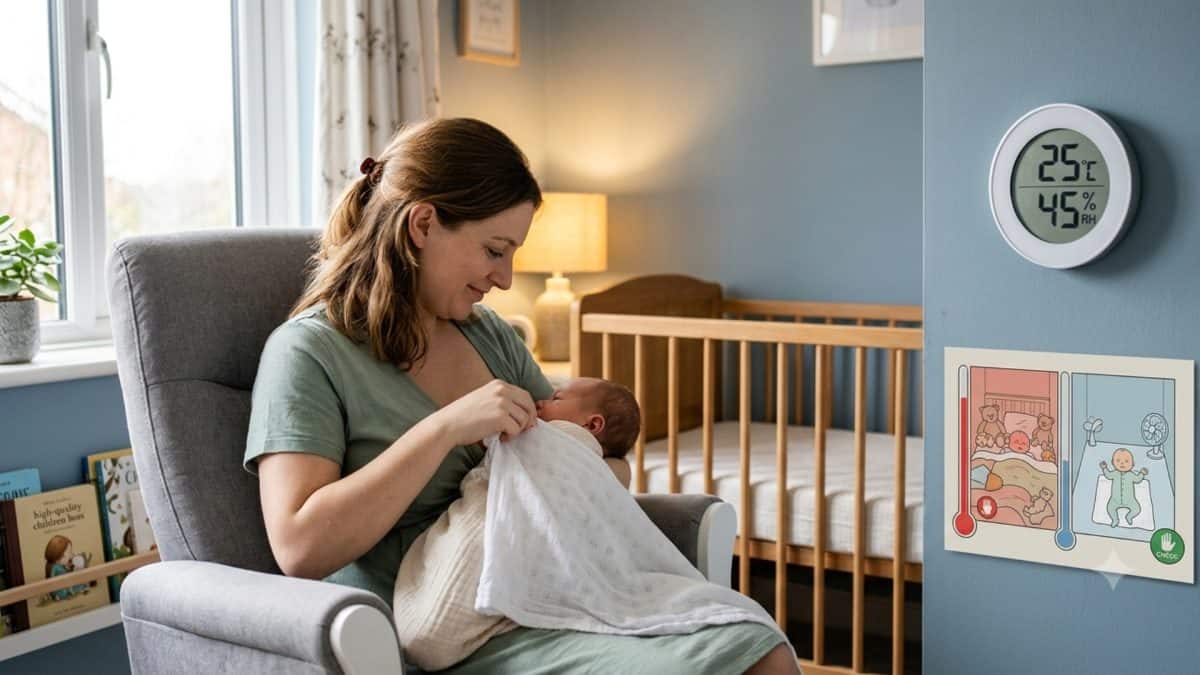
Babies need to be kept warm, but too much heat can cause problems.
When a baby's room is too hot, the baby becomes very sleepy.
A very sleepy baby is hard to wake up for feeding.
Newborns normally need to eat eight to twelve times every day.
If a baby sleeps too long without eating, it can get dehydrated and fail to gain weight properly.
A mother's body also makes milk when the baby feeds often, so less feeding can mean less milk.
Very hot babies may even have trouble latching on to the breast.
Doctors say to keep the room around 24 to 26 degrees Celsius and dress the baby in just one more light layer than an adult wears.
You can check if a baby is too warm by feeling the chest or the back of the neck.
Small changes to room temperature and clothing can help babies stay alert and feed better.

Paediatricians warn that overheating a newborn's room can make babies excessively sleepy and harder to wake for feeds.
Newborns need to feed eight to twelve times a day, and sleeping through hunger cues risks poor weight gain and dehydration.
Reduced feeding frequency can lower a mother's milk supply because breast milk production follows the principle of supply and demand.
Doctors say traditional practices of heavy layers, caps, socks and heated rooms need rethinking in today's hotter, more humid climate.
Experts recommend keeping rooms around 24–26°C and dressing babies in just one extra light layer than a comfortably dressed adult.
- Who
- Paediatricians including Dr Ankur Rajvanshi, Dr Pawan Kumar and Dr Khushboo Saxena, addressing parents of newborns in India
- What
- Warned that keeping a baby's room too warm can make newborns drowsy and interfere with breastfeeding, feeding frequency and milk supply
- When
- During World Breastfeeding Week, with the first six to eight weeks after birth highlighted as most critical
- Where
- India
- Why
- Overheating makes babies excessively sleepy so they feed less often than the recommended eight to twelve times a day, risking dehydration, poor weight gain and reduced milk supply
Traditional Practices
Modern Medical Advice
How warm to keep a baby's room
Traditional Practices
Older generations believe newborns should always be kept very warm, with heated rooms considered essential to protect them from illness.
Modern Medical Advice
Doctors say overheating can make babies drowsy, reduce feeding and raise the risk of SIDS, so rooms should be kept comfortably cool at 24–26°C.
Dressing newborns indoors
Traditional Practices
Layers of clothing, blankets, caps and socks are traditionally seen as necessary for a newborn's wellbeing.
Modern Medical Advice
Paediatricians advise dressing babies in just one extra light layer than an adult and avoiding piles of blankets, caps and socks indoors unless medically advised.
- Recommended room temperature
- 24–26°C, comfortably cool
- Newborn feeding frequency
- 8–12 times per day
- Clothing guidance
- One extra light layer more than a comfortably dressed adult
- Health risks of overheating
- Dehydration, poor weight gain, feeding refusal, fever and increased SIDS risk
- Signs a baby is too warm
- Excessive sleepiness, sweating or damp hair, flushed skin, rapid breathing, irritability while feeding
- Context
- World Breastfeeding Week
- Core medical principle
- Milk production depends on supply and demand; an awake baby feeds better than a drowsy one