0 months ago
Supreme Court Acquits Odisha Murder Convict After 22 Years
A man named Arjun Jani was sent to prison in India for a very long time, almost 22 years.
The police said he hurt three women in a place called Koraput.
But the evidence against him was very weak.
There was only one person who said they saw him do it, and that person kept telling different stories that did not match.
Some people said the police beat the man to make him say he did it, which is not allowed.
A lower court said he was guilty, so he went to jail.
When he tried to ask a higher court for help, his request was dismissed because it was late.
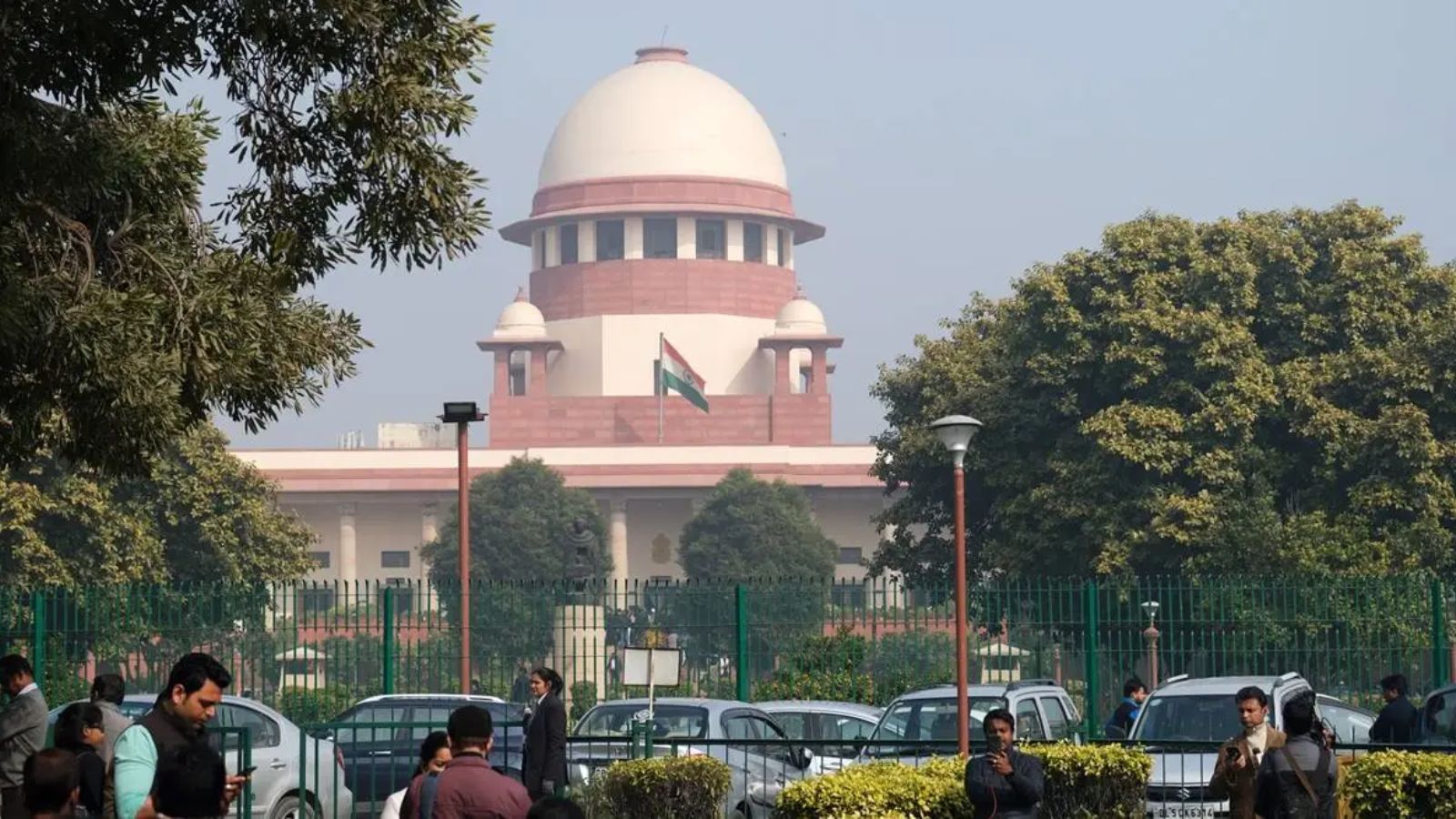
He finally asked the highest court in India, the Supreme Court, for help.
The Supreme Court looked at the case and said the evidence was not good enough to prove he was guilty.
They let him go free and asked local helpers to assist him in starting a new life.

The Supreme Court acquitted Arjun Jani, who spent nearly 22 years in jail for a 2004 murder conviction in Odisha's Koraput district, calling the evidence 'weak and highly unreliable.'
The prosecution's case rested almost entirely on a single eyewitness who claimed to see Jani attack one victim around 1 am but gave inconsistent accounts.
Though accused of bludgeoning three women — Kamala, Sonbari, and Ratnai — to death, Jani was convicted of murdering only one.
The High Court dismissed his appeal without a hearing over a 3,157-day delay, and his Supreme Court appeal was delayed by 3,703 days, delays the top court condoned.
The court flagged investigation flaws, including a witness saying police beat Jani to extract a confession and contradictions over the recovered stone weapon, and directed the District Legal Services Authority of Koraput to arrange his rehabilitation.
- Who
- Arjun Jani (alias Tuntun), a man from Odisha convicted of murder, and a Supreme Court bench of Justices J B Pardiwala and K Vinod Chandran; one report also names Justice S K Singh as heading a three-judge bench.
- What
- The Supreme Court acquitted Jani after he spent nearly 22 years in jail, ruling the evidence against him was weak and highly unreliable.
- Where
- Koraput district, Odisha, with the final ruling issued by the Supreme Court of India.
- When
- The murder of three women occurred in 2004; the acquittal came after Jani had spent nearly 22 years in prison.
- Why
- The prosecution failed to prove the crime beyond reasonable doubt because the sole eyewitness was inconsistent and the alleged confession was reportedly extracted through torture.
Supreme Court's Finding
Prosecution's Case
Eyewitness testimony
Supreme Court's Finding
The single eyewitness was inconsistent, failed to see the other victims' bodies, and gave different accounts to different people, so his testimony was unreliable.
Prosecution's Case
The eyewitness claimed to have seen Jani attack one of the women around 1 am, and the trial court relied on this testimony to convict him.
Confession and investigation
Supreme Court's Finding
A confession extracted through third-degree torture and police beatings is legally unacceptable, and police never explained why suspicion fell on Jani alone.
Prosecution's Case
The prosecution built its case on Jani's alleged confession, and the investigating officer's account of recovering the stone weapon was contradicted by witnesses.
Appeal delays
Supreme Court's Finding
The High Court should have considered that the appeal was filed from jail and that Jani had already been in prison for a long time when it dismissed the appeal over delay.
Prosecution's Case
Jani's appeals were delayed by thousands of days, and the High Court dismissed the appeal without hearing it because of the delay.
Key facts
- Convict
- Arjun Jani (alias Tuntun)
- Time in jail
- Nearly 22 years
- Case location
- Koraput district, Odisha
- Victims (2004)
- Kamala, Sonbari, and Ratnai
- Conviction
- Murder of one woman (accused of killing three)
- High Court appeal delay
- 3,157 days
- Supreme Court appeal delay
- 3,703 days
- Rehabilitation directive
- District Legal Services Authority of Koraput
Quotes
Justice J B Pardiwala
Judge of the Supreme Court of India
“Three lives were snuffed out, a person taken into custody on mere suspicion from whom a confession, though not admissible, was extracted employing third‑degree methods; the trial court fails to evaluate the evidence properly and the High Court remains a mute spectator while adding to the tally of disposals; cumulatively resulting in 22 years being erased out of a person’s life without any reliable evidence.”
 indianexpress.com
“"arresting a person based solely on suspicion, using third-degree torture to extract a confession, and then convicting him on that basis is against the principles of justice"”
 NDTV
NDTV
Sources
Related news

Indore High Court Acquits Woman in Jhabua Murder Case

High Court Acquits Two Brothers 17 Years After Murder Conviction
Two men freed after 14 years over wrong forensic report
Two brothers challenge IB staffer murder conviction over sole witness
Mumbai Court Acquits Man in Son's Murder Case