

Archive · 31 Jul 2026
Ceuta Faces 60,000‑Migrant Surge, 41 Dead
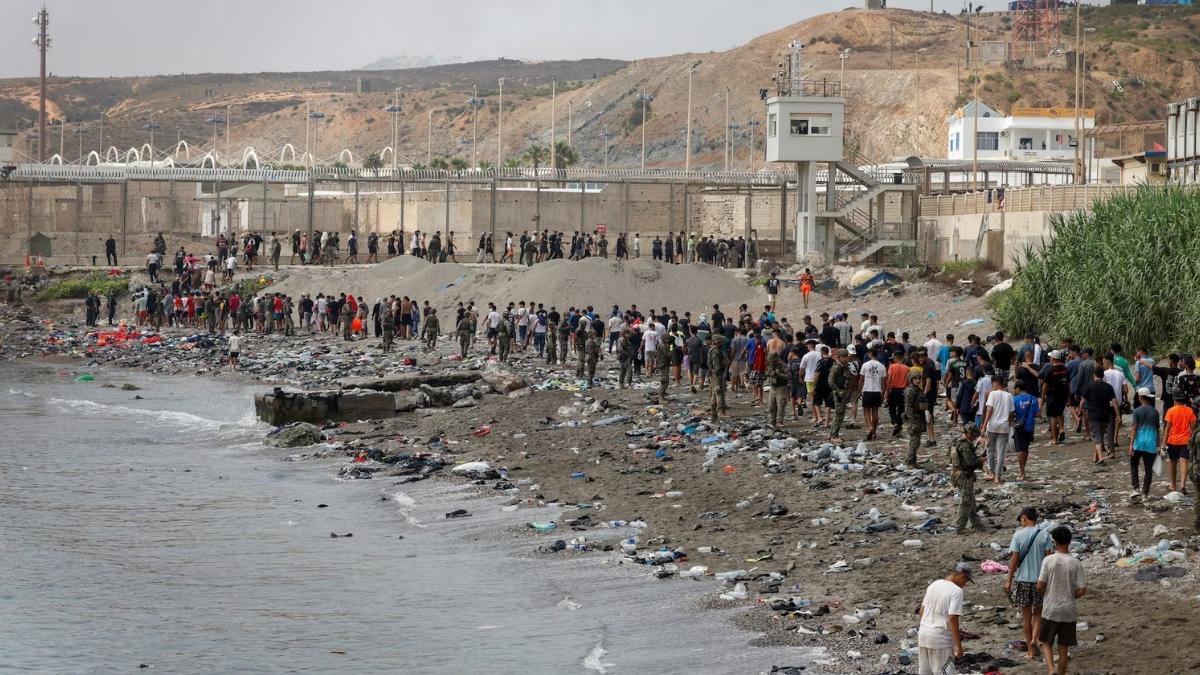
Ceuta is a small Spanish city on the coast of Africa.
In one day, about 50,000 people from Morocco crossed the border, which is more than half of Ceuta’s 85,000 residents.
The surge happened after a court decision said people who arrive by sea can’t be sent back right away.
Some smugglers told migrants that they could stay, so many tried to cross.
The city was overwhelmed, and 41 people died while crossing.
Spanish police and soldiers were sent to help, and Moroccan police used tear gas to stop more people from coming.
Some migrants later went back to Morocco because life in Ceuta was hard.
The event made leaders in Spain and the EU worry about borders and how to help people safely.

Ceuta received an estimated 50,000–60,000 migrants in a single day, about 70% of its 85,000 residents.
The surge followed a Supreme Court ruling that sea arrivals cannot be immediately deported, a decision misinterpreted by smugglers.
At least 41 migrants died during the crossings, many by drowning or in a stampede near the border fence.
Spanish authorities described the situation as a humanitarian crisis, deploying extra police and armed forces, while Moroccan police used tear gas and water cannons.
Some migrants returned to Morocco voluntarily as conditions in Ceuta deteriorated, prompting criticism from EU leaders and calls for tighter border controls.
- Who
- Spanish authorities, migrants, Prime Minister Pedro Sanchez, Supreme Court, smuggling networks
- What
- Massive influx of migrants into Ceuta causing a humanitarian crisis
- When
- July 31, 2026 (over a 24‑hour period)
- Where
- Ceuta, Spanish autonomous city on Africa’s northern coast, near Morocco
- Why
- Supreme Court ruling misinterpreted by smugglers and economic hardship in Morocco
- Estimated migrants
- 50,000–60,000
- Deaths
- 41
- Ceuta population
- 85,000
- Supreme Court ruling
- Sea arrivals cannot be immediately deported
- Response
- Spanish police & armed forces deployed; Moroccan police used tear gas
