Archive · 23 Dec 2025
South Korea's Hanbit-Nano Rocket Fails on Maiden Flight

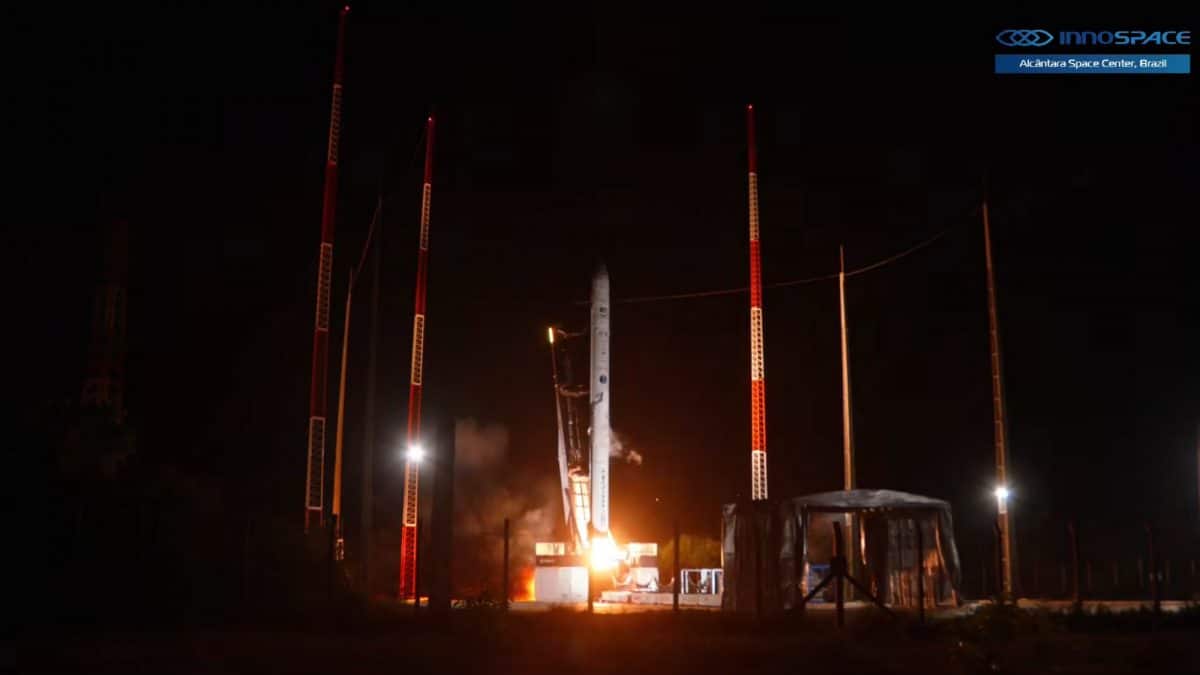
South Korea's private space company, Innospace, tried to launch its first rocket, called Hanbit-Nano, from Brazil.
The rocket took off but had a problem about a minute later and crashed back to Earth.
It was supposed to carry small satellites into space for customers in India and Brazil.
The company said they would look into what went wrong.
This was their first try, and sometimes rockets don't work perfectly the first time.
The rocket uses special fuels that are good for the environment and can carry up to 90 kilograms of stuff into space.

South Korea's Innospace launched its Hanbit-Nano rocket from Brazil's Alcantara Space Centre on December 22.
The rocket failed about a minute after liftoff due to an unspecified anomaly and crashed back to Earth.
Hanbit-Nano is a two-stage rocket designed for the small-satellite launch market, using liquid oxygen and paraffin for the first stage and liquid oxygen and liquid methane for the upper stage.
The rocket was carrying five commercial small satellites from India and Brazil, along with three experimental payloads.
The mission had faced several delays due to technical challenges and weather conditions before the launch attempt.
- Who
- Innospace, a South Korean private firm
- What
- Launch of the Hanbit-Nano rocket
- When
- December 22, 8:13 pm EST
- Where
- Alcantara Space Centre, Brazil
- Why
- To deploy small satellites into sun-synchronous orbit
- Rocket Name
- Hanbit-Nano
- Manufacturer
- Innospace
- Launch Site
- Alcantara Space Centre, Brazil
- Launch Time
- 8:13 pm EST, December 22
- Payload Capacity
- Up to 90 kg into sun-synchronous orbit
- Payloads Carried
- Five commercial small satellites and three experimental payloads
- Propellants
- Liquid oxygen and paraffin (first stage), liquid oxygen and liquid methane (upper stage variant)