

Archive · 28 May 2025
Sluice Gate Fishing in Goa Faces Challenges: Study Reveals Decline
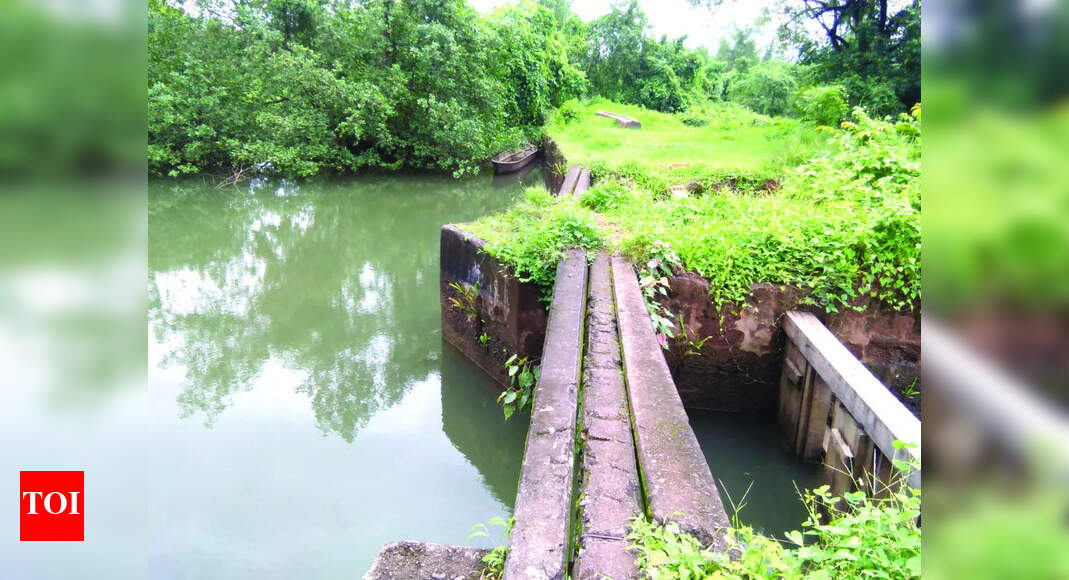
Researchers studied how fish are caught near sluice gates in Goa.
They found that it's become harder to catch fish.
One big problem is that the riverbed gets filled with dirt, reducing the water depth and fish.
Also, crabs damage the walls that hold the water in, and weeds grow, which makes it harder to catch fish.
The researchers say the dirt needs to be removed, but there are some problems with who should do it.
These sluice gates are part of a system that helps with both farming and fishing in this area.

Study reveals decline in fish catch at sluice gates in Chorao and St. Estevam, Goa.
Siltation, crab damage to bunds, and weed growth are primary factors in reduced fish yield.
Desilting work is crucial, but tenant associations and the irrigation department face challenges.
Mud crabs damage bunds, causing water level reduction, making repairs difficult.
Weed growth along bunds also negatively impacts fish yields if not addressed promptly.
- Who
- Researchers Dixita Shingadi, Chandrakant Shinde, and Deepali Gadkari
- What
- A study on the decline of fish catch at sluice gates due to siltation, crab damage, and weed growth.
- When
- Recent years
- Where
- Chorao and St. Estevam islands, Goa
- Why
- Siltation from runoff and mining, crab damage to bunds, and weed growth affect fish yields.
- Location
- Chorao and St. Estevam islands, Goa
- Researchers
- Dixita Shingadi, Chandrakant Shinde, and Deepali Gadkari
- Main Causes
- Siltation, crab damage, and weed growth
- Fishing Method
- Sluice gate fishing
- River
- Mandovi River, Goa