

Archive · 23 Sep 2026
fastrr Checkout Outlines RTO Prevention Playbook for Indian D2C Brands
Return to Origin, or RTO, happens when an online order is sent back because delivery fails.
This can cost online brands money for shipping, handling and lost sales.
fastrr Checkout says brands should look for risky orders before sending them out.
Its playbook recommends using customer, location, address and payment information to estimate delivery risk.
COD should not necessarily be removed because many shoppers still use it.
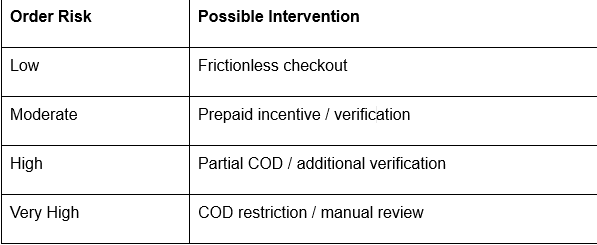
Instead, brands can ask some risky customers for a partial online payment or encourage them to switch to prepaid.
They can also verify selected orders and help customers fix incomplete addresses.
The company says its merchant examples show that risk controls can be used while still improving checkout and prepaid payment rates.
Brands are advised to keep measuring both delivery outcomes and sales conversions.

fastrr Checkout recommends identifying delivery-risk patterns across COD, customers, locations, products, order values and address quality.
The playbook uses AI-powered risk prediction to flag potentially risky orders before shipment and apply targeted interventions.
Suggested controls include conditional COD, Partial COD, COD-to-prepaid conversion, buyer verification and address intelligence.
fastrr cites merchant cases involving reduced high-risk cart progression, higher prepaid adoption and improved checkout conversion.
The company says brands should measure RTO alongside conversion and continuously analyse, intervene, verify and optimise checkout performance.
- Who
- fastrr Checkout and Indian direct-to-consumer (D2C) brands.
- What
- fastrr Checkout published a nine-step playbook for preventing Return to Origin orders through risk-based checkout controls.
- When
- The release was dated September 23; the year was not specified.
- Where
- New Delhi, India.
- Why
- To help D2C brands reduce delivery failures and related costs without eliminating Cash on Delivery or unnecessarily reducing checkout conversion.
- Core issue
- Return to Origin orders can create forward and reverse shipping costs, handling expenses, blocked inventory and lost revenue.
- Main approach
- Identify and address delivery risk during checkout rather than after a shipment fails.
- Risk signals
- Buyer behaviour, delivery history, location, address information, payment type, order value and customer history.
- Recommended controls
- Conditional COD, Partial COD, COD-to-prepaid conversion, OTP or order verification and address correction.
- High-risk cart example
- Of 1,525 very-high-risk carts cited by fastrr, 13 proceeded to an order under the applicable controls.
- Wellness brand example
- A cited D2C wellness brand increased prepaid share from 20% to 43.16% and checkout conversion from 6.41% to 23.18%.
- Measurement framework
- Brands should track RTO, payment mix, conversion, high-risk order share, prepaid conversion, Partial COD adoption and verification rates.