

Archive · 10 Nov 2025
US to Test Space-Based Missile Interceptor by 2028
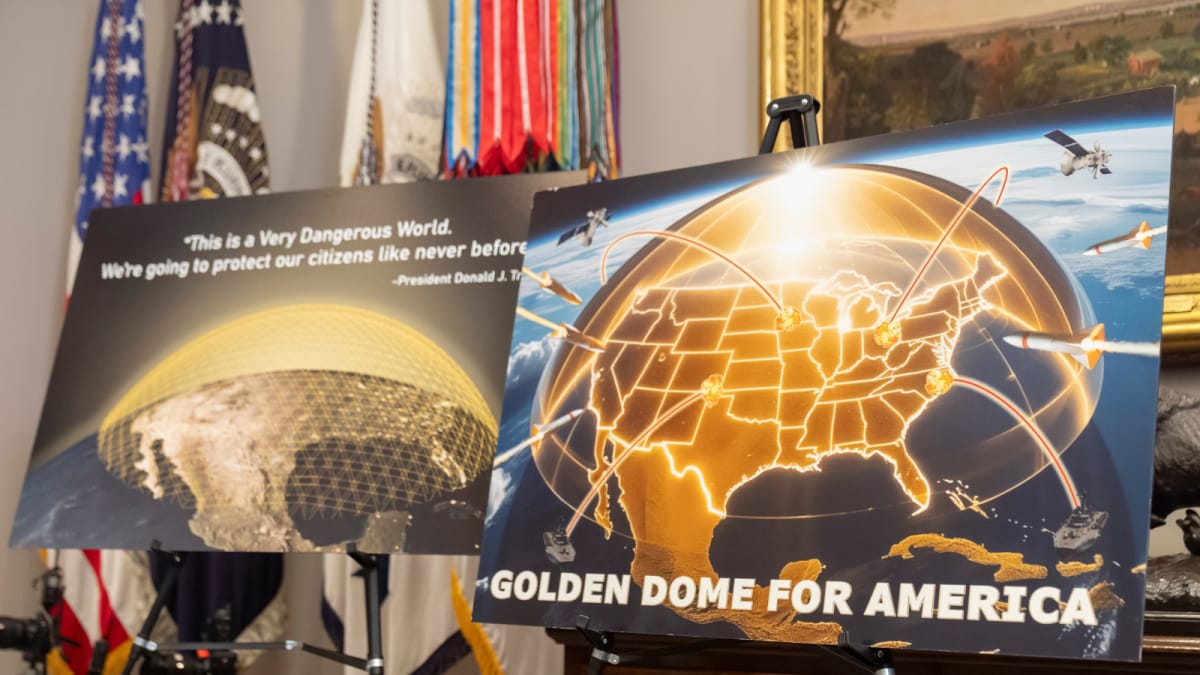
Imagine a super-fast shield in space that can shoot down enemy rockets right after they are launched, even before they get close to Earth.
That's what the United States is building with something called the Golden Dome project.
A company called Lockheed Martin is making special interceptor rockets that will live in space.
They plan to test these space rockets by the year 2028, not just in a lab, but a real one that could be used in a war.
This shield is designed to destroy all kinds of missiles, even the really big ones that can travel across the world.
The goal is to keep America safe by getting rid of any danger while it's still very far away.
This means space is becoming a new place where countries might have to defend themselves.

Lockheed Martin plans to test its space-based missile interceptor, a key part of the Golden Dome defense system, by 2028.
The Golden Dome aims to create a missile defense shield capable of destroying enemy missiles from space within seconds of launch.
The system is designed to intercept missiles during both the boost phase shortly after launch and the mid-course phase in space.
Lockheed Martin has developed a prototype command and control system in Virginia for the Golden Dome.
This initiative signals a growing focus on space as a critical domain for military defense capabilities.
- Who
- American defense company Lockheed Martin
- What
- Plans to conduct a real test of its space-based missile interceptor, part of the Golden Dome defense system
- When
- By 2028
- Where
- United States of America (USA)
- Why
- To provide the United States with an advanced missile defense shield capable of destroying enemy missiles from space shortly after launch, eliminating threats far from American borders.
- Developer
- Lockheed Martin
- Project Name
- Golden Dome
- Interceptor Type
- Space-based missile interceptor
- Test Date
- By 2028
- Location of C2 System
- Virginia, USA
- Phases of Interception
- Boost phase and mid-course phase (in space)