

Archive · 27 Jul 2026
Why AEDs and CPR Training Are Critical in Public Spaces
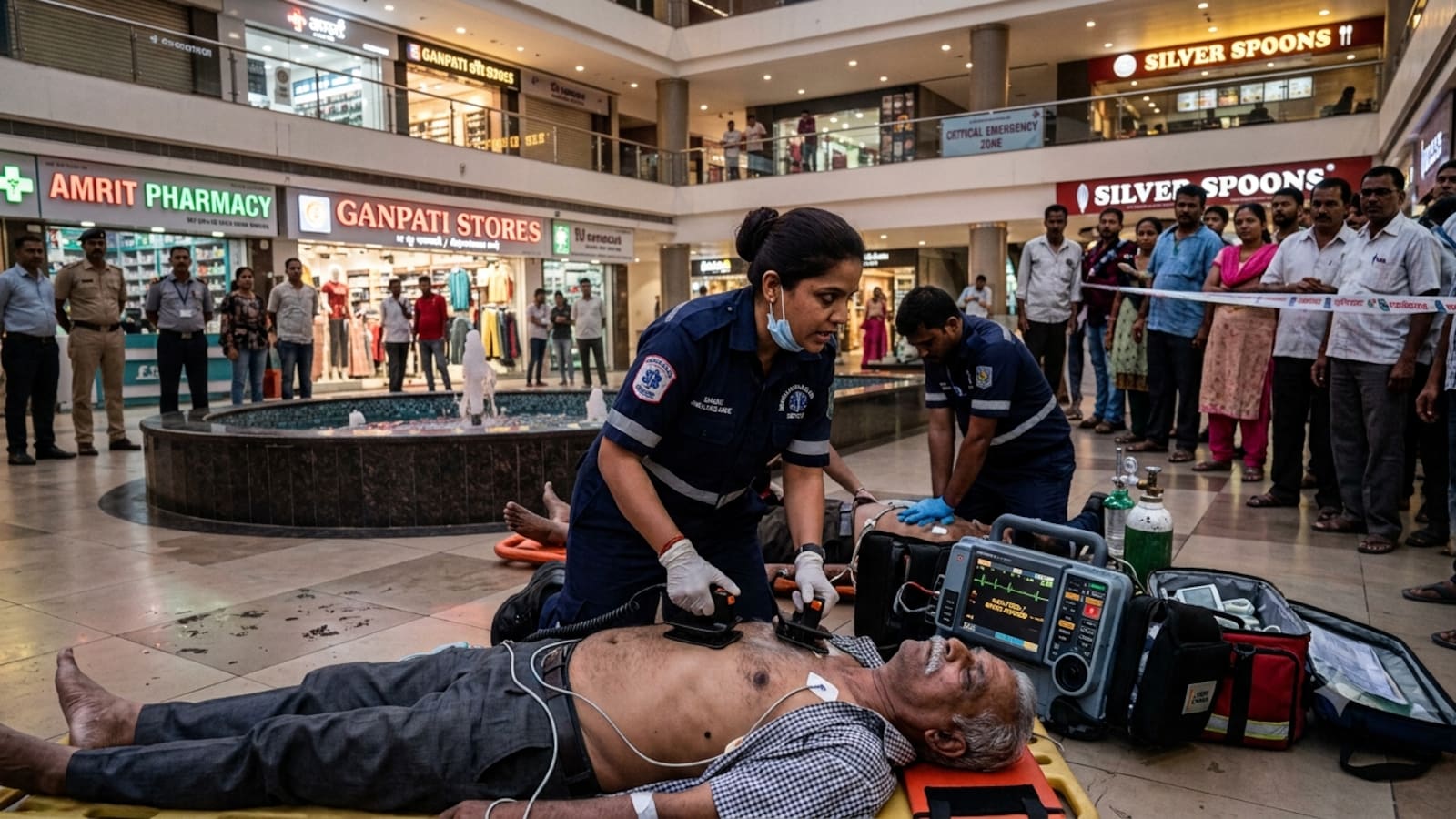
Sudden cardiac arrest is a serious condition where the heart stops pumping blood effectively.
Unlike a heart attack, it requires immediate intervention.
AEDs and CPR training are crucial in public spaces like schools, malls, and airports.
These devices and training can save lives by providing quick help before emergency services arrive.
Experts recommend making AEDs as common as fire extinguishers and ensuring staff are trained in CPR.
This can turn bystanders into lifesavers and improve survival rates.

Sudden cardiac arrest (SCA) is a leading cause of unexpected death worldwide.
AEDs and CPR training can significantly improve survival rates during SCA.
Public spaces like schools, malls, and airports should be equipped with AEDs.
The 'Chain of Survival' includes early recognition, calling emergency services, immediate CPR, rapid defibrillation, and advanced medical care.
Countries with widespread CPR training and AED programs report higher survival rates.
- Who
- Dr. Arvind Dambalkar, Senior Consultant & Head - Interventional Cardiology at Sarvodaya Hospital.
- What
- The importance of AEDs and CPR training in public spaces to improve survival rates during sudden cardiac arrest.
- When
- The need for immediate intervention during sudden cardiac arrest.
- Where
- Public spaces such as schools, malls, airports, and railway stations.
- Why
- To improve survival rates and ensure timely intervention during sudden cardiac arrest.
Proponents of AEDs and CPR Training
Skeptics of AEDs and CPR Training
Effectiveness in Saving Lives
Proponents of AEDs and CPR Training
Proponents argue that AEDs and CPR training significantly improve survival rates during sudden cardiac arrest, especially in public spaces.
Skeptics of AEDs and CPR Training
Skeptics may question the cost-effectiveness and practicality of widespread AED deployment and training, suggesting that resources could be better allocated elsewhere.
Public Safety Infrastructure
Proponents of AEDs and CPR Training
Proponents believe AEDs should be as common as fire extinguishers, emphasizing their role in public safety.
Skeptics of AEDs and CPR Training
Skeptics might argue that the focus should be on improving emergency medical services response times rather than relying on bystanders.
- Sudden Cardiac Arrest (SCA)
- A condition where the heart suddenly stops pumping blood effectively.
- Automated External Defibrillators (AEDs)
- Portable devices that analyze heart rhythm and deliver electric shocks to restore normal heartbeat.
- CPR
- Cardiopulmonary resuscitation, a life-saving technique involving chest compressions and rescue breaths.
- Chain of Survival
- A sequence of steps including early recognition, calling emergency services, immediate CPR, rapid defibrillation, and advanced medical care.
- Survival Rate Decline
- Decreases by 7-10% for every minute without CPR and defibrillation.
- Dr. Arvind Dambalkar
- Senior Consultant & Head - Interventional Cardiology at Sarvodaya Hospital, Faridabad.
- American Heart Association (AHA)
- An organization that emphasizes the importance of early CPR and AED use.
- European Resuscitation Council and ILCOR
- Organizations that emphasize the 'Chain of Survival' for cardiac arrest.