

Archive · 5 Jan 2026
NRIs Warned of Rs 10 Lakh Penalty for Foreign Asset Non-Disclosure
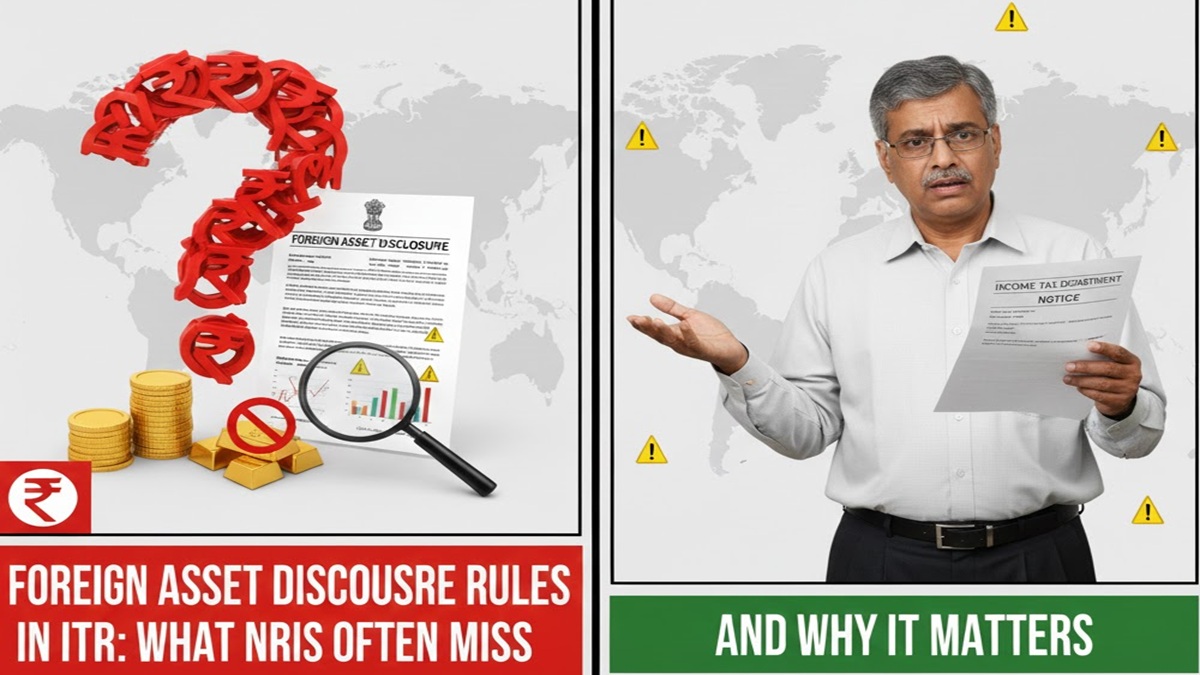
Some Indians living abroad (NRIs) who return to India for a few years might need to report their foreign assets in their tax returns.
If they are classified as 'Resident and Ordinarily Resident' (ROR) during those years, they must disclose these assets.
Not doing so could lead to a penalty of up to Rs 10 lakh.
However, this penalty is usually for people who deliberately hide their assets.
If it was a mistake, they can fix it by filing an updated tax return.
Experts advise checking old tax returns, listing all foreign assets, and filing the updated return if needed.
It's important to act now and correct any mistakes to avoid problems later.

NRIs who become 'Resident and Ordinarily Resident' (ROR) must disclose foreign assets in their income tax returns.
Non-disclosure of foreign assets can result in a penalty of up to Rs 10 lakh under the Black Money Act.
Penalties are typically for deliberate concealment, not genuine mistakes.
Taxpayers can file an updated return (ITR-U) to correct omissions and disclose foreign assets.
Experts advise listing all foreign assets, reviewing old tax returns, and filing ITR-U if necessary to avoid penalties.
- Who
- Non-Resident Indians (NRIs) and Resident and Ordinarily Residents (RORs)
- What
- Potential penalty for non-disclosure of foreign assets in income tax returns
- When
- During years classified as ROR
- Where
- India
- Why
- To comply with tax laws and avoid penalties
- Residential Status
- NRI, RNOR, ROR
- Disclosure Requirement
- RORs must disclose foreign assets
- Penalty Amount
- Up to Rs 10 lakh
- Penalty Condition
- Wilful concealment or tax evasion
- Updated Return
- ITR-U for correcting omissions
- Expert Advice
- Dinkar Sharma, Jotwani Associates