

Archive · 3 Aug 2025
Radioactive Rhino Horns: A New Weapon Against Poaching
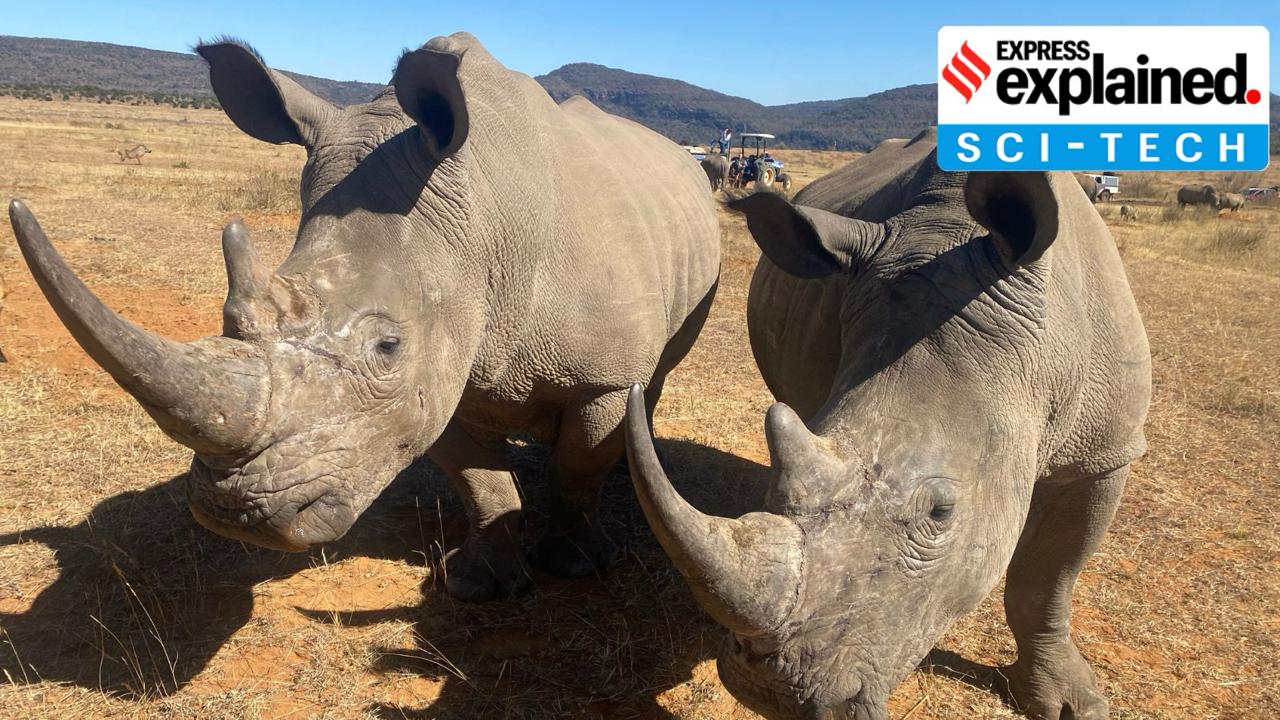
Scientists are trying a new way to stop people from poaching rhinos, who are killed for their horns.
They're injecting the rhinos' horns with tiny amounts of a special substance that gives off a signal, like a secret code.
This signal can be detected by special machines at borders and airports.
If a rhino horn is illegally taken and sold, the machines can find it.
Tests have shown that this process doesn't hurt the rhinos and the horn becomes useless to people.
The goal is to make it harder for poachers to sell rhino horns and save the animals.

A South African university launched a project injecting rhinos with radioactive isotopes.
The project aims to deter rhino poaching by making horns traceable by customs agents.
Radioactive isotopes are injected into rhino horns through a non-invasive procedure.
Tests confirmed that horns could be detected inside shipping containers.
The project's pilot phase showed no harm to the rhinos.
- Who
- The University of the Witwatersrand, supported by the IAEA.
- What
- A project to inject rhinos with radioactive isotopes to deter poaching.
- When
- Launched on Thursday, July 31
- Where
- South Africa, specifically the Waterberg Biosphere Reserve.
- Why
- To curb rhino poaching by making horns traceable and less valuable to poachers.
Concerns
Potential Benefit
Rhino Health
Concerns
Unknown impact on rhinos long term
Potential Benefit
Project claims to be safe
- Project Name
- Rhisotope Project
- Organization
- University of the Witwatersrand
- Supporting Agency
- IAEA
- Location of Pilot Phase
- Waterberg Biosphere in Limpopo, South Africa
- Rhino Population Decline
- From 500,000 to 27,000
- Rhinos in Pilot Phase
- 20