

Archive · 14 Sep 2025
Wildlife Returns to Bodoland Park After Conflict
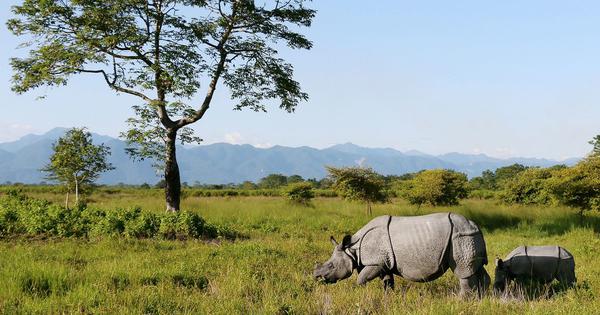
Imagine a beautiful park in India, Manas National Park, where many animals live.
A long time ago, there was a fight in the area, and the park suffered.
Many animals like tigers and rhinos almost disappeared.
Now, the fighting is over, and the park is getting better!
Scientists studied the park and found that some animals like elephants and tigers are doing well again.
But some animals, like wild pigs and hog deer, are still having trouble because of the loss of their habitats and predation.
Local people are helping the park by protecting the animals, which is very important.

Manas National Park suffered significant decline in wildlife populations during the Bodoland conflict.
A recent study shows a recovery of several species, including tigers and rhinos.
Populations of hog deer and wild pigs have declined despite the overall recovery.
The recovery of key species is attributed to improved law and order and community engagement.
Continued decline of hog deer and wild pigs could impact the ecological balance.
- Who
- Researchers from the Wildlife Institute of India and park authorities
- What
- A study on the post-conflict recovery of Manas National Park and its wildlife populations
- When
- The study was conducted in 2022-2023, assessing recovery after civil unrest between the late 1980s and early 2000s
- Where
- Manas National Park in Assam, India
- Why
- To assess the impact of the Bodo conflict on wildlife and the subsequent recovery of species, including the challenges that remain.
- Location
- Manas National Park, Assam, India
- Conflict Period
- Late 1980s to early 2000s
- Conflict Parties
- Bodo insurgent groups and the state government
- Post-Conflict Recovery
- Started after 2003 peace accord
- Study Findings
- High densities of elephant, wild buffalo, and tiger; declining hog deer and wild pig