

Archive · 7 Dec 2025
Study links child undernutrition to multidimensional poverty
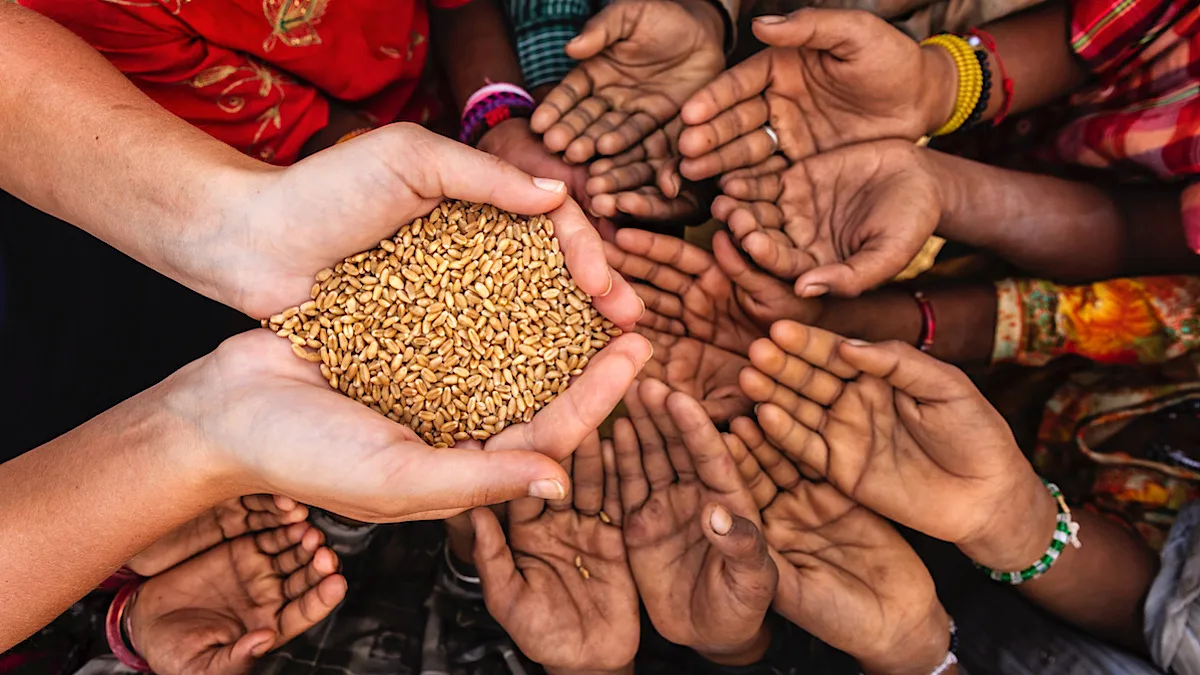
A new study found that many children in India are not getting enough food because of poverty.
The study looked at data from different places and found that the worst problems are in certain states where people have low incomes, poor housing, and not enough education.
The researchers say that just giving food is not enough.
They also need better healthcare, clean water, and more money for schools and hospitals in these areas.
If these problems are not fixed, the children will keep being unhealthy, and it will be hard for India to reach its goals for a better future.

Child undernutrition in India is linked to multidimensional poverty, according to a new study.
The study uses NFHS-5 data and NITI Aayog’s MPI Progress Review to analyze stunting, wasting, and underweight among children under five.
States like Madhya Pradesh, Uttar Pradesh, Jharkhand, Chhattisgarh, Rajasthan, Bihar, Odisha, and West Bengal are identified as critical hotspots.
The authors recommend district-specific strategies, community-based health services, and increased public health funding.
The study warns that without addressing structural deficits, improvements in nutrition indicators will remain slow and uneven.
- Who
- Researchers from Raiganj University and Sidho Kanho Birsha University
- What
- A study linking child undernutrition to multidimensional poverty in India
- When
- Published in November 2025
- Where
- India, particularly in states like Madhya Pradesh, Uttar Pradesh, Jharkhand, Chhattisgarh, Rajasthan, Bihar, Odisha, and West Bengal
- Why
- To highlight the need for targeted district-level interventions to address child undernutrition
- Study Publication
- BMC Public Health, November 2025
- Authors
- Partha Das, Tamal Basu Roy, Tanu Das, Priya Das, Subhadeep Saha, Dr Samiran Bisai
- Data Sources
- NFHS-5 data, NITI Aayog’s MPI Progress Review
- Key Indicators
- Stunting, wasting, underweight among children under five
- Critical Hotspots
- Madhya Pradesh, Uttar Pradesh, Jharkhand, Chhattisgarh, Rajasthan, Bihar, Odisha, West Bengal
- Recommended Interventions
- District-specific strategies, community-based health services, increased public health funding
- Key Concerns
- Risk of entrenching cycles of undernutrition and intergenerational inequity