

Archive · 6 Jan 2026
Why Humans Don't Hibernate
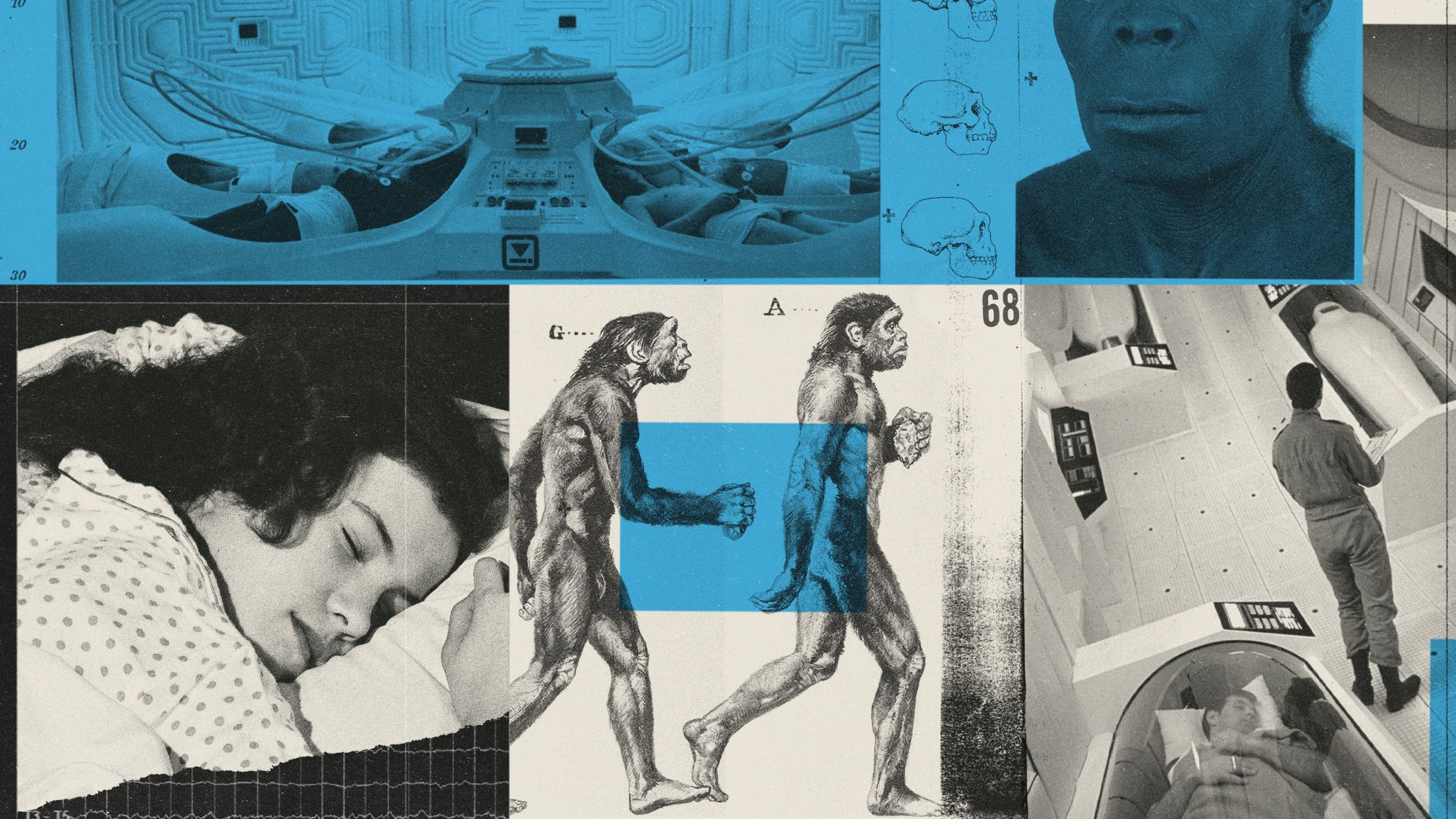
Humans don't hibernate because our ancestors lived in warm places and didn't need to.
They found other ways to stay warm, like using fire and clothes.
But scientists think some ancient humans might have spent winters sleeping in caves, which is a bit like hibernation.
Now, researchers are studying if humans can hibernate in the future.
This could help astronauts on long space trips and patients in hospitals.
It's like something out of a science fiction movie, but it might become real soon!

Humans evolved in tropical regions and did not develop hibernation due to recent migration to cooler areas.
Ancient humans may have spent winters in caves, sacrificing nutrition and sunlight for safety.
Modern research explores induced hibernation for space travel and medical applications.
Nasa and ESA support trials using sedatives to mimic hibernation in humans.
Future hibernation could reduce boredom, cargo needs, and conflict in space missions.
- Who
- Humans and their evolutionary ancestors
- What
- The reasons why humans do not hibernate and potential future hibernation
- When
- Modern humans migrated to cooler regions ~100,000 years ago
- Where
- Cooler temperate and sub-Arctic latitudes
- Why
- Humans evolved in tropical regions and developed other survival methods
- Evolutionary Ancestors
- Tropical animals with no hibernation history
- Migration Timing
- Modern humans migrated to cooler regions ~100,000 years ago
- Evidence of Hibernation-Like Behavior
- Fossilized bones suggest ancestors spent winters in caves
- Future Hibernation Research
- Nasa and ESA support trials for hibernation-like states
- Potential Benefits
- Astronauts and medical patients could benefit from hibernation