Archive · 29 Sep 2026
SC Panel Finds Widespread Distress Among Higher-Education Students
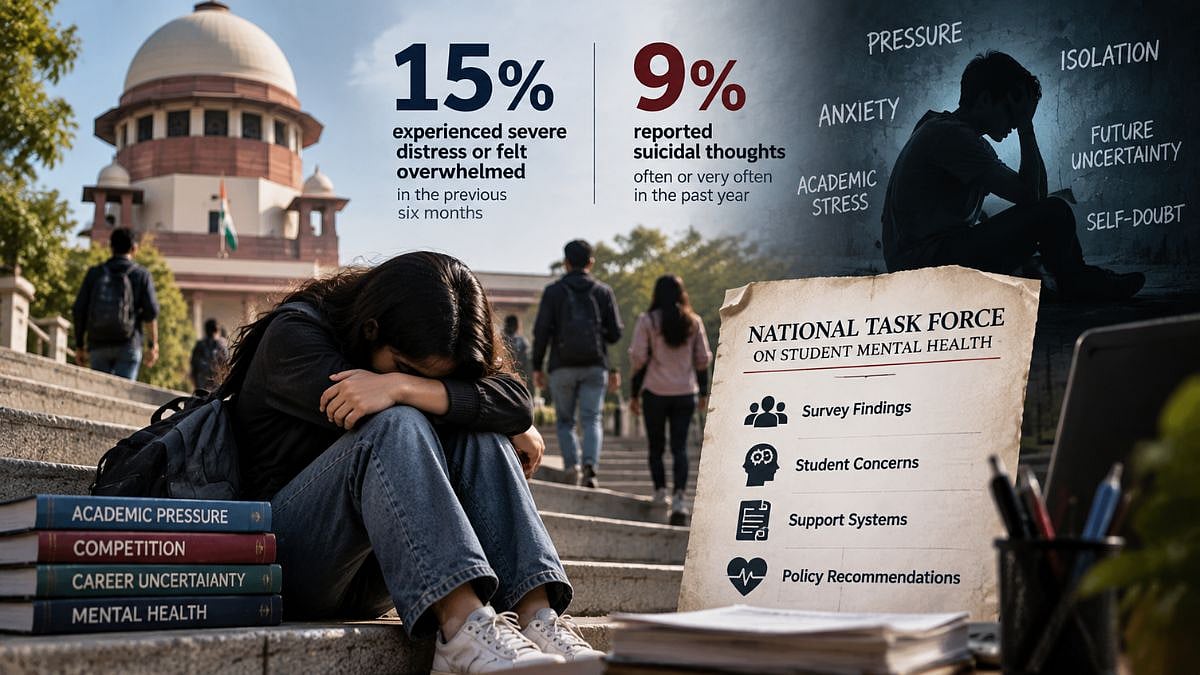
A Supreme Court-appointed group asked college and university students about their mental health and campus experiences.
More than 2.43 lakh students answered the survey.
About 15 out of every 100 students said they had felt very distressed, anxious or low for several weeks in the previous six months.
About nine out of every 100 said they often or very often had thoughts of suicide during the previous year.
Around one-third said they felt like outsiders at their institutions.
Many students also described pressure from classes, attendance rules, competition and worries about jobs.
Some reported discrimination, harassment, weak academic support and a lack of counselling.
The group said these findings are not yet a complete picture because the sample was not representative and more responses are still being studied.
It plans to recommend better support, staff training, crisis procedures and monitoring before submitting its final report.

A nationwide survey of more than 2.43 lakh higher-education students found 15% had recently experienced prolonged distress, low mood or anxiety.
Nine per cent reported experiencing suicidal thoughts often or very often during the previous year.
About 34% said they felt like outsiders on campus, while 32% said their institutions did not offer counselling services.
Students reported academic overload, strict attendance rules, intense competition, discrimination, harassment, faculty shortages and employment worries.
The panel called for stronger support systems but cautioned that the survey and institutional visits were preliminary and not representative.
- Who
- The Supreme Court-appointed National Task Force, headed by Justice S Ravindra Bhat, surveyed higher-education students.
- What
- The task force studied student distress, suicidal thoughts, campus belonging, counselling access and academic and institutional problems.
- When
- The survey covered the previous six months and previous year for different questions; the final report is expected by October 31, 2026.
- Where
- The survey covered higher-education institutions across India; 30 meetings were held at 19 sites in Delhi and the National Capital Region, Tamil Nadu, Karnataka, Assam and West Bengal.
- Why
- The Supreme Court constituted the task force to address rising student suicides and mental-health and well-being concerns in higher education.
Urgent Reform
Methodological Caution
What the findings require
Urgent Reform
The reported distress, suicidal thoughts and campus problems indicate a need for standardized support systems, faculty training, stigma reduction, crisis procedures and regular monitoring.
Methodological Caution
The task force says the current sample is not representative, institutional visits covered only a small number of sites, and the findings should be treated as preliminary and tentative.
How widely the problems apply
Urgent Reform
Students across multiple disciplines described academic overload, intense competition, discrimination, harassment, weak support and employment concerns as issues requiring institutional action.
Methodological Caution
Responses to additional survey questions, including open-text fields, are still being analysed, so the full scope and prevalence of these concerns remain under review.
- Survey respondents
- More than 2.43 lakh higher-education students
- Reserved-category respondents
- 67% identified as belonging to Scheduled Castes, Scheduled Tribes or Other Backward Classes
- Recent distress
- 15% reported several weeks of severe distress, low mood or anxiety in the previous six months
- Suicidal thoughts
- 9% reported experiencing suicidal thoughts often or very often during the previous year
- Campus belonging
- 34% reported feeling like outsiders on campus to varying degrees
- Counselling access
- About 32% said their institutions did not offer counselling services
- Institutional consultations
- 30 meetings were held at 19 institutional sites