0 months ago
NSE Closing Auction lifts Nifty close; experts weigh in

Normally, a stock market has a set time when trading stops and final prices are decided.
In India, the National Stock Exchange changed the ending part of the trading day for many stocks starting August 3.
Now, regular buying and selling stops at 3:15 pm, and after that the exchange holds a special auction to decide the official closing price.
During this auction, the exchange matches leftover buy and sell orders to find a price that everyone agrees on.
This caused the final closing numbers to look very different from where the market was at 3:15 pm.
On the second day, the Nifty's closing price jumped about 152 points higher than its 3:15 pm level.
On the third day, the jump was smaller, only about 55 points.
Some experts say the new system is causing confusion and forcing some investors to close their positions quickly.
Others say the difference is shrinking because traders are learning how the new system works.
The exchange says it is making the process more transparent so the market can be fairer in the long run.

The National Stock Exchange introduced the Closing Auction Session (CAS) on August 3 for F&O-eligible cash stocks, replacing the previous method of setting official closing prices.
On Day 2, the Nifty's final close was 152 points above its 3:15 pm level, settling 0.64% lower at 24,614.90 while the Sensex fell 210.08 points to 78,428.95.
On Day 3, the gap narrowed to about 55 points, with the Nifty closing at 24,624.65 and the Sensex gaining nearly 79 points during the auction.
Experts gave contrasting views: Vinod Nair of Geojit called the moves initial teething issues causing forced square-offs, while Somil Mehta of Mirae Asset ShareKhan said the narrowing gap shows traders adapting to the system.
Under CAS, regular trading for eligible stocks ends at 3:15 pm followed by an auction to set an equilibrium closing price; the articles differ on the auction length (15 vs 20 minutes), and F&O derivatives trade until 3:40 pm.
- Who
- The National Stock Exchange (NSE), market analysts, and traders and investors reacting to the new closing price mechanism.
- What
- The NSE's new Closing Auction Session (CAS) for F&O-eligible stocks, which sets closing prices via an auction after 3:15 pm and produced large gaps between 3:15 pm levels and final settlements in its first three sessions.
- Where
- India's National Stock Exchange, affecting the Nifty, Sensex, and Bank Nifty indices.
- When
- Introduced from August 3; reported across the first three trading sessions, including Tuesday and Wednesday.
- Why
- The exchange aims to improve price discovery and transparency and reduce end-of-day price manipulation, but the change has caused short-term volatility and forced retail square-offs.
CAS is causing disruptions
CAS is a healthy transition
Is the auction gap a malfunction or an adjustment phase?
CAS is causing disruptions
Vinod Nair of Geojit Investments says the new system is 'not functioning as intended,' creating distortion, heightened volatility, and forced square-offs of retail positions ahead of the blind derivatives closing window, which exchanges and regulators need to address.
CAS is a healthy transition
Somil Mehta of Mirae Asset ShareKhan says the narrowing gap shows market participants are gradually adapting, and as participation increases, price discovery will improve, making closing prices more accurate, transparent, and less vulnerable to end-of-day manipulation.
Short-term impact on the market
CAS is causing disruptions
The current volatility distorts market trends, particularly around weekly expiry, and pushes retail investors into forced square-offs under the new framework.
CAS is a healthy transition
These are initial teething issues, not fundamental structural concerns; the broader economic and financial outlook remains solid, and Nifty trading above key moving averages keeps the broader trend positive.
Key facts
- Exchange
- National Stock Exchange (NSE)
- Mechanism
- Closing Auction Session (CAS) for F&O-eligible stocks
- Start date
- August 3
- Regular trading ends
- 3:15 pm for F&O-eligible stocks; derivatives continue until 3:40 pm
- Auction length
- Articles differ: 15 minutes reported on Day 2 vs 20 minutes (3:15-3:35 pm) on Day 3
- Nifty close Day 2
- 24,614.90, down 159.40 points (0.64%); Sensex 78,428.95, down 210.08 points
- Nifty close Day 3
- 24,624.65, about 55 points above the 3:15 pm level; Sensex gained nearly 79 points in the auction
- Bank Nifty close Day 3
- 57,740 post-auction, about 110 points above the 3:15 pm level
Quotes
Somil Mehta
Head of Retail Research at Mirae Asset ShareKhan
“Tuesday’s weekly expiry, combined with the implementation of the new mechanism for determining F&O closing prices, has led to a distortion in market trends. The significant gap between the 3:30 p.m. and 3:40 p.m. closing prices of Nifty stocks and the index, along with the divergence with Sensex, suggests that the new system is not functioning as intended, resulting in heightened price volatility. This has triggered forced square-offs of positions, particularly among retail investors, ahead of”
 financialexpress.com
“On Tuesday, the benchmark index Nifty opened with a gap-down and remained under pressure for most of the trading session, gradually drifting lower. However, the CAS settlement price was 152 points higher than the 3:15 PM closing level, helping the index reclaim the 24600 mark. The Nifty eventually settled at 24615, down 0.64% for the day. Technically, the session resulted in the formation of a small-bodied candle with a long lower shadow, indicating buying interest emerging at lower levels.”
financialexpress.com
Sources

Related news

Nifty Closing Auction Gap Narrows as Markets Adapt
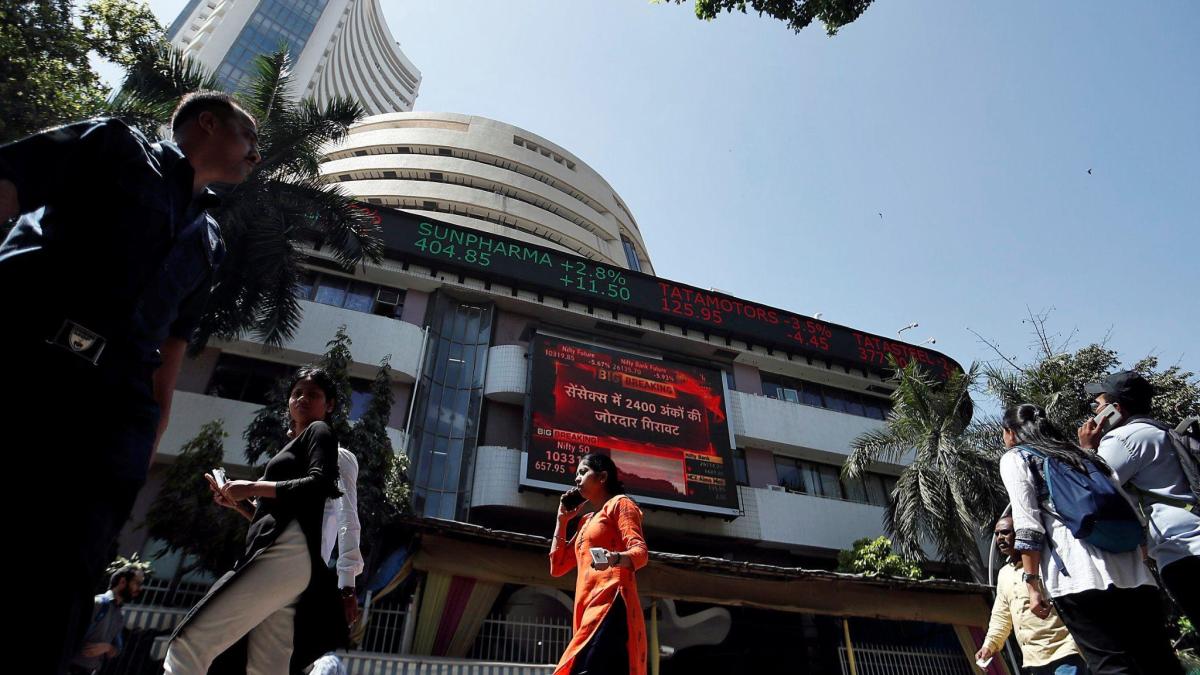
Nifty closing price volatility eases on third day of auction

Indian Stock Market Seen Flat Amid Crude Oil Rise

Lumino Industries IPO Draws Demand as Bidding Enters Day Two

Hero MotoCorp’s ₹1,758 Crore Ather Deal Lifts Stake to 32.8%

NSE Listing to Headline India’s September IPO Rush

Symbiotec Pharmalab IPO Draws Strong, Conflicting Subscription Figures