

Archive · 19 May 2025
Scientists Investigate Body's Mysterious mRNA Editing Process
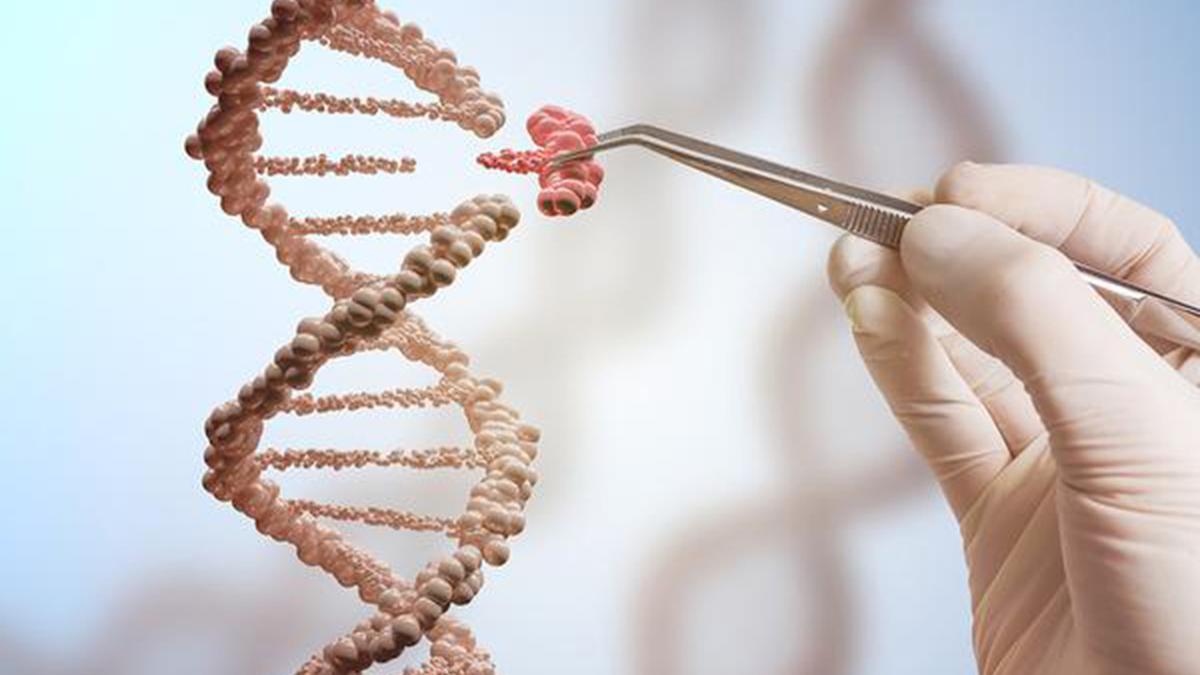
Your body has a book of recipes (DNA) to make proteins.
Sometimes, the recipe gets slightly changed after it's copied into mRNA.
This change is called A-to-I mRNA editing, where a letter in the mRNA is swapped.
Scientists are puzzled because they don't know why this happens or what it does.
Research on a fungus shows that this editing is important during sexual reproduction.
For certain genes, editing seems to help the fungus survive stress, which explains why it didn’t change in the DNA.
The study aims to figure out why cells perform A-to-I mRNA editing, as the function is not clear.

A-to-I mRNA editing involves changing 'A' in mRNA to 'I' via ADAR proteins.
Researchers are investigating the purpose of A-to-I mRNA editing in animals and fungi.
A study on a fungus found that A-to-I mRNA editing is crucial during sexual development.
Certain genes with editing benefit from resisting environmental stresses.
Scientists are trying to understand why this editing process is essential.
- Who
- Researchers are studying A-to-I mRNA editing, including scientists from China Agricultural University and Northwest A&F University.
- What
- A-to-I mRNA editing, where the cell modifies RNA, is studied by researchers.
- When
- Recent studies, including one published in January 2024.
- Where
- China Agricultural University in Beijing, and Northwest A&F University in Yangling, China.
- Why
- Researchers are trying to understand the purpose and function of A-to-I mRNA editing, as its evolutionary benefit is unclear.
- Process
- A-to-I mRNA editing
- Enzyme
- ADAR proteins
- Focus
- Fungus Fusarium graminearum
- Gene Type
- PSC (Premature Stop Codon)
- Study Date
- January 2024