

Archive · 12 Nov 2025
JEE 2026: Syllabus Updates, Chapter Weightage, and Preparation Pitfalls
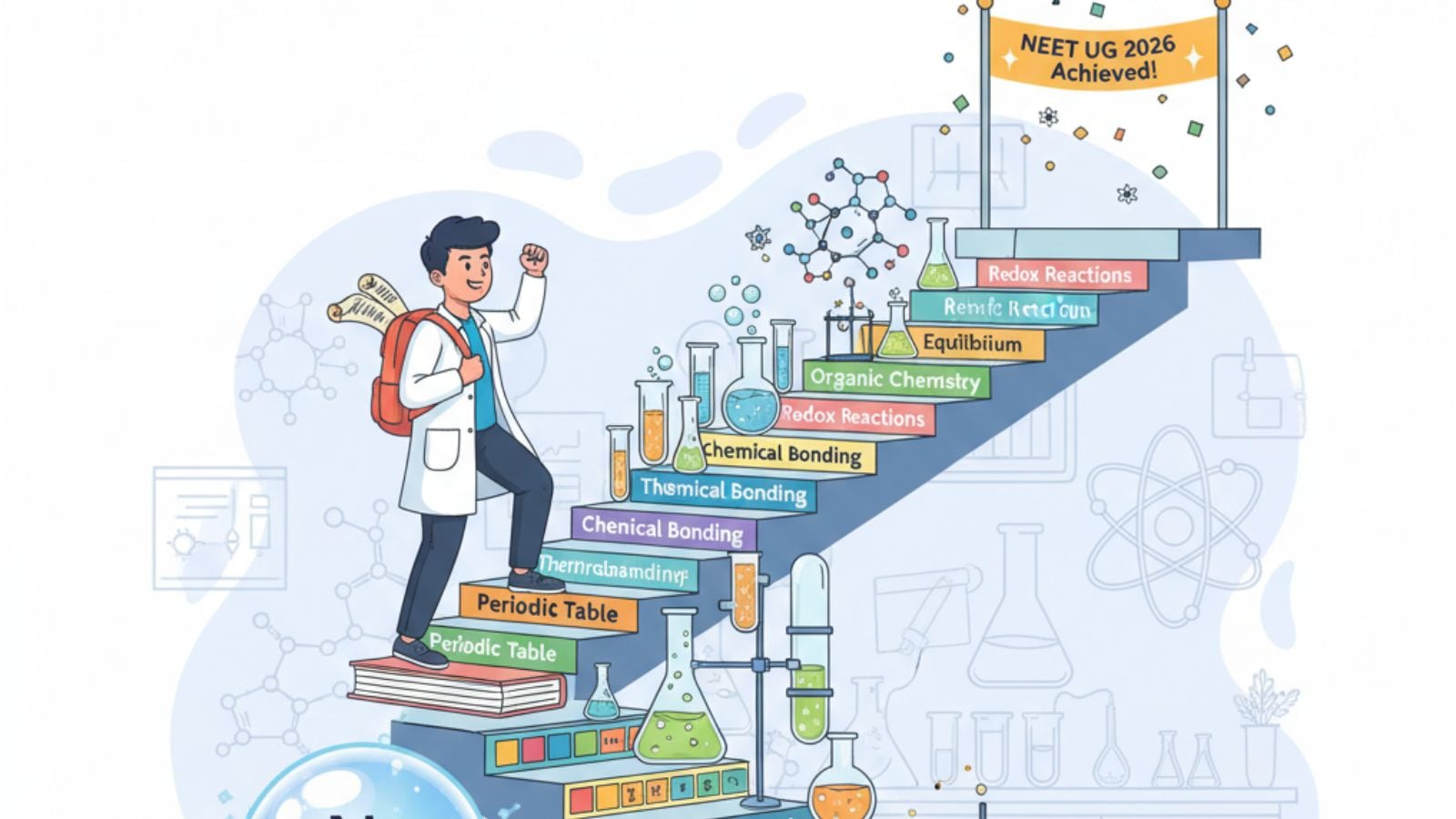
The JEE exam is a tough test for getting into good engineering schools like IITs.
For 2026, the syllabus has some changes to make learning more about understanding and using ideas, not just memorizing.
In Physics, they're changing how much importance is given to experiments and removing some topics.
Chemistry is reducing some parts of Inorganic Chemistry but focusing more on Organic and Physical Chemistry with more problems to solve.
Math is still focusing on Calculus and Algebra for practical uses.
To do well, it's smart to know which chapters have more questions (like Modern Physics, Electrostatics in Physics; d&f block, coordination compounds in Chemistry; and Vectors, Matrices in Math).
About 60% of your study time should be on these important chapters, and 40% on others.
It's also important not to wait until the end to take practice tests, and to always learn from your mistakes.
Don't skip any chapters, study all subjects, and practice different kinds of questions.

JEE 2026 syllabus emphasizes conceptual and application-based learning over memorization.
Physics includes a fixed 20% weightage for Experimental Skills, with deletions in Communication Systems.
Chemistry has reduced content in P-Block Elements and Solid State, with increased focus on Organic and Physical Chemistry.
Mathematics focuses more on applications of Calculus and Algebra, with no major deletions.
Effective preparation involves understanding chapter weightage, regular mock tests, analyzing mistakes, and balanced subject preparation.
- Who
- JEE Main 2026 aspirants
- What
- Guidance on JEE Main 2026 preparation, including chapter weightage, syllabus updates, and common mistakes to avoid.
- When
- Leading up to the JEE Main 2026 examinations
- Where
- India (for admission to IITs, NITs, IIITs)
- Why
- To help aspirants prepare smartly and effectively by understanding syllabus trends, focusing on key areas, and avoiding common pitfalls for better results.
Study Approach
Preparation Strategy
Focus
Study Approach
Prioritize high-weightage chapters (about 60% of study time).
Preparation Strategy
Balance preparation by studying less frequent but conceptually linked topics (40% of study time).
Question Difficulty
Study Approach
Focus on basic and medium-level questions first.
Preparation Strategy
Gradually progress to solving advanced problems after mastering basics.
Syllabus Coverage
Study Approach
Cover basic formulas and problems from all chapters to secure marks from low-weightage topics.
Preparation Strategy
Ensure comprehensive coverage, not skipping any chapters entirely.
- Exam
- JEE Main 2026
- Institutes
- IITs, NITs, IIITs
- Governing Body
- National Testing Agency (NTA)
- Syllabus Basis
- NCERT Classes 11 & 12
- Key Updates
- Syllabus enhancement, conceptual focus, application-based learning, changes in Physics (Experimental Skills weightage, deletions), reduced Inorganic Chemistry content, focus on Organic & Physical Chemistry, emphasis on Calculus & Algebra applications.
- Official Website
- jeemain.nta.nic.in
