1 week ago
Roy Dias Says Tests, ODIs Still Matter Amid T20 Boom

Roy Dias says cricket’s older formats, Tests and ODIs, are still important.
He also accepts that T20 cricket is now a permanent part of the sport.
He believes players should learn strong batting basics in longer matches.
Those basics can help them succeed in shorter games too.
Players should train differently for each format.
T20 batters often try to hit even good deliveries for boundaries.
Test cricket challenges players to handle bowlers and changing conditions for much longer.
Dias also says some modern subcontinental batters do not play spin as well as earlier generations.
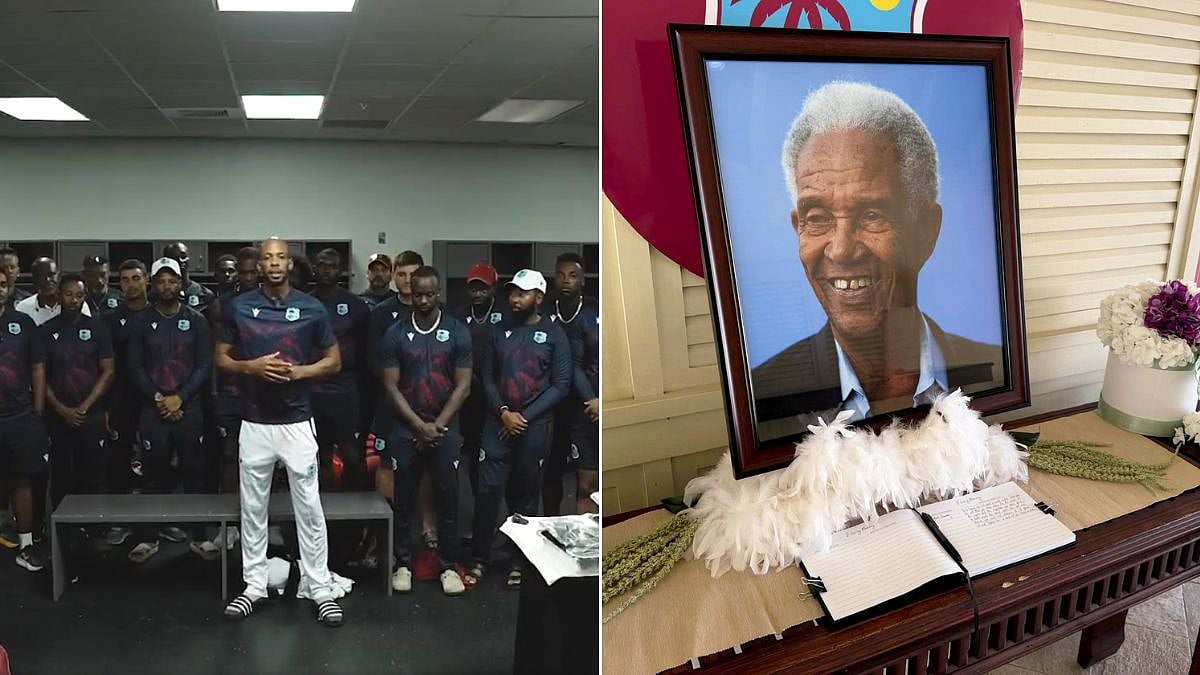
He remembers Sir Gary Sobers teaching players to wait for the ball to turn and use soft hands.

Roy Dias says Test and ODI cricket remain relevant despite T20’s rapid expansion.
He urges young players to build strong fundamentals in longer formats.
Dias says cricketers must train and approach Tests, ODIs and T20s differently.
He calls Test cricket the strongest test of skills against bowlers and conditions.
Dias says modern subcontinental batters have struggled to play spin effectively and recalls Sir Gary Sobers’s advice to play spin late with soft hands.
- Who
- Veteran Sri Lankan coach and former batter Roy Dias, discussing young cricketers.
- What
- Dias argued that Test and ODI cricket remain relevant alongside T20 cricket and urged players to develop strong fundamentals.
- Where
- When
- Why
- He said each format requires different skills and training, while a strong technical base in longer formats can support success in ODIs and T20s.
Longer-Format Emphasis
T20-Focused Adaptation
Role of traditional formats
Longer-Format Emphasis
Dias says Tests and ODIs remain relevant and that Test cricket is the ultimate examination of a player’s skills.
T20-Focused Adaptation
The growing number of T20 matches and leagues has shifted attention toward the shortest format, which Dias says players cannot ignore.
Player preparation
Longer-Format Emphasis
Young cricketers should establish their technique and fundamentals in longer formats before applying them elsewhere.
T20-Focused Adaptation
T20 requires specialized preparation, including trying to hit even good balls for fours and sixes and bowling a maximum of four overs.
Future of cricket formats
Longer-Format Emphasis
Test, ODI and T20 cricket can coexist because each demands different skills and appeals to different audiences.
T20-Focused Adaptation
T20’s expansion has made it increasingly central to the sport, requiring players to balance its demands with those of longer formats.
Key facts
- Speaker
- Roy Dias, a former Sri Lankan batter and veteran coach
- Formats discussed
- Test, ODI and T20 cricket
- Dias’s preferred format
- He considers Test cricket the best format for testing skills against bowlers and conditions.
- Advice to young players
- Build proper technique and fundamentals in longer formats.
- Training approach
- Players should train and adjust their approach differently for each format.
- Spin-batting advice
- Play spin late, wait for the turn and use soft hands.
- Coaching influence
- Sir Gary Sobers coached Dias and others in the 1980s and shared advice on playing spin.
Quotes
Roy Dias
Former Sri Lankan batter and veteran cricket coach
“See, when I started a lot of quality spinners were around. Our coaches told us to play spin very late, wait for the turn and then play it with soft hands.”
 rediff.com
“They need to treat T20, ODI and Test differently and the players need to train accordingly. You cannot ignore T20 now, because it is here to stay.”
rediff.com
Sources
Related news

Chaminda Vaas Urges Boards to Preserve Test and ODI Cricket

Manjrekar Calls IPL Generation’s Test Cricket Adaptation A Mystery

Sohail Khan Says Pacers, T20 Cricket Drive Pakistan Test Decline

ICC CEO: Random bilaterals over; Test and ODI need reinvention
Arjuna Ranatunga Warns Commercial Cricket Threatens Tests and ODIs

Priyadarshan Recalls Eye Injury While Chasing Tiger Pataudi

Priyadarshan Explains Why Saif Missed Garam Masala Role

From Conscience to Cameras: Cricket’s Changing Spirit Across Generations