

Archive · 25 Jul 2025
AI Helps Revive Japan's Traditional Nishijinori Weaving
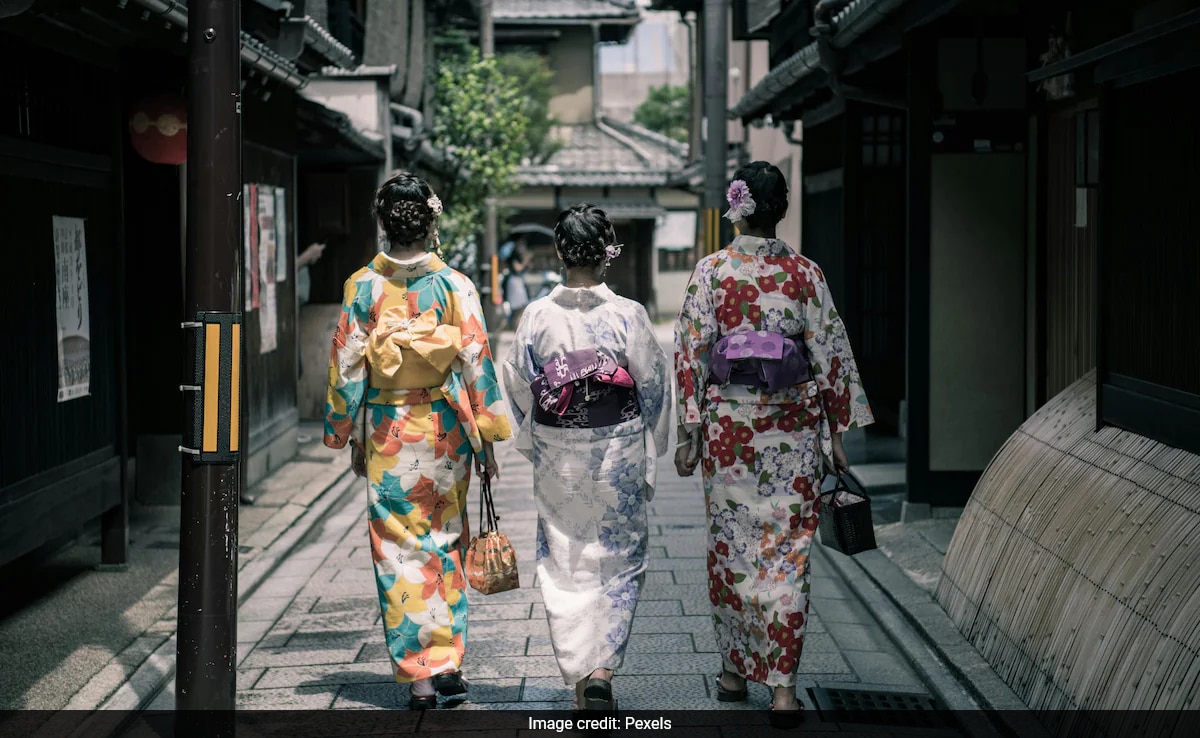
Imagine a very old art form called Nishijinori, a special way of weaving kimonos in Japan.
This art is struggling because fewer people wear kimonos now.
To help keep it alive, artists are using AI, which is like a smart computer.
The AI helps by coming up with new ideas for the designs, but the human artists still do the actual weaving.
The AI can quickly make many design suggestions, even ones the artists haven't thought of.
This mix of old and new helps preserve the traditional art while making it fresh.

Nishijinori, a 1,000-year-old Japanese weaving art, is collaborating with AI to stay relevant.
Demand for kimonos is declining, threatening the survival of Nishijinori.
AI helps suggest new Nishijinori designs but does not perform the actual weaving.
Researchers are exploring AI to digitize color gradations and assist with tedious tasks.
The collaboration has produced a kimono with innovative AI-generated patterns.
- Who
- Hironori Fukuoka, a Nishijinori artisan, and Sony Computer Science Laboratories are involved.
- What
- AI is being used to assist in the design process of Nishijinori, a traditional Japanese weaving technique.
- When
- The AI collaboration is a recent development.
- Where
- Kyoto, Japan.
- Why
- To keep the Nishijinori art relevant and adapt to changing times and declining demand for kimonos.
Traditionalists
Modernists
Approach to Technology
Traditionalists
Concerned that AI may undermine the artistry of the weaving
Modernists
Excited about the prospect of embracing new technologies
- Art Form
- Nishijinori weaving
- Origin
- Kyoto, Japan
- Partners
- Hironori Fukuoka & Sony CSL
- AI's Role
- Design suggestions
- Traditional Technique
- Still used for actual weaving
- Kimono Price
- Up to 1 million yen