

Archive · 31 Dec 2025
China Creates Boneless Fish via Gene Editing
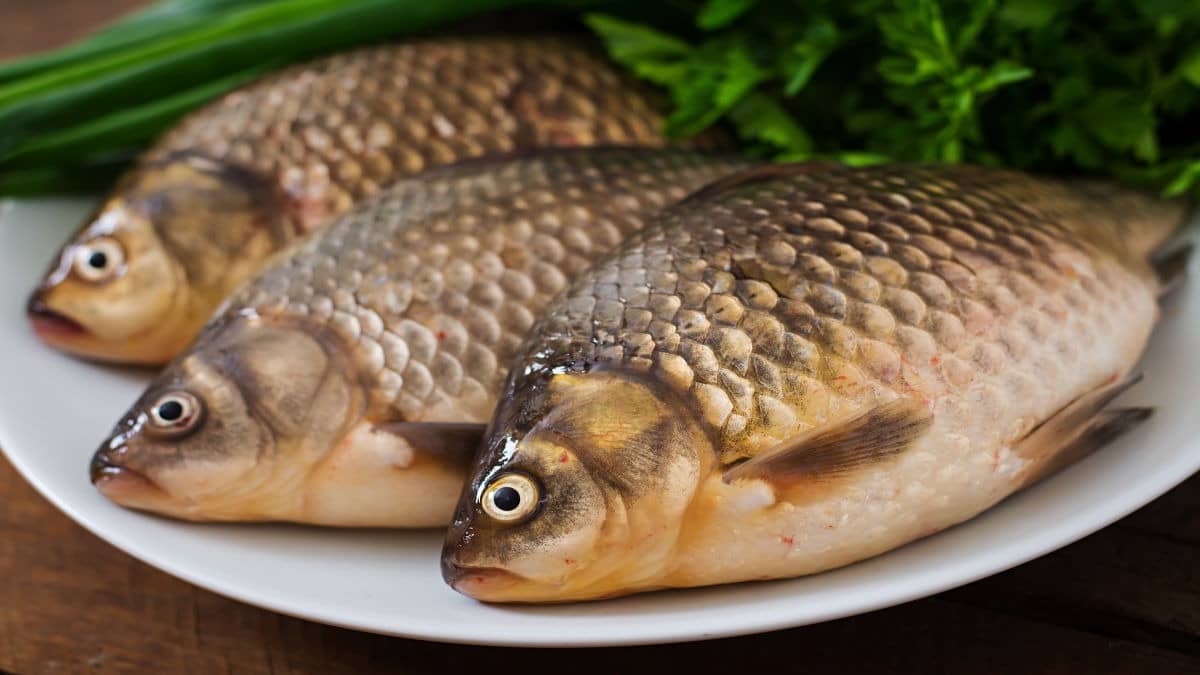
Scientists in China have created a special kind of fish called 'Zhongke No.
6' that has no tiny bones inside its meat.
Normally, fish like carp have lots of small bones that can be hard to eat and might cause choking.
The scientists used a special tool called CRISPR-Cas9 to turn off a specific gene in the fish embryos.
This gene, called runx2b, is responsible for making those tiny bones.
By turning it off, the fish grows up without those bones but still has a normal skeleton.
The new fish also grows faster, needs less food, and is more resistant to diseases.
This makes it easier and cheaper to farm.
The scientists worked on this for six years and think this could help make other fish easier to eat and farm in the future.

China has created a boneless fish called 'Zhongke No. 6' using gene-editing technology.
The fish is a variety of Prussian carp, a freshwater fish widely consumed in Asia.
Scientists used CRISPR-Cas9 to disable the runx2b gene, which forms intermuscular bones.
The new fish grows faster, requires less feed, and has higher disease resistance.
The breakthrough is part of a six-year research program aimed at improving food security.
- Who
- Scientists from the Chinese Academy of Sciences (CAS) led by Gui Jianfang
- What
- Created a boneless fish named 'Zhongke No. 6' using gene-editing technology
- When
- After six years of research
- Where
- Beijing, China
- Why
- To make carp easier to eat and improve commercial farming efficiency
- Fish Name
- Zhongke No. 6
- Species
- Prussian carp
- Gene-Editing Tool
- CRISPR-Cas9
- Targeted Gene
- runx2b
- Research Duration
- 6 years
- Research Institute
- Chinese Academy of Sciences (CAS)
- Lead Scientist
- Gui Jianfang
- Key Improvement
- Faster growth, less feed, higher disease resistance