

Archive · 24 Sep 2026
IIT Madras Maps Human Brain Through Imaging and Engineering
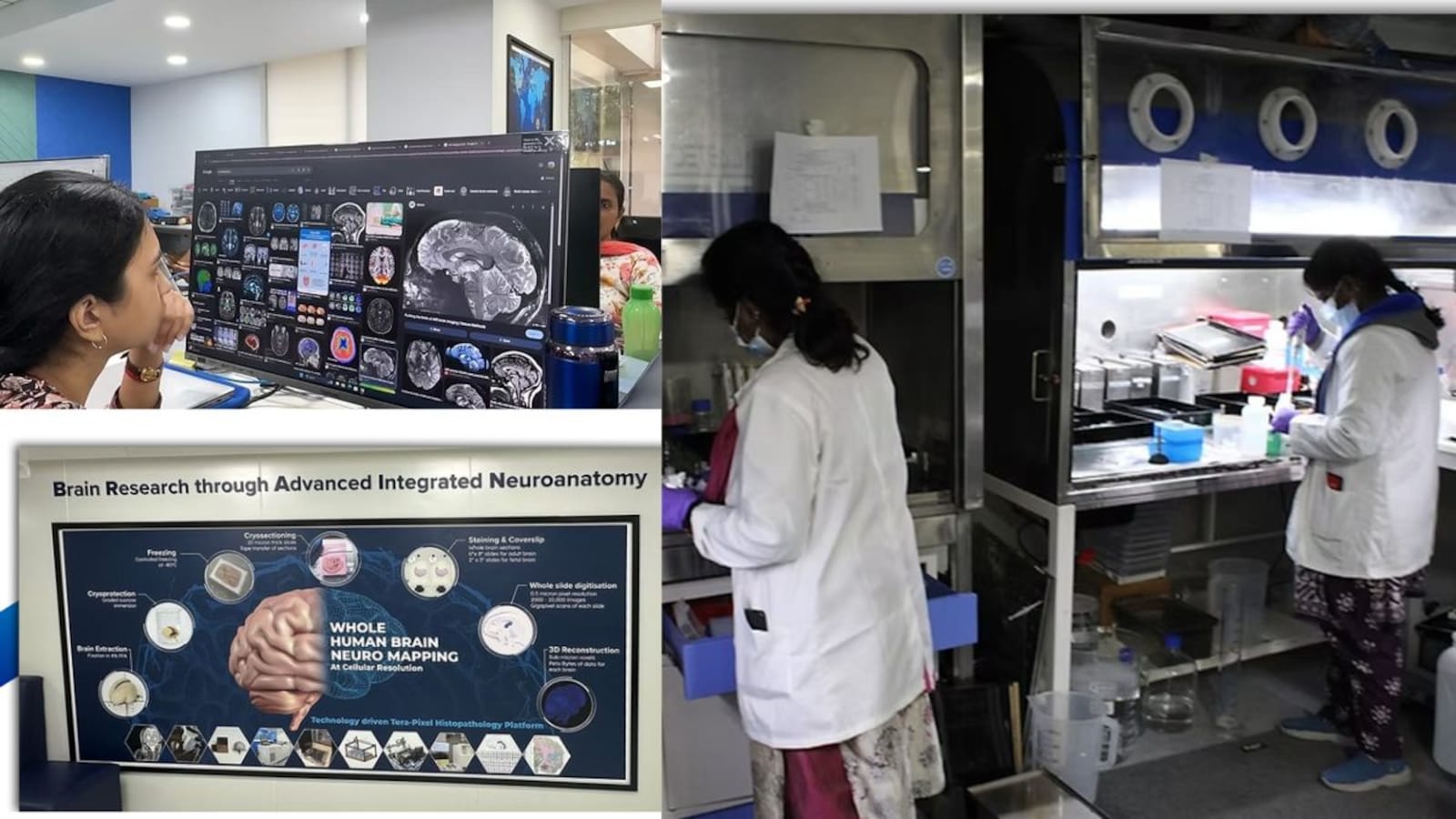
IIT Madras is working to make very detailed digital maps of human brains.
The project is led by the Sudha Gopalakrishnan Brain Centre.
Scientists carefully freeze brains, cut them into very thin slices, add stains, and scan them.
These scans help researchers see how the brain is organised.
The centre has collected more than 400 donated brains.
It works with doctors, engineers, and scientists from several countries.
Researchers hope the maps will improve understanding of brain diseases.
They are studying conditions such as strokes, rabies, dementia, and Alzheimer’s disease.

The Sudha Gopalakrishnan Brain Centre aims to map the human brain cell by cell and share the resource globally.
Established in 2022, the centre has expanded from five members to more than 200 doctors, scientists, technicians, and engineers.
Researchers freeze, slice, stain, and scan donated brains using high-resolution imaging equipment developed with an Indian company.
Each digitised brain can produce nearly 1.5 petabytes of data, while the centre has received more than 400 donated brains.
The centre collaborates with about 30 researchers across seven or eight countries to study diseases including strokes, rabies, dementia, and Alzheimer’s.
- Who
- The Sudha Gopalakrishnan Brain Centre at IIT Madras, led by Professor Mohanasankar Sivaprakasam with Scientific Director Dr Richa Verma.
- What
- A project to map human brains cell by cell through high-resolution imaging and digitalisation.
- When
- The centre was established in 2022; the article describes its current research and collaborations.
- Where
- IIT Madras in India, with collaborators in the United States and other countries.
- Why
- To understand how the human brain is organised and how diseases alter its structure, supporting research into neurological treatments.
- Research centre
- Sudha Gopalakrishnan Brain Centre at IIT Madras
- Established
- 2022
- Team size
- More than 200 doctors, scientists, technicians, and engineers
- Donated brains
- More than 400
- Data per brain
- Nearly 1.5 petabytes
- International collaboration
- About 30 collaborators in seven or eight countries
- Diseases studied
- Strokes, rabies, dementia, and Alzheimer’s disease