

Archive · 28 Jan 2026
ECL Uses AI Drones for Environmental Monitoring
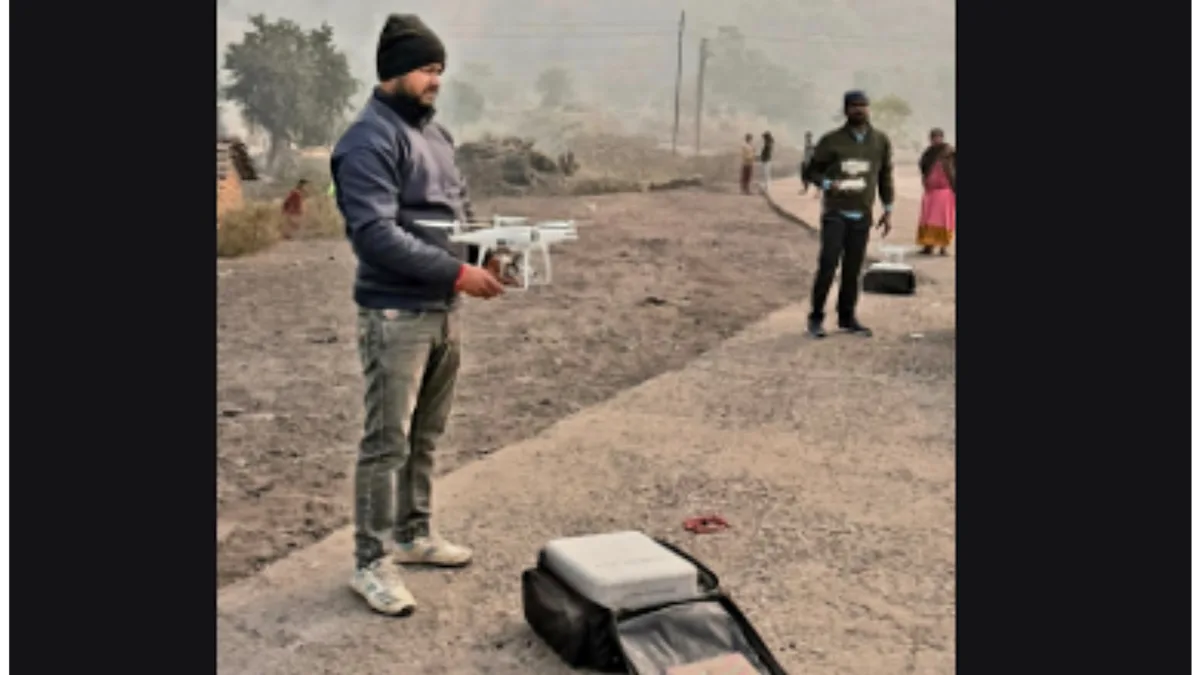
Eastern Coalfields Limited (ECL) is using special drones with artificial intelligence to help take care of the environment around their coal mines.
These drones take pictures and collect data to check how well plants are growing and if the land is healing after mining.
This helps ECL make sure they are following environmental rules and doing their part to keep the area green and healthy.
The drones take many pictures that are put together like a big puzzle to show the whole area clearly.
This helps scientists and officials make better decisions for the future of the mine and the environment.

ECL is using AI-driven drones to monitor and improve the environment around their coal mines.
The initiative aims to reduce coal dust pollution and ensure sustainable mining practices.
The drones are used for high-resolution surveys and geo-spatial analytics to assess plantation performance and ecological restoration.
The Central Institute of Mining and Fuel Research (CIMFR) is conducting the study using advanced methodologies like drone-based orthomosaic mapping and vegetation health analysis.
The first phase of the drone survey has been completed, but the primary data is still being analyzed.
- Who
- Eastern Coalfields Limited (ECL) and Central Institute of Mining and Fuel Research (CIMFR)
- What
- Deployment of AI-driven drones for environmental monitoring and scientific reclamation
- When
- Initiative ongoing, with the first phase drone survey completed
- Where
- Sonepur Bazari Area of ECL
- Why
- To decrease coal dust pollution, ensure environmental compliance, and promote sustainable mining practices
- Organization
- Eastern Coalfields Limited (ECL)
- Location
- Sonepur Bazari Area
- Technology Used
- AI-driven drones, Unmanned Aerial Vehicles (UAVs)
- Research Institute
- Central Institute of Mining and Fuel Research (CIMFR)
- Forest Land
- 240.93 hectares
- Social Forestry Cover
- 477 hectares
- Planned Plantation Areas
- 182 hectares (backfill) and 68 hectares (overburden soil)