

Archive · 12 Nov 2025
India's Vulnerability to Tropical Cyclones Increased by Coastal Factors and Warming Oceans
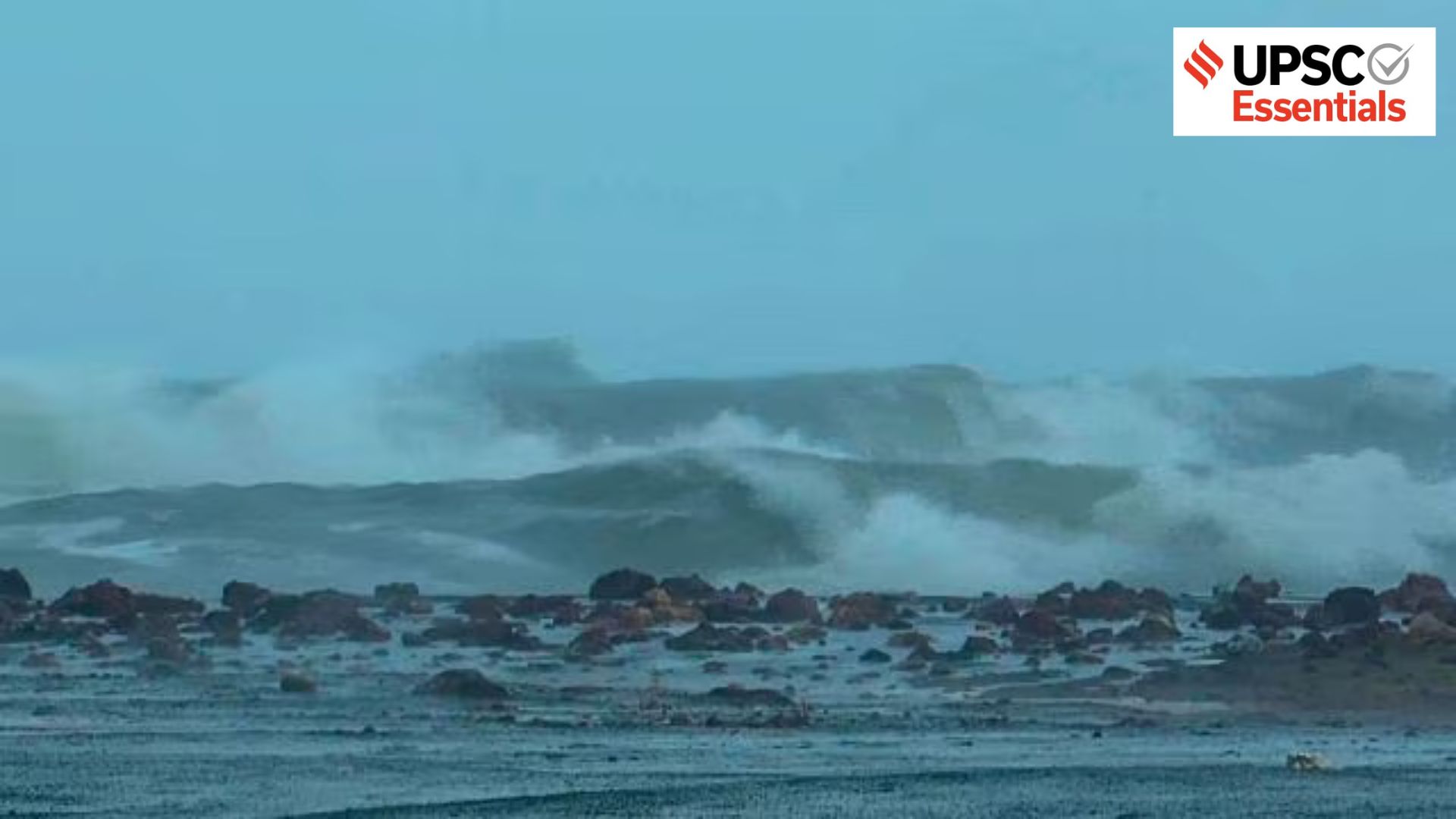
Imagine the ocean is like a big pot of warm water.
Sometimes, when the water is very warm, a special kind of swirling storm called a cyclone can form.
India has a very long edge along the ocean, with lots of people living near it.
The water is also getting warmer because of climate change, which makes these storms stronger.
These strong storms bring high winds and lots of rain, damaging homes, farms, and roads.
Because so many people live close to the coast and the storms are getting more powerful, India is becoming more vulnerable to them.
Scientists are working to predict these storms better and build safer places for people to go when they are coming.

Tropical cyclones have been responsible for 28.6% of deaths due to extreme weather events in India between 1970 and 2019.
Recent cyclones have caused significant damage to crops, infrastructure, and led to substantial financial losses in India.
India's extensive coastline, high population density, and flat coastal terrain make it inherently vulnerable to tropical cyclones.
Warming sea surface temperatures, exacerbated by climate change, are contributing to the rapid intensification of cyclones in the North Indian Ocean.
Improved forecasting and preparedness strategies, including early warning systems and community-based disaster management, are crucial for mitigating cyclone impacts.
- Who
- India and its coastal population
- What
- Increasing vulnerability to tropical cyclones
- When
- Ongoing, with increased concern due to climate change
- Where
- Coastal regions of India, particularly along the North Indian Ocean
- Why
- Long coastline, shallow continental shelf, high population density, flat coastal terrain, and climate change-induced sea-level rise leading to warmer ocean temperatures that intensify cyclones.
- Cyclone Deaths (1970-2019)
- 28.6% of all extreme weather event deaths
- Recent Cyclone Damage (Andhra Pradesh)
- 6,384 crore
- Crop Damage (Andhra Pradesh)
- 87,000 hectares
- Sea Surface Temperature Increase (Arabian Sea)
- 1.2–1.4°C
- Vulnerable Coastal Area
- 8% of India's geographical area
- Coastal States/UTs Vulnerable
- 13