

Archive · 28 Jul 2025
Bagan's Rise and Fall: A Myanmar Buddhist Kingdom's History
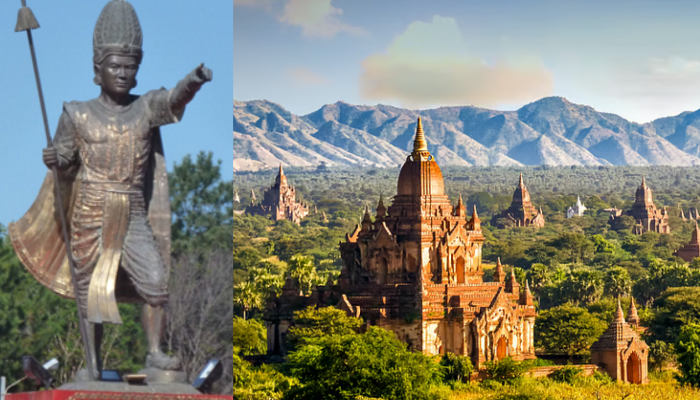
Long ago, in what is now Myanmar, there was a kingdom called Bagan.
It was the first to unite the area and had a powerful king named Anawrahta.
He made the kingdom rich by building canals for farming and spreading Buddhism.
They also loved Indian culture, even telling stories like the Ramayana.
Over many years, Bagan became famous for its beautiful temples.
Though they were conquered by the Mongols, the area continued to be a place for worship and it still stands today.

The Bagan Kingdom, in present-day Myanmar, was the first to unify the region.
King Anawrahta, the kingdom's greatest ruler, expanded the empire and promoted Theravada Buddhism.
Bagan flourished for over 250 years, with a peak in temple construction during the 13th century.
The kingdom was heavily influenced by Indian culture, including the popularization of the Ramayana.
Bagan fell due to Mongol invasions in the late 1200s but later regained importance as a Buddhist pilgrimage site.
- Who
- The Burman people, King Anawrahta, and the Mongols.
- What
- The history and cultural significance of the Bagan Kingdom, a Buddhist empire in present-day Myanmar.
- When
- From its founding in 849 AD until its decline in the late 1200s.
- Where
- In the Irrawaddy region of present-day Myanmar.
- Why
- To understand the rise and fall of the Bagan Kingdom and its cultural legacy.
Early Criticisms
Modern Collaboration
Restoration Methods
Early Criticisms
Military government's restoration of Bagan site was criticized.
Modern Collaboration
World Heritage award should encourage collaboration to protect Bagan's holy sites.
- Capital Founded
- 849 AD
- Greatest Ruler
- King Anawrahta
- Religion
- Theravada Buddhism
- Key Feature
- Numerous Temples and Pagodas
- UNESCO Site
- Designated in 2019