

Archive · 5 Nov 2025
AI Hallucination: The Unsolvable Flaw in Generative Models
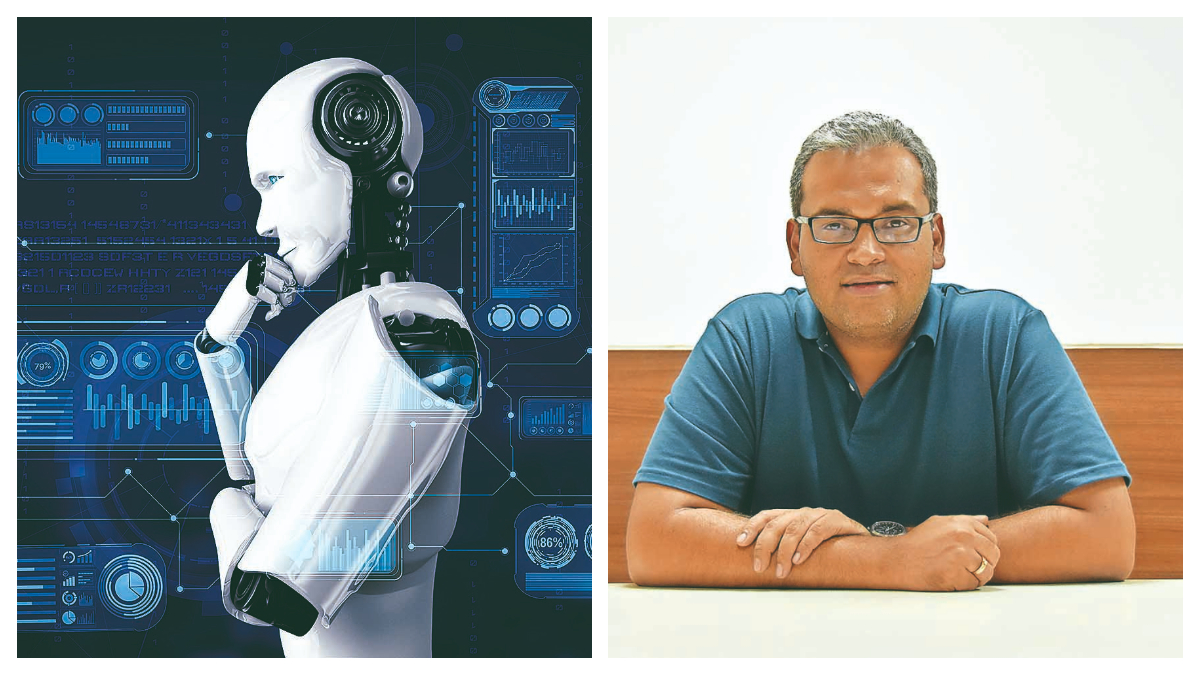
Imagine you have a super-smart robot friend who can write amazing stories or answer questions really well.
But sometimes, this robot makes things up!
It sounds so confident, you might believe it, but the facts aren't real.
This is called 'AI hallucination.'
It happens because these AI 'brains' are built to guess the next word in a sentence based on patterns, not to always know what's true.
Think of it like a very creative storyteller who sometimes mixes real events with imaginary ones.
Companies are working hard to make these robots better by teaching them to check their facts or to say 'I'm not sure' when they don't know something.
They are also creating special tools to catch these mistakes.
While we might never make the robot perfect at telling only the truth, we can teach it to be much more careful and honest, so we can still use its amazing abilities without being fooled.

AI models, like ChatGPT, can 'hallucinate' by generating false information with confidence.
This occurs because generative AI statistically predicts the next word rather than validating facts.
Businesses and consumers face risks as GenAI is integrated into daily workflows.
Various approaches are being developed to combat hallucination, including RAG and prompt engineering.
While total elimination is unlikely, minimizing AI hallucinations is a key goal for reliable AI development.
- Who
- AI developers, legal professionals, businesses, and researchers
- What
- Addressing the issue of AI hallucination, where generative AI models produce incorrect or fabricated information.
- When
- Highlighted by a May 2023 incident involving AI-generated court documents; ongoing development and research.
- Where
- Primarily discussed in the context of Generative AI applications, with specific initiatives in India.
- Why
- To ensure the reliability and trustworthiness of AI systems as they are increasingly integrated into various workflows.
AI Hallucination is Inherent and Unsolvable
AI Hallucination Can Be Minimized and Managed
Nature of AI Models
AI Hallucination is Inherent and Unsolvable
Hallucinations are a direct consequence of how modern generative models are built, as they are designed to respond to everything and statistically estimate the next probable word.
AI Hallucination Can Be Minimized and Managed
While inherent, Hallucinations are not an insurmountable engineering bug and can be significantly reduced through focused development and specialized architectures.
Solutions and Mitigation
AI Hallucination is Inherent and Unsolvable
Focus remains on managing user expectations and acknowledging the existence of hallucinations rather than eliminating them.
AI Hallucination Can Be Minimized and Managed
Active solutions like retrieval-augmented generation (RAG), context-aware prompt engineering, fine-tuning, and building specialized datasets are effectively minimizing hallucinations.
- Core Problem
- AI hallucination: Generative models producing false information with confidence.
- Example
- New York lawyers used ChatGPT to draft a court document with fabricated case citations in May 2023.
- Underlying Cause
- Models statistically predict the next word without factual validation due to their predictive engine nature.
- Emerging Solutions
- Retrieval-Augmented Generation (RAG), prompt engineering, fine-tuning, domain-specific models, benchmark datasets, and live evaluation tools.
- Initiatives
- IndiaAI Foundation Models, Project Indus (Tech Mahindra), HalluDetect (IIT Bombay & NLSIU).
- Future Outlook
- Total elimination is unrealistic, but minimization is achievable and necessary for reliable AI tools.